
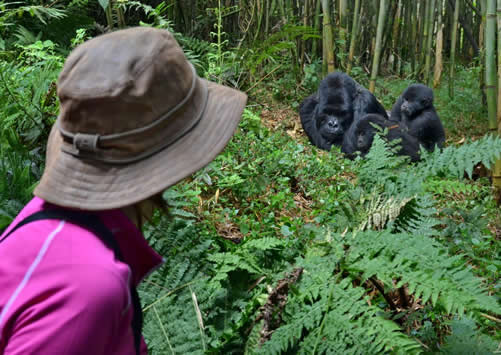
Is Gorilla Trekking Worth It? — The Honest Answer from People Who Have Done It
The cost, the physical effort, the permit price, the trek — and why virtually everyone says yes
Is gorilla trekking worth it? Ask anyone who has done it. The answer comes back the same way, in near-identical words, from seasoned travellers who have been on safari on five continents, from first-time Africa visitors who were not sure what to expect, from sceptics who thought $700 or $1,500 for a single hour seemed indefensible, and from people who almost did not go because the trek sounded too difficult.
They all say the same thing: it was the most extraordinary wildlife experience of my life.
That is not marketing copy. It is the consistent, unprompted response that gorilla trekking generates from virtually everyone who does it — and it is the reason gorilla trekking in Uganda and Rwanda remains the most sought-after wildlife encounter in Africa despite being one of the most expensive single-activity tickets in global tourism.
This guide gives you the honest, complete answer to “is gorilla trekking worth it?” — examining the cost versus the experience, the physical reality of the trek, what the encounter actually feels like, who should and should not do it, the difference between Uganda and Rwanda gorilla trekking, and exactly what Uganda Wildlife Tours offers across every gorilla trekking package so you can make an informed decision.
What Does Gorilla Trekking Actually Cost — and Is the Price Justified?
Let’s start where most people start: the price. Uganda gorilla trekking permits cost $700 per person. Rwanda gorilla trekking permits cost $1,500 per person. These are the highest-priced single wildlife encounter permits in Africa, and they prompt the most understandable version of the “is gorilla trekking worth it?” question.
The answer requires understanding what the permit price actually funds. Rwanda Development Board and Uganda Wildlife Authority permit revenue is the primary mechanism for funding mountain gorilla conservation — the programme that has grown the global mountain gorilla population from approximately 620 individuals in 2008 to over 1,000 today.
When you buy a gorilla trekking permit, you are directly funding the ranger salaries, veterinary monitoring, anti-poaching operations, and community outreach that have made mountain gorilla conservation one of the most celebrated wildlife recovery stories of the 21st century.
The gorillas that are alive today — including the silverback whose eyes you will meet from four metres away — exist in part because visitors like you bought permits before you. That context does not make the price smaller, but it makes it meaningful in a way that few tourism expenditures ever are.
Beyond conservation funding, the permit covers: your guide for the day, ranger escort throughout the trek, the one-hour encounter itself, and the official UWA trekking certificate. The total safari cost — including 3 Days Gorilla Trekking Safari accommodation, transfers, and professional guiding — adds further context, but the permit is the anchor cost around which everything else is built.
Is the price worth it? Every independent travel review, every safari forum post, every first-person account from people who have done gorilla trekking in Uganda reaches the same conclusion: yes, without reservation.
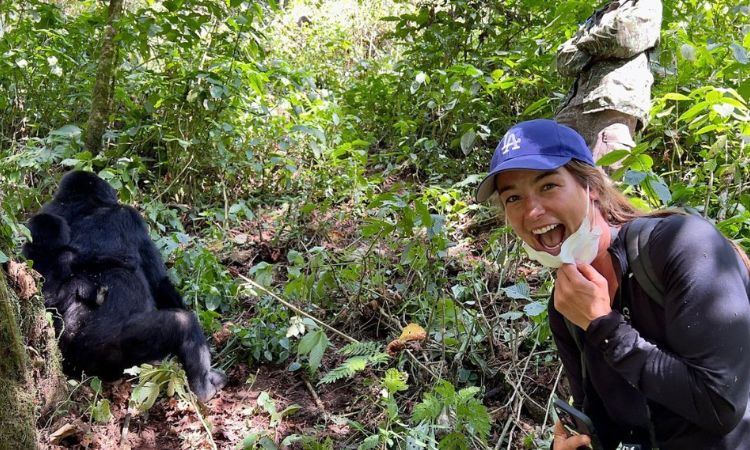
What Gorilla Trekking Actually Feels Like — The Honest Description
Words struggle here, but they are the only tool available. Here is what gorilla trekking in Uganda’s Bwindi Impenetrable Forest actually feels like — not the brochure version, the honest one.
You wake before dawn. The forest at 2,000 metres is cold in a way that surprises people who associate Africa with heat. At the UWA briefing centre, your group of eight gathers while the ranger assigns you to a gorilla family based on your fitness level and the family’s last known location.
The guide explains what you will see, what to do if a silverback approaches, what sounds the gorillas make. You are nervous in a way that does not quite make sense — you are about to walk through a forest to visit animals. Why does it feel significant?
Because it is significant. The trek begins through highland farmland, then crosses into the forest proper. The density of Bwindi changes immediately — the light drops, the vegetation closes in, the sounds of birds and insects increase. Your porters navigate slopes that your knees will remember for days. The trail, where it exists, alternates between mud and root. Where it does not exist, the trackers cut through with machetes.
Then the guide stops. Holds up a hand. Points.
Fifteen metres ahead, barely visible through the understorey, a shape that your brain takes a moment to parse as a gorilla — because the scale is wrong. Gorillas in photographs are somehow smaller than this.
A female with an infant is feeding on leaves. She glances at your group with the same mild curiosity she might give a passing butterfly. The infant freezes, stares at you directly with eyes that are not animal eyes in the way that antelope or elephant eyes are animal — these are eyes that are recognising you, categorising you, assessing you.
The silverback materialises from the forest and lies down three metres to your left. You did not hear him arrive. He is the size of a man and a bear simultaneously, his silver back catching what light penetrates the canopy, and he is profoundly, entirely unconcerned by your presence.
You have one hour. It passes in about fifteen minutes of subjective time.
Every person who has been through this experience knows exactly what the next hour will contain. And none of them can quite describe it properly afterwards. They just say it was the most extraordinary thing they have ever seen.
Is Gorilla Trekking Worth It for the Physical Effort Required?
This is the second most common concern after cost — and it deserves a specific, honest answer rather than reassuring generalisation.
Gorilla trekking is physically demanding. That is the truth. The forest floor in Bwindi Impenetrable National Park is steep, slippery when wet (which is most of the time), tangled with roots and vegetation, and the altitude sits between 1,160 and 2,607 metres above sea level.
The trek to locate the gorilla family can take anywhere from 30 minutes to 8 hours depending on where the gorillas have ranged overnight.
The average trek duration to reach one of the more commonly visited gorilla families in Bwindi is 2–4 hours of walking each way, with the terrain varying from manageable forest paths to steep, vegetation-dense hillsides that require grasping roots and branches for stability.
However — and this is important — gorilla trekking is not technically difficult. It is physically demanding but does not require specialist skills or fitness. Thousands of visitors aged 60, 70, and beyond complete gorilla treks every year.
Visitors with mobility limitations who cannot complete the full trek can hire a gorilla-carrying chair for UGX 350,000 (approximately $95) — a specialised sedan-chair style carrier that four porters use to carry visitors who cannot manage the terrain independently.
UWA also has special gorilla trekking access initiatives for disabled visitors that allow closer access to the park’s most accessible gorilla families.
The practical preparation advice: hire a porter at the trailhead ($15–$20, not optional for most visitors). Porters carry your day bag, steady you on steep terrain, and significantly reduce the physical toll of the trek.
Wear proper hiking boots — not trail runners, not sandals. Bring trekking poles if you have them. Accept that you will be muddy, that your knees will feel the descent, and that it will be completely worth it.
For visitors concerned about the physical demands, the 4 Day Gorillas and Lake Bunyonyi Safari includes the gorilla trek followed by two days of recovery and relaxation on the beautiful terraced shores of Lake Bunyonyi — one of Uganda’s most scenic and peaceful lakes — which many visitors describe as the perfect physical and emotional decompression after the intensity of Bwindi.
Is Gorilla Trekking Worth It Compared to Other African Safari Experiences?
Some travellers ask whether gorilla trekking is worth it compared to a Serengeti wildebeest migration, a Okavango Delta safari, a South Luangwa leopard encounter, or any of the other canonical African wildlife experiences. It is a useful comparison because it contextualises what makes gorilla trekking different.
The difference is proximity, recognition, and rarity. Game drives across East Africa’s savanna parks deliver extraordinary wildlife — lions, elephants, leopards, cheetahs — from the relative distance of a vehicle. The animals are wild, the encounters are genuine, but the relationship is observer-to-observed, separated by the vehicle and by the natural wariness of prey-response prey species.
Gorilla trekking is different in kind, not just degree. You are in the forest on foot, in the gorilla family’s territory. There is no vehicle between you. When the silverback looks at you, he is not looking at a vehicle — he is looking at you, specifically, with the evaluative intelligence of a hominid that shares 98.3% of your DNA.
The infant that grabs its mother and stares at you with wide eyes is responding to a human visitor with something that is closer to curiosity than fear.
No other wildlife encounter in Africa — and arguably in the world — delivers this combination of proximity, recognition, and mutual awareness with a wild animal. Gorilla trekking is not comparable to other safari experiences because it occupies a different category of human-wildlife encounter entirely.
The 4 Days Gorilla and Chimpanzee Tour offered by Uganda Wildlife Tours provides the clearest direct comparison: gorilla trekking in Bwindi followed by chimpanzee tracking in Kibale Forest.
Both are primate encounters of exceptional quality. Ask anyone who has done both which was more powerful, and the answer is almost universal: the gorillas. Not because chimpanzees are less extraordinary — they are genuinely extraordinary — but because the silverback delivers a specific impact that nothing else in Africa replicates.
Is Gorilla Trekking Worth It in Uganda vs Rwanda? How Do They Compare?
For travellers deciding between Uganda and Rwanda gorilla trekking, the key comparisons are permit price, trek character, and total trip cost.
Uganda gorilla trekking permit: $700. Rwanda gorilla trekking permit: $1,500. Both cover one hour with one habituated gorilla family.
The trek in Uganda (Bwindi Impenetrable Forest) is generally more rugged and more forested — Bwindi is a true impenetrable forest and the terrain reflects that. The encounter is often described as more authentic, more genuinely wild. Bwindi has more habituated gorilla families than Rwanda’s Volcanoes National Park, which means more permit availability and potentially more variety in family selection.
The trek in Rwanda (Volcanoes National Park) involves less driving from Kigali than from Kampala to Bwindi, and the Virunga volcanoes provide a dramatically photogenic backdrop. Rwanda’s infrastructure around Volcanoes National Park is excellent and the overall logistics are slightly smoother.
For travellers who can only do one: Uganda delivers the same quality gorilla encounter for $800 less per person. For travellers who can do both: the 7 Days Uganda Cultural and Gorilla Safari in Uganda provides context and cultural depth alongside the gorilla trek that the shorter Rwanda packages rarely include.
Uganda Wildlife Tours operates gorilla trekking in both countries — but for value-for-money gorilla trekking with the most diverse surrounding safari itinerary options, Uganda is the stronger recommendation.
Gorilla Habituation vs Gorilla Trekking — Which Is More Worth It?
Standard gorilla trekking gives you one hour with a fully habituated gorilla family. Gorilla habituation gives you four hours with a family still undergoing the process of becoming comfortable with human presence — a more unpredictable, more raw, and for many visitors more deeply affecting experience.
The 3 Days Gorilla Habituation experience in Uganda is available only at Bwindi Impenetrable National Park and costs $1,500 per permit — the same as the Rwanda standard trekking permit.
But those four hours with a habituating family deliver an experience that regular trekkers who subsequently do the habituation experience consistently describe as entirely different: longer observation windows, more natural family behaviour (because the family has not yet fully adjusted to human presence), and a connection to the conservation process itself that is absent from the standardised trekking encounter.
If budget is the primary constraint, the standard 3 Days Gorilla Trekking Safari at $700 per permit is outstanding value for money. If the desire is for maximum time with a gorilla family in the most authentic forest context available, the habituation experience is worth the higher investment.
Who Should and Should Not Do Gorilla Trekking
Who Should Absolutely Do Gorilla Trekking
Anyone who cares about wildlife and has ever looked at a photograph of a mountain gorilla with any curiosity should do gorilla trekking. Anyone who has been on an African game drive and wants an encounter of a completely different intensity.
Anyone who wants to understand why conservation funding matters in a visceral, immediate, personal way. Anyone planning an East Africa safari who has the time and budget to include Uganda.
The 5 Days Kibale and Bwindi Gorilla Safari is one of the most complete Uganda primate safari packages available — combining chimpanzee tracking in Kibale with gorilla trekking in Bwindi in five days.
For first-time Uganda safari visitors who want to understand why Uganda is called the primate capital of Africa, this is the right starting package.
Who Should Think Carefully Before Booking
Travellers with significant mobility limitations should discuss the trek specifics with their operator before booking. The gorilla carrying chair is available and makes trekking accessible to many visitors with mobility challenges, but the forest environment is genuinely demanding and there are scenarios where the physical requirements exceed what some visitors can safely manage.
Children under 15 are not permitted to gorilla trek under UWA regulations (to reduce disease transmission risk to the gorillas). Travellers currently ill with any respiratory or gastrointestinal illness will be turned away at the briefing centre — gorillas are susceptible to human disease and UWA takes this seriously.
Travellers with severe claustrophobia who are already uncomfortable with dense forest environments may find the closed canopy of Bwindi more challenging than expected — though the overwhelming majority of visitors find the forest atmosphere extraordinary rather than oppressive.
The Gorilla Silverback Experience — What No One Tells You
The thing that no gorilla trekking guide or brochure fully conveys is what happens internally during the encounter. Not the visual spectacle — that can be photographed. The internal experience.
You have spent months thinking about this moment. You have paid for it. You have hiked through mud and vegetation to reach it. And then you are there, genuinely there, three metres from a 200-kilogram silverback who is lying in the dappled forest light looking at you with the patient, measuring intelligence of an animal that has no reason to find you threatening and no particular interest in impressing you.
And what most people feel is not triumph or excitement. What most people feel is something quieter and stranger — a recognition that this creature and you are more similar than different, that the distance between wild and domestic is smaller than your entire lived experience has prepared you for, and that the forest, the gorilla, and the moment are the realest thing you have encountered in years.
That is why gorilla trekking is worth it. Not the photograph — though the photograph will be extraordinary. The moment before you remember you have a camera.
The 2 Days Silverback Gorilla Safari and the 6 Day Uganda Gorilla and Golden Monkey Trekking Adventure from Uganda Wildlife Tours both place the silverback encounter at the centre of the itinerary — in the first case as an intensive two-day focused experience, in the second as part of a wider primate journey through Uganda’s highland forests.
Booking Gorilla Trekking — Timing, Availability, and How to Secure Your Permit
Uganda gorilla trekking permits are limited to eight visitors per gorilla family per day, with approximately 20 habituated families in Bwindi and one family in Mgahinga. Total daily permits across both parks run to approximately 170 — a very small number relative to global demand.
Peak season (June–September and December–February) permits sell out months in advance. Booking your gorilla trekking safari through Uganda Wildlife Tours at least 4–6 months before your intended travel dates is strongly recommended for peak season travel. Shoulder season travel (March–May, October–November) has better availability but involves more unpredictable weather.
Every gorilla safari package from Uganda Wildlife Tours includes permit procurement, ground transport from Kampala or Entebbe, accommodation near the trekking sites, and professional guide services throughout — so the logistics of securing your permit are handled as part of the complete package.
The 8 Days Uganda Safari and 7 Days Uganda Wildlife Safari packages include gorilla trekking alongside Uganda’s savanna wildlife and are well-suited to first-time Uganda visitors who want the gorilla encounter as part of a broader East Africa wildlife experience rather than as a standalone activity.
Is Gorilla Trekking Worth It? — The Final Verdict
Yes. Without qualification, without reservation, and with the confidence of a claim that is supported by the consistent, independent testimony of virtually every person who has ever done it.
Gorilla trekking is worth the cost. It is worth the physical effort. It is worth the early morning, the muddy forest, the aching knees on the descent. It is worth planning around, saving for, and building an entire Uganda safari to include.
It is, for the overwhelming majority of people who experience it, the single most powerful wildlife encounter of their lives — and one of the most powerful experiences they have had anywhere, in any context, for any reason.
The mountain gorillas of Bwindi Impenetrable Forest exist because enough people decided it was worth it to fund their conservation. Every trek, every permit, every hour spent in the forest with a gorilla family is simultaneously the most extraordinary tourism experience in Africa and a direct contribution to the survival of a species that was heading toward extinction when conservation funding was not available.
That combination — extraordinary experience plus genuine conservation impact — is what makes gorilla trekking not just worth it, but meaningful in a way that very few travel experiences ever achieve.
Uganda Wildlife Tours operates gorilla trekking safaris across every format and duration — from 1 Day Gorilla Trekking Uganda for travellers with the absolute minimum time to the comprehensive 9 Days Uganda Wildlife Safari that places the gorilla encounter within the full context of Uganda’s extraordinary wildlife landscape.
Contact Uganda Wildlife Tours to begin planning your gorilla trekking safari — check permit availability for your dates, discuss the right package for your time and budget, and take the first step toward the wildlife experience that everyone who has done it says was the most extraordinary of their life.
Related Pages — Plan Your Gorilla Trekking Safari with Uganda Wildlife Tours
- Home — Uganda Wildlife Tours
- Gorilla Safaris — All Uganda Gorilla Trekking Packages
- 1 Day Gorilla Trekking Uganda
- 2 Days Uganda Safari
- 2 Days Silverback Gorilla Safari
- 3 Days Gorilla Habituation — 4 Hours with a Gorilla Family
- 3 Days Gorilla Trekking Safari — Bwindi Impenetrable Forest
- 4 Day Gorillas and Lake Bunyonyi Safari
- 4 Days Gorilla and Chimpanzee Tour — Bwindi + Kibale
- 4 Days Uganda Wildlife Safari
- 5 Days Gorillas and Murchison Falls Safari
- 5 Days Kibale and Bwindi Gorilla Safari
- 6 Days Uganda Gorilla and Wildlife Safari
- 6 Day Uganda Gorilla and Golden Monkey Trekking Adventure
- 6 Days Uganda Budget Safari
- 6 Days Uganda Primate Safari
- 7 Days Uganda Cultural and Gorilla Safari
- 7 Days Uganda Primate Safari
- 7 Days Uganda Wildlife Safari
- 7 Days Uganda Safari
- 8 Days Uganda Safari
- 9 Days Uganda Wildlife Safari
- 10 Days Uganda Safari
- Long Uganda Safaris — Full Package Range
- Bwindi Impenetrable National Park — Complete Guide
- Accommodations in Bwindi Impenetrable National Park
- Batwa Pygmies — Cultural Uganda Experience
- Adventure Tourism in Jinja
- Waterfalls in Uganda
- Contact Uganda Wildlife Tours — Plan Your Gorilla Safari


https://shorturl.fm/R3U9l