
Birdwatching in Uganda: Best Birding Sites & Tours
Birdwatching in Uganda offers exceptional opportunities to see more than 1,090 recorded bird species across tropical rainforests, papyrus wetlands, savannahs, lakes, and mountain habitats.
From searching for the rare Shoebill at Mabamba Swamp to spotting Albertine Rift endemics in Bwindi Impenetrable National Park, Uganda is one of Africa’s most rewarding destinations for birdwatchers.
Known as the Pearl of Africa, Uganda lies at the meeting point of East African savannah, Central African rainforest, and the Albertine Rift. This geographical diversity supports an extraordinary range of resident and migratory birds.
Whether you are an experienced birder hoping to add rare species to your life list or a first-time visitor interested in African birdlife, a guided Uganda birding safari can introduce you to some of the country’s most remarkable species and habitats.
Birdwatching in Uganda: Top Destinations, Birds and Birding Tours
Why Is Uganda a Great Birdwatching Destination?
Uganda’s birding appeal comes from its variety of habitats and the number of species found within a relatively compact country.
- Exceptional bird diversity: Uganda has more than 1,090 recorded bird species, making it an outstanding destination for birdwatching in Africa.
- Albertine Rift endemics: The country’s western forests and mountains provide opportunities to search for bird species found within the Albertine Rift region.
- Wetland specialists: Papyrus swamps, lakes, and river systems support Shoebills, kingfishers, herons, storks, and other waterbirds.
- Forest birding: Tropical forests such as Bwindi, Kibale, and Semuliki shelter turacos, hornbills, broadbills, pittas, and many other forest species.
- Savannah birdlife: Uganda’s national parks offer opportunities to see eagles, vultures, bee-eaters, rollers, bustards, and ground-dwelling birds.
- Resident and migratory species: Birders can observe Uganda’s resident birds throughout the year, alongside seasonal visitors from Europe and other regions.
The combination of these habitats makes Uganda particularly attractive for birders who want to see a wide range of species during one trip.
Best Birdwatching Destinations in Uganda
1. Mabamba Swamp – Best for Shoebill Birdwatching
Mabamba Swamp, on the northern shores of Lake Victoria, is one of Uganda’s most famous birdwatching destinations and a leading place to search for the rare Shoebill (Balaeniceps rex).
The wetland is explored mainly by traditional canoe, with local guides navigating narrow channels through the papyrus vegetation. Early morning excursions are particularly popular because they offer good opportunities to look for Shoebills feeding in the marsh.
Other birds to look for include:
- Papyrus Gonolek
- Malachite Kingfisher
- Pied Kingfisher
- African Jacana
- Goliath Heron
- African Fish Eagle
- Long-toed Lapwing
- African Marsh Harrier
Mabamba is especially convenient for visitors staying in Entebbe or Kampala because it can be explored on a day excursion.
Recommended trip: 1-Day Mabamba Bird Watching Tour
You can also read our detailed guide to Mabamba Swamp for more information about its birdlife and canoe excursions.
2. Bwindi Impenetrable National Park – Best for Albertine Rift Endemic Birds
Bwindi Impenetrable National Park is internationally known for mountain gorilla trekking, but it is also one of Uganda’s most important forest birding destinations.
Its montane rainforest supports more than 350 bird species, including several Albertine Rift endemics. Birdwatchers visit particularly to search for elusive forest species that are difficult to find in other parts of the country.
Notable birds include:
- African Green Broadbill
- Grauer’s Rush Warbler
- Shelley’s Crimsonwing
- Handsome Francolin
- Rwenzori Batis
- Regal Sunbird
- Bar-tailed Trogon
The Mubwindi Swamp trail in the Ruhija sector is particularly well known among birdwatchers searching for Albertine Rift species. Other forest trails also offer rewarding birding opportunities.
Bwindi is a valuable destination for specialist birders, especially those interested in combining mountain gorilla trekking with forest birdwatching.
Explore our Bwindi Impenetrable National Park guide when planning your visit.
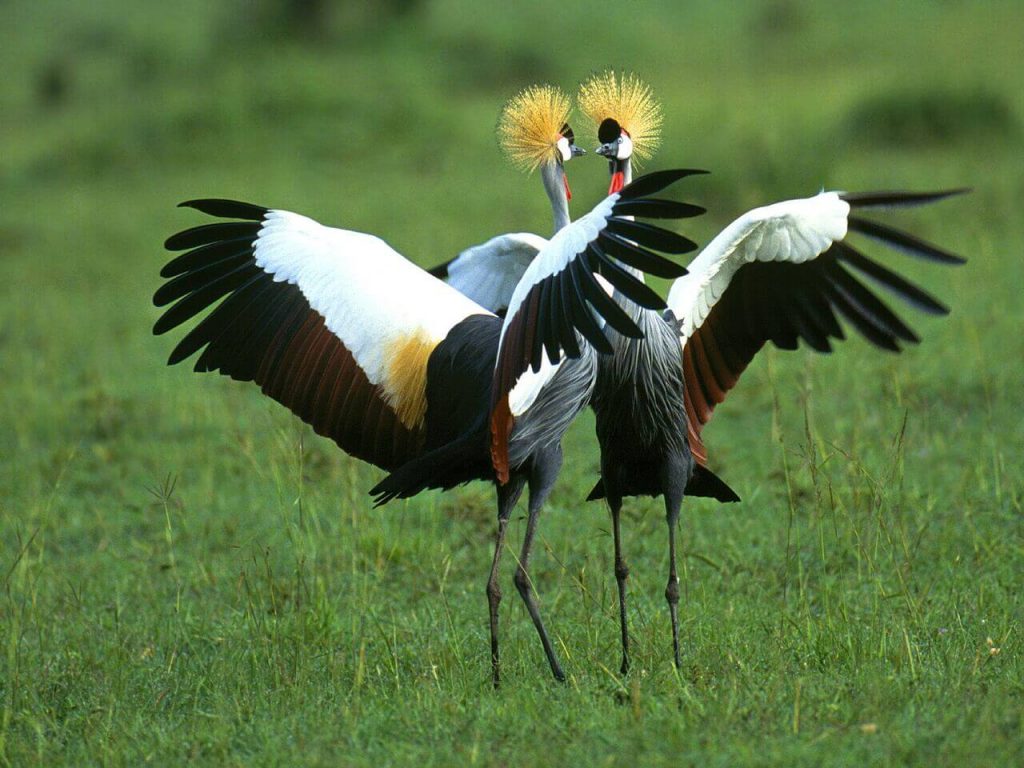
3. Queen Elizabeth National Park – Savannah and Wetland Birdwatching
Queen Elizabeth National Park is one of Uganda’s richest birding destinations, with more than 600 recorded bird species. Its combination of open savannah, crater lakes, wetlands, woodland, and the Kazinga Channel supports an impressive variety of birds.
The Kazinga Channel boat cruise is particularly rewarding because it allows visitors to observe waterbirds along the banks and on the water.
Species to look for include:
- African Fish Eagle
- African Skimmer
- Pink-backed Pelican
- Saddle-billed Stork
- Grey Crowned Crane
- Malachite Kingfisher
- Pied Kingfisher
- African Jacana
The Kasenyi Plains, Maramagambo Forest, Katwe area, and Kazinga Channel each offer different birdwatching opportunities.
Queen Elizabeth is an excellent choice for travelers who want to combine birding with game drives and other wildlife experiences.
Read our guide to Queen Elizabeth National Park to learn more about its habitats and wildlife.
4. Murchison Falls National Park – Birding Along the Nile
Murchison Falls National Park offers birdwatching across extensive savannah, woodland, riverine forest, and wetland habitats. The Victoria Nile and its surrounding vegetation attract numerous waterbirds and other species.
The Nile Delta is an important area to explore for Shoebill sightings, while boat trips along the river provide opportunities to observe birds along the banks.
Birds to look for include:
- Shoebill
- Abyssinian Ground Hornbill
- Red-throated Bee-eater
- Goliath Heron
- African Fish Eagle
- Saddle-billed Stork
- Secretary Bird
- Grey Crowned Crane
The park is particularly appealing to birders who also enjoy larger wildlife. Game drives may reveal elephants, giraffes, buffaloes, antelopes, and predators alongside the birdwatching experience.
5. Semuliki National Park – Central African Forest Birding
Semuliki National Park is one of Uganda’s most distinctive birding locations because its lowland tropical rainforest forms part of the wider Congo Basin ecosystem.
The park is especially important for birders interested in Central African forest species that are difficult to find elsewhere in East Africa.
Some notable species include:
- Black-casqued Wattled Hornbill
- Congo Serpent Eagle
- Nkulengu Rail
- White-crested Hornbill
- Red-billed Dwarf Hornbill
- Yellow-throated Cuckoo
- African Piculet
The Sempaya and Kirumia forest trails provide opportunities to explore different sections of the forest. Birding here can be challenging because many species remain high in the canopy or are easier to identify by their calls.
Semuliki is particularly rewarding for experienced birders seeking species associated with the Congo Basin.
6. Kibale Forest National Park – Forest Birds and the Green-breasted Pitta
Kibale Forest National Park is famous for chimpanzee tracking, but its tropical rainforest also supports more than 370 bird species.
One of its most sought-after birds is the Green-breasted Pitta, a colourful and elusive forest species that attracts specialist birdwatchers.
Other birds include:
- Great Blue Turaco
- African Grey Parrot
- Black-billed Turaco
- Yellow-spotted Barbet
- White-headed Wood Hoopoe
- African Pitta
- Narina Trogon
Guided forest walks offer opportunities to search for birds by sight and sound. Kibale can also be included in a longer itinerary combining forest birding with chimpanzee tracking and other wildlife activities.
7. Rwenzori Mountains National Park – High-Altitude Birding
The Rwenzori Mountains offer a different birdwatching experience, with montane forests, bamboo zones, alpine vegetation, and high-altitude habitats.
Birders visiting the mountain slopes may search for species such as:
- Rwenzori Turaco
- Rwenzori Batis
- Strange Weaver
- Archers’ Robin-Chat
- Blue-headed Sunbird
- Rwenzori Double-collared Sunbird
Birding in the Rwenzoris can involve demanding walks and changing weather conditions. The best routes depend on the species you hope to find and your preferred level of physical activity.
Rare and Special Birds to See in Uganda
Uganda offers opportunities to search for several highly sought-after African birds. Some are wetland specialists, others inhabit dense tropical forests, while a number are associated with the Albertine Rift.
| Bird species | Where to look | Why birders seek it |
|---|---|---|
| Shoebill | Mabamba Swamp, Murchison Falls | One of Africa’s most distinctive and sought-after wetland birds |
| African Green Broadbill | Bwindi | Rare Albertine Rift forest species |
| Green-breasted Pitta | Kibale Forest | Elusive and colourful forest bird |
| Shelley’s Crimsonwing | Bwindi and other highland forests | Rare montane finch |
| Great Blue Turaco | Kibale, Bwindi and other forests | Large, strikingly coloured turaco |
| Papyrus Gonolek | Mabamba and other papyrus wetlands | Specialist of papyrus swamp habitats |
| Rwenzori Turaco | Rwenzori Mountains | Distinctive highland forest bird |
| Nkulengu Rail | Semuliki | Secretive forest-dwelling rail |
| African Skimmer | Queen Elizabeth and other suitable wetlands | Unusual feeding behaviour and distinctive bill |
| Black-casqued Wattled Hornbill | Semuliki | Large Central African forest hornbill |
Sightings are never guaranteed. The likelihood of finding particular species depends on the location, season, weather, habitat conditions, and the experience of the birding guide.

Best Time for Birdwatching in Uganda
Birdwatching is possible throughout the year in Uganda, although different seasons offer different advantages.
November to April – Migratory Bird Season
This period is particularly interesting for birders hoping to see Palearctic migrants that visit Uganda during the northern winter. Wetland and open-country birding can be rewarding, with additional seasonal species complementing the resident birdlife.
June to August – Drier Conditions
The relatively drier weather can make travel between birding destinations and access to forest trails easier. This period is suitable for combining birdwatching with wildlife safaris.
December to February – Another Useful Dry Period
These months offer generally favourable travel conditions in many birding areas. Early morning excursions are especially useful for wetland and forest birdwatching.
March to May and September to November – Rainier Periods
Rain can make some forest trails and unpaved roads more challenging. However, these months can still provide rewarding birding opportunities, and the arrival of migratory species during parts of this period adds interest.
For specialist birding, the best travel dates should be selected according to the target species and the locations you want to visit.
Uganda Birding Tours and Safaris We Offer
At Uganda Wildlife Tours, we organize guided birdwatching trips for visitors interested in Uganda’s wetlands, forests, mountains, and savannah habitats. Our birding experiences can be arranged as short excursions or longer safaris, depending on your available time and the species you want to see.
Here are some options to consider:
1-Day Mabamba Birdwatching Tour
This short excursion is ideal for visitors staying in Kampala or Entebbe who want to search for the Shoebill without undertaking a long safari.
The experience includes a journey to Mabamba Swamp, a guided canoe excursion through the papyrus channels, and opportunities to observe other wetland birds.
See the details of our 1-Day Mabamba Bird Watching Tour.
5-Day Uganda Birding Tour
Our 5-day birding safari visits several important birding habitats, including Mabamba Swamp, Mabira Forest, Queen Elizabeth National Park, and Bwindi Impenetrable Forest.
This itinerary offers a varied birdwatching experience, with opportunities to search for the Shoebill, Great Blue Turaco, and Albertine Rift forest species.
Explore the 5-Day Uganda Birding Tour for the itinerary and trip details.
Customized Multi-Day Uganda Birding Safari
For travelers with more time, we can organize longer birding safaris that cover additional locations such as Semuliki National Park, Kibale Forest, Bwindi, Murchison Falls, and Queen Elizabeth National Park.
A customized itinerary can focus on particular species, Albertine Rift endemics, wetland birds, forest specialists, or a broad selection of Uganda’s birdlife.
We can also combine birdwatching with selected wildlife experiences, cultural visits, and nature walks where they complement your interests.
Birdwatching Gear and Preparation
Having the right equipment makes it easier to identify birds and enjoy long birding sessions.
- Binoculars: An 8×42 or 10×42 pair is useful for observing birds in forests, wetlands, and open habitats.
- Camera: A camera with a suitable telephoto lens is helpful for photographing distant birds.
- Field guide: A regional bird guide, such as Birds of East Africa by Stevenson and Fanshawe, can help with identification.
- Notebook or birding app: Record sightings, locations, and identifying features throughout your trip.
- Clothing: Comfortable, neutral-coloured clothing is useful for forest and wetland environments.
- Rain protection: Carry a lightweight waterproof jacket, particularly when visiting rainforest destinations.
- Walking shoes: Comfortable footwear with good grip is important for forest trails and uneven ground.
- Insect repellent and sun protection: These are useful for outdoor birding in wetlands, forests, and open areas.
For specialist birding, consider traveling with an experienced local birding guide who can identify species by their calls, plumage, habitat, and behaviour.
Responsible Birdwatching and Conservation in Uganda
Responsible birdwatching helps protect the habitats and species that make Uganda such an important destination.
During birding excursions:
- Avoid disturbing birds, particularly when they are nesting or feeding.
- Keep a respectful distance from nests and breeding sites.
- Do not handle wild birds or remove eggs, feathers, or other natural materials.
- Avoid excessive playback of bird calls, which can disturb territorial and breeding behaviour.
- Follow the instructions of local guides and park authorities.
- Carry all rubbish out of forests, wetlands, and protected areas.
- Choose local guides and responsible tourism operators who support conservation and nearby communities.
Birdwatching tourism can provide income for local communities and create incentives to protect wetlands, forests, and other important bird habitats.
FAQs About Birdwatching in Uganda
How many bird species are found in Uganda?
Uganda has more than 1,090 recorded bird species. Its wide range of habitats supports wetland birds, forest specialists, savannah species, mountain birds, and seasonal migrants.
Where is the best place to see the Shoebill in Uganda?
Mabamba Swamp is one of Uganda’s best-known destinations for Shoebill birdwatching. The wetland is explored by traditional canoe, usually with a local guide. The Nile Delta in Murchison Falls National Park is another place where birders may search for the species.
What is the best time of year for birdwatching in Uganda?
Birdwatching is possible throughout the year. November to April is particularly interesting for migratory birds, while the relatively drier periods of June to August and December to February can make travel and access to some birding areas easier.
Can beginners go birdwatching in Uganda?
Yes. Uganda is suitable for beginners as well as experienced birders. A guided excursion at Mabamba Swamp is a good introduction, while longer trips can be customized for visitors interested in identifying a wider variety of species.
How many days do I need for a Uganda birding safari?
A one-day excursion can be enough to explore Mabamba Swamp, while a five-day safari allows visitors to experience several different habitats. Birders targeting a wider range of species, particularly Albertine Rift endemics, may benefit from a longer itinerary.
Can I combine birdwatching with gorilla trekking in Uganda?
Yes. Bwindi Impenetrable National Park offers both mountain gorilla trekking and forest birdwatching. A longer itinerary can combine these experiences, subject to permit availability and your travel schedule.
Do I need a birding guide in Uganda?
A knowledgeable birding guide is highly recommended, especially for forest and specialist birding. Experienced guides can identify birds by their calls and help visitors locate elusive species that may otherwise be difficult to see.
Plan Your Birdwatching Safari with Uganda Wildlife Tours
Uganda offers far more than the opportunity to see the Shoebill. Its wetlands, tropical forests, savannahs, and mountain habitats provide birdwatching opportunities for beginners, experienced birders, photographers, and nature enthusiasts.
At Uganda Wildlife Tours, we organize birding excursions and customized safaris based on your interests, travel dates, preferred destinations, and available time. Whether you want a short Shoebill excursion at Mabamba Swamp or a multi-day birding journey through Bwindi, Semuliki, Kibale, and other birding hotspots, we can help you plan your trip.
Contact Uganda Wildlife Tours to discuss your birdwatching interests and request a customized Uganda birding safari.