
Giraffe Facts: Height, Diet, Habitat, Behavior & Where to See Them in Uganda
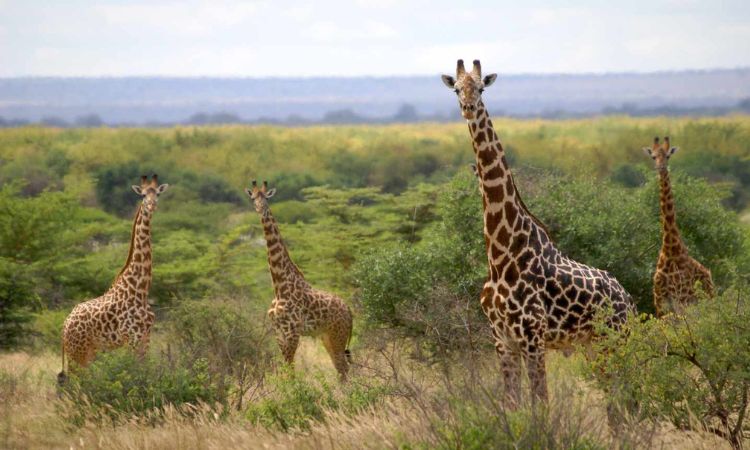
The giraffe (Giraffa camelopardalis) is the tallest land animal on Earth, and few safari encounters compare to standing beneath one in the wild. This complete guide covers everything you need to know about giraffe facts — height, weight, diet, habitat, social behavior, reproduction, and conservation status — plus exactly where to find the endangered Rothschild’s giraffe on a Uganda wildlife safari.
Whether you’re researching giraffes for curiosity’s sake or planning a giraffe safari in Uganda, this guide walks through the full picture: how tall a giraffe actually gets, what a giraffe eats, how long giraffes live, and which Ugandan national parks give you the best chance of a close encounter.
Giraffe Facts: Quick Classification Overview
Understanding where the giraffe sits in the animal kingdom helps explain just how unusual this species really is.
- Common Name: Giraffe
- Scientific Name: Giraffa camelopardalis
- Kingdom: Animalia
- Class: Mammalia
- Order: Artiodactyla
- Family: Giraffidae
- Closest Living Relative: The okapi, the giraffe’s only surviving family member
Giraffes are split into several recognized subspecies across Africa, but the one most relevant to travelers heading to East Africa is the Rothschild’s giraffe (Giraffa camelopardalis rothschildi) — one of the most endangered giraffe subspecies in the world, and the specific giraffe you’ll encounter on a Uganda giraffe safari.
How Tall Is a Giraffe? Giraffe Height and Weight Facts
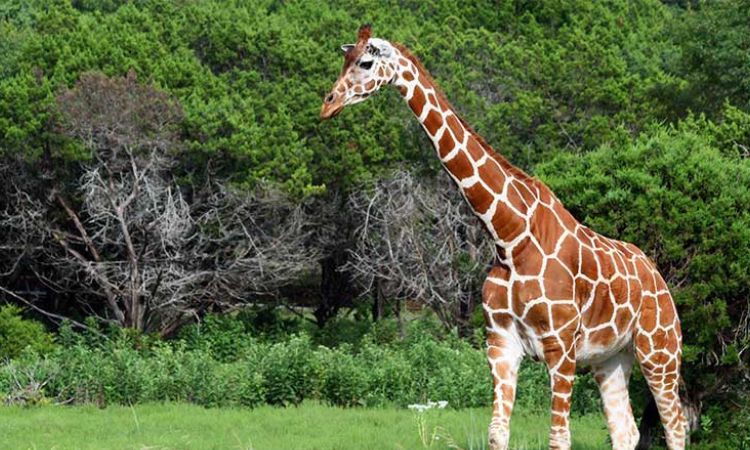
Giraffe height is the single fact everyone wants to know first, and the numbers are genuinely staggering. Adult male giraffes stand 16–18 feet (4.8–5.5 meters) tall, while females measure slightly shorter at 13–15 feet (4–4.5 meters). A newborn giraffe calf is already around 6 feet (1.8 meters) tall at birth — taller than most adult humans within hours of being born.
Giraffe weight scales with that height: adult males weigh in at roughly 1,200–1,900 kg (2,600–4,200 lbs), while females typically weigh 700–1,200 kg (1,500–2,600 lbs). Much of that height comes from an extraordinarily long neck, which can measure up to 6 feet (1.8 meters) on its own — yet, remarkably, a giraffe’s neck contains only seven vertebrae, exactly the same number found in the human neck, just dramatically elongated.
The giraffe’s coat pattern — a mosaic of brown or orange patches separated by lighter lines — is unique to each individual, much like a human fingerprint. This distinctive giraffe coat pattern also varies by subspecies; Rothschild’s giraffes, for instance, are recognizable by their pale, unmarked lower legs, which look almost like white “socks” compared to other giraffe subspecies.
Giraffe Habitat: Where Do Giraffes Live?
Giraffe habitat centers on open savanna, grassland, and open woodland across sub-Saharan Africa, where scattered acacia trees provide both food and shade. Giraffes need this specific mix of habitat because their entire feeding strategy depends on tall trees — a giraffe can’t easily browse the low grasses and shrubs that sustain most other savanna herbivores.
In Uganda specifically, the endangered Rothschild’s giraffe occupies a much narrower range than giraffes elsewhere in Africa, largely confined to a handful of protected parks. Murchison Falls National Park holds Uganda’s largest and most reliable giraffe population, with herds regularly spotted along the northern game-drive circuit near the Nile.
Lake Mburo National Park is another key Rothschild’s giraffe stronghold, and one of the only parks in Uganda where giraffes were deliberately reintroduced as part of a national conservation effort. Kidepo Valley National Park, in Uganda’s remote northeast, also supports a smaller giraffe population within its rugged, semi-arid landscape.
What Do Giraffes Eat? Giraffe Diet Explained
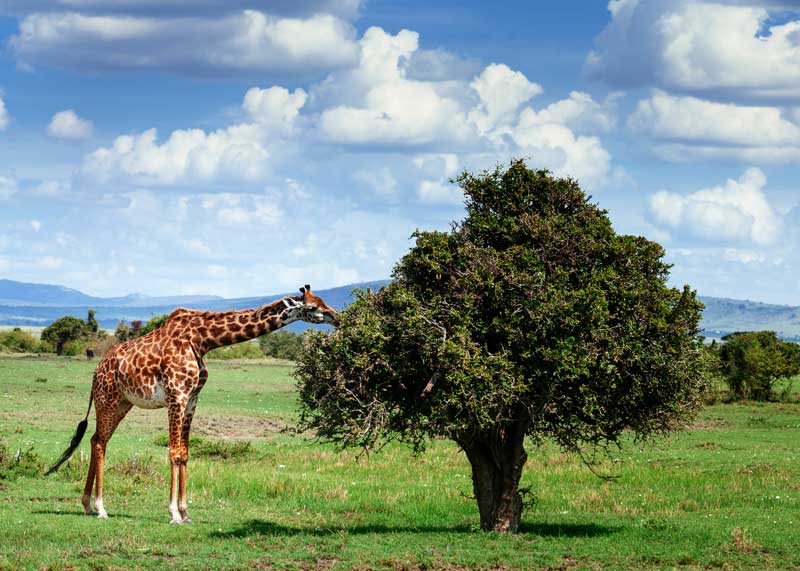
What do giraffes eat? The short answer is leaves — enormous quantities of them. Giraffes are herbivorous browsers, and their diet consists overwhelmingly of acacia leaves, shoots, and buds, which they strip from branches using a remarkably long, dark, prehensile tongue that can measure up to 18–20 inches (45–50 cm).
An adult giraffe can consume up to 34 kg (75 lbs) of vegetation per day, and the dark coloring of the giraffe’s tongue is thought to protect it from sunburn during the many hours spent reaching into direct sunlight to feed. Acacia trees are typically covered in sharp thorns, but the giraffe’s tough, leathery lips and thick saliva allow it to browse around the thorns with surprising precision.
Giraffes get much of their water directly from the moisture in leaves, meaning they can go for extended periods without drinking. When a giraffe does need to drink, it must awkwardly splay its front legs wide or bend its knees to lower its head all the way to a waterhole — a vulnerable position that leaves it exposed to predators, which is why giraffes tend to drink quickly and only when necessary.
Giraffe Behavior and Social Structure
Giraffe social behavior is famously loose compared to many other African herbivores. Giraffes live in what researchers call “fission-fusion” herds — flexible groups that split apart and reform constantly, rather than maintaining a fixed, permanent group structure. Herd size and composition can shift within hours, with individuals moving freely between groups.
Male giraffes establish dominance through a distinctive behavior called “necking” — swinging their long necks and heads to deliver forceful blows to a rival’s body, neck, or legs. These contests determine breeding rights and social rank, and while necking bouts can look brutal, they’re rarely fatal.
Giraffes are almost entirely silent to human ears, though research has documented giraffes communicating using infrasound — low-frequency sounds below the threshold of typical human hearing.
They also sleep remarkably little for a mammal of their size, often getting by on just 30 minutes to 2 hours of sleep per day, frequently taken in short standing naps rather than one continuous rest period.
Giraffe Reproduction and Lifespan
Female giraffes reach sexual maturity around 4–5 years old, while males typically don’t breed successfully until closer to 7–10 years, once they’ve won enough necking contests to establish real social standing.
Gestation lasts approximately 15 months — one of the longest pregnancies of any land mammal — and giraffes give birth standing up, meaning a newborn calf’s first experience of life is a drop of several feet to the ground.
A giraffe calf can stand within 30 minutes to an hour of birth and can run alongside its mother within a single day, an essential survival adaptation given predation pressure from lions and hyenas on young calves. Giraffe lifespan in the wild typically runs 20–25 years, with captive individuals occasionally living into their late twenties or beyond.
Giraffe Predators and Threats
Adult giraffes have few natural predators thanks to their sheer size and powerful kicking legs, capable of seriously injuring or killing a lion with a single well-placed strike. Lions remain the primary threat to adult giraffes, while young calves face additional danger from hyenas, leopards, and crocodiles near waterholes.
Beyond natural predation, giraffe conservation status has become a genuine concern in recent decades. Populations across Africa have declined sharply due to habitat loss, poaching, and civil conflict in parts of their range — a trend conservationists have referred to as a “silent extinction,” since giraffe declines have historically drawn far less public attention than those of elephants or rhinos.
The Rothschild’s giraffe found in Uganda is classified as Near Threatened, with the wild population having dropped to just a few thousand individuals before targeted conservation and reintroduction programs — including translocations into parks like Lake Mburo — began stabilizing numbers.
Giraffe Facts: Interesting Trivia
- A giraffe’s heart weighs around 11 kg (25 lbs) and must generate roughly double the blood pressure of a human heart to pump blood all the way up that long neck to the brain.
- Giraffes have a specialized network of blood vessels and valves that prevent a dangerous rush of blood to the head when they lower it suddenly to drink.
- Despite the immense neck length, giraffes share the same seven neck vertebrae found in virtually all mammals, including humans and mice.
- A group of giraffes is called a “tower” — a fitting name for East Africa’s tallest safari sighting.
- Giraffes are excellent swimmers in theory but almost never enter deep water in the wild, since their body shape makes swimming genuinely awkward and dangerous.
Where to See Giraffes in Uganda: Best Parks for a Giraffe Safari
If you want to see Rothschild’s giraffes in the wild rather than just read about them, Uganda offers some of the best and most reliable giraffe viewing anywhere in East Africa.
Murchison Falls National Park is the single best destination for a Uganda giraffe safari, with large resident herds visible on almost every game drive along the park’s northern delta plains — full details on access and pricing are in our Murchison Falls National Park entrance fees guide.
Lake Mburo National Park offers a completely different giraffe-viewing experience — it’s small enough that you can track giraffes on foot or by bike alongside zebras, impalas, and topis, making it one of the most intimate giraffe encounters available anywhere in Uganda. Check the Lake Mburo National Park entrance fee guide before you go.
Kidepo Valley National Park, though far more remote, rewards the journey with giraffe sightings against a dramatic, rugged mountain backdrop unlike anywhere else in the country.
Giraffes are also part of Uganda’s broader Big Five and iconic wildlife circuit — see our full breakdown of the Big Five animals and the top 60 must-see African safari animals for how giraffes fit into a complete Uganda wildlife itinerary alongside lions, elephants, and zebras.
FAQ: Giraffe Facts
How tall is a giraffe? Adult male giraffes stand 16–18 feet tall, while females measure slightly shorter at 13–15 feet. Even newborn calves stand around 6 feet at birth.
What do giraffes eat? Giraffes are herbivorous browsers, feeding mainly on acacia leaves, shoots, and buds using an 18–20 inch prehensile tongue. An adult can eat up to 34 kg of vegetation a day.
How long do giraffes live? Wild giraffes typically live 20–25 years, with some captive individuals living longer.
Where can I see giraffes in Uganda? Murchison Falls National Park has Uganda’s largest giraffe population, followed by Lake Mburo National Park and Kidepo Valley National Park.
Are giraffes endangered? The Rothschild’s giraffe subspecies found in Uganda is classified as Near Threatened, having declined sharply before conservation programs helped stabilize numbers.
How many hours do giraffes sleep? Giraffes sleep remarkably little — often just 30 minutes to 2 hours per day, usually in short standing naps.
Related Uganda Wildlife Guides
- Giraffes of Uganda
- Murchison Falls National Park
- Murchison Falls National Park Entrance Fees
- Lake Mburo National Park
- Lake Mburo National Park Entrance Fee
- Kidepo Valley National Park
- Queen Elizabeth National Park
- Wildlife in Queen Elizabeth National Park
- What Are the Big Five Animals
- Top 60 Must-See African Safari Animals
- Zebra Facts
- African Elephant
- Contact Us to Plan Your Safari


https://shorturl.fm/chXdQ
https://shorturl.fm/S6gXD
https://shorturl.fm/BrRYi
https://shorturl.fm/D6sOu
https://shorturl.fm/UMa4d
https://shorturl.fm/HhHY1
ya,im here