
Discover the Best Hidden Waterfalls in Uganda 2026
Waterfalls in Uganda in 2026 include secluded forest cascades, scenic mountain waterfalls, and lesser-known falls tucked away in remote valleys and rural landscapes.
Beyond the famous Sipi Falls, Uganda offers breathtaking waterfalls worth exploring for hiking, photography, nature walks, and off-the-beaten-path adventures.
While Uganda is widely known for mountain gorilla trekking, wildlife safaris, and the River Nile, its waterfalls reveal another side of the country’s natural beauty.
From powerful cascades and mist-covered cliffs to peaceful waterfalls reached by forest trails, these destinations offer rewarding experiences for travelers seeking something beyond the usual safari circuit.
In this guide to the best waterfalls in Uganda, discover hidden waterfall destinations, their locations, hiking opportunities, the best time to visit, accessibility, and practical travel tips.
Whether you are planning a Uganda adventure safari, a scenic hiking holiday, or a nature-focused road trip, these waterfalls can add a memorable experience to your itinerary.

Best waterfalls in Uganda Include;
Sipi Falls: The Crown Jewel of Uganda’s Waterfalls
Set on the foothills of Mount Elgon, close to the Kenyan border, Sipi Falls is one of Uganda’s most photogenic and peaceful natural sites. The Sipi region actually consists of three distinct waterfalls, the tallest dropping more than 100 meters into the valley below — each with its own character, and each worth building into a longer Uganda adventure holiday.
A Hiker’s Paradise
Sipi Falls isn’t just a viewpoint; it’s a genuine hiking destination. A network of trails winds through banana plantations, coffee farms, and rugged hillside, with the most popular route taking hikers to the base of all three falls. The trails suit most fitness levels, and local guides add real depth to the walk with insight into the region’s culture, plants, and wildlife. For a full list of what’s on offer here, see our guide to Sipi Falls activities.
Adrenaline-Fueled Activities
For travelers after more than scenery, abseiling down the main waterfall — a full 100-meter vertical drop — is one of the more exhilarating things you can do in this part of Uganda, combining the descent itself with sweeping views over the surrounding landscape. If you’re building a longer trip around this region, our 5 Days Uganda Safari is a good way to pair Sipi Falls with a broader wildlife circuit.
Coffee lovers shouldn’t skip a Sipi coffee tour either — Mount Elgon’s volcanic soils make this one of Uganda’s best coffee-growing regions, and visitors can tour local farms, learn the process from harvest to roast, and even roast their own beans. It’s a genuinely enriching add-on to a waterfall-focused Uganda tour package.
Best Time to Visit Sipi Falls
Sipi Falls is accessible year-round, but the dry seasons — June to August and December to February — offer the easiest hiking conditions and clearest skies. The wet season has its own appeal too: the falls run noticeably more powerful and the surrounding hillsides turn a deeper green.
Mpanga Falls: A Hidden Gem
While Sipi Falls tends to get the attention, Mpanga Falls is a genuine hidden gem in western Uganda, near the town of Kamwenge. The falls plunge into the Mpanga River Gorge in a dramatic spray of mist and roaring water, with almost none of the crowds found at more established sites.
Serene Surroundings
What sets Mpanga Falls apart is the sheer quiet of the place. It remains relatively unknown even among domestic travelers, which means you can take in the scenery — rushing water, birdcalls, the cool breeze off the gorge — largely on your own.
Nearby Attractions
While in the area, it’s worth visiting nearby Mpanga Forest, a tropical forest home to colobus monkeys and more than 550 bird species. Between the falls and the forest, this pocket of western Uganda offers a genuinely well-rounded mix of relaxation and wildlife spotting for anyone building a private Uganda safari itinerary around lesser-known sites.
How to Get There
Mpanga Falls is roughly a five-hour drive from Kampala. The roads aren’t as developed as those leading to Uganda’s more famous attractions, but the peaceful reward at the end makes the drive worthwhile.

Sezibwa Falls: A Cultural Experience
Uganda’s waterfalls aren’t purely natural attractions — many carry real cultural and spiritual weight, and Sezibwa Falls, just 35 km east of Kampala, is one of the clearest examples.
Local legend holds that the falls were created when a woman gave birth to twin streams, named Sezibwa and Bwanda, and the site holds deep spiritual significance for the Baganda people, who still visit to perform traditional rituals and leave offerings to ancestral spirits.
Cultural Significance
For travelers interested in Uganda’s heritage, Sezibwa Falls is a genuinely rewarding stop. Visitors can observe Baganda cultural practices, and in some cases take part directly, gaining real insight into local beliefs and traditions. The falls themselves sit amid lush greenery, with a calm, reflective atmosphere that suits a slower pace of travel.
Activities at Sezibwa Falls
Beyond the cultural draw, the surrounding area offers hiking trails and solid birdwatching. The calm pools at the base are ideal for a refreshing dip, and picnicking by the river is a relaxed way to spend an afternoon here.
Accessibility
Sezibwa Falls makes for an easy day trip from Kampala — a convenient way to combine Uganda’s natural beauty with its cultural history without straying far from the capital.
Karuma Falls: A Rushing Torrent
Set on the mighty Nile River, Karuma Falls is a sharp contrast to the calm of Uganda’s other waterfalls. It’s defined less by height and more by sheer volume and speed — a powerful, genuinely dangerous rush of water over rocky outcrops.
Wildlife Spotting
Karuma Falls sits near Murchison Falls National Park, one of Uganda’s most celebrated wildlife reserves, and the falls themselves attract hippos and crocodiles basking in the calmer stretches of river, along with plenty of waterfowl for birdwatchers.
Fishing and Boating
Swimming here isn’t an option given the current, but the waters are excellent for fishing and boating. Local guides run boat trips that let visitors view the falls safely from the water while taking in the surrounding wildlife, and anglers can try their luck with the Nile’s famous Nile perch.
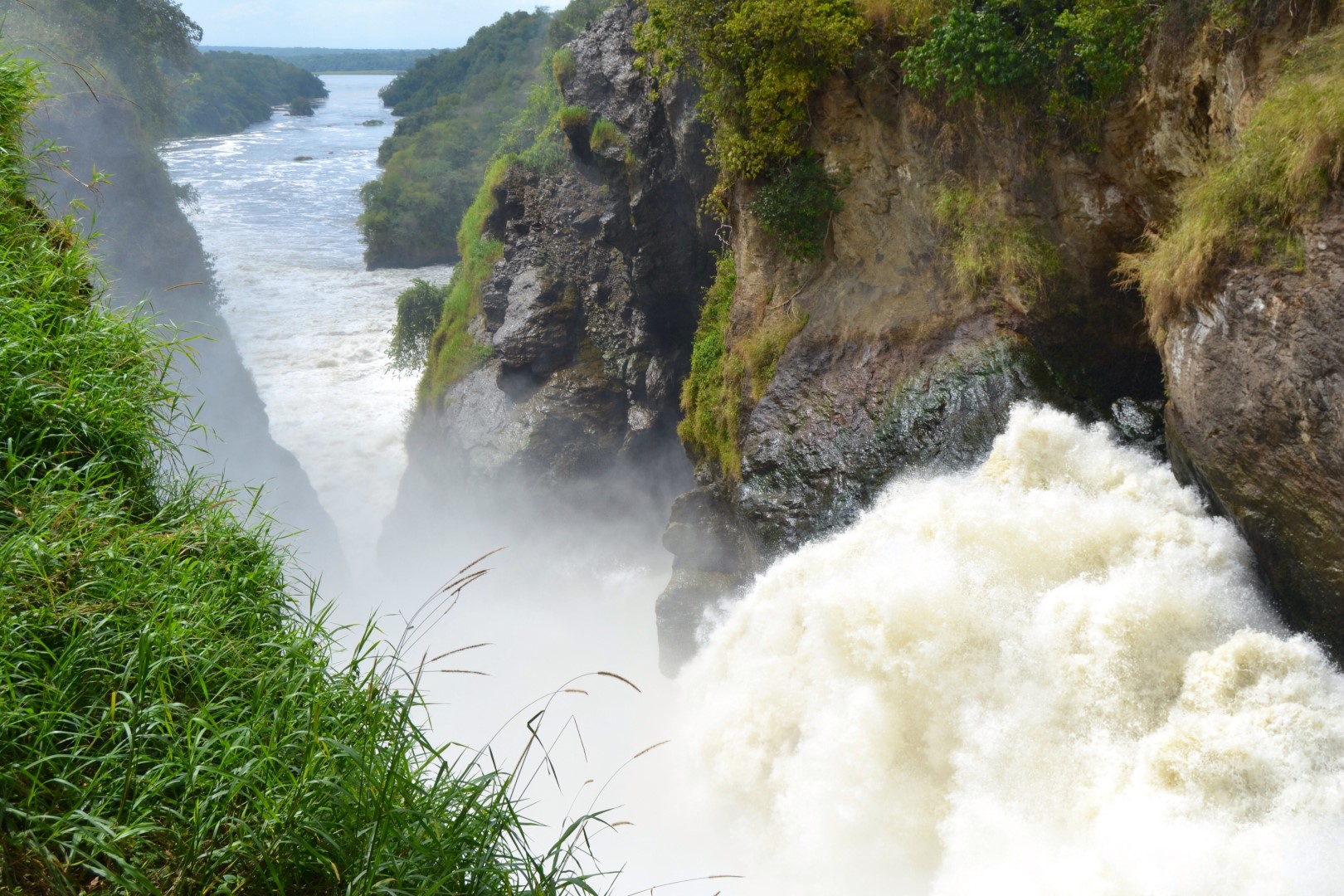
Murchison Falls: The Iconic Powerhouse
No list of Ugandan waterfalls is complete without Murchison Falls — arguably the country’s most powerful, and while not exactly hidden, it earns its place here for sheer scale.
Inside Murchison Falls National Park, the Nile narrows from over 50 meters wide down to just 7 meters, creating a thunderous roar as the river forces its way through the gorge.
Best Ways to Experience Murchison Falls
You can take in the falls from both the base and the top. A boat ride along the Nile brings you close to the churning water below, while a hike to the summit rewards you with panoramic views over the river and surrounding savannah. For an even more dramatic vantage point, our Murchison Falls balloon safari takes you over the park at sunrise.
Murchison Falls anchors some of our most popular wildlife safaris, since the national park itself holds healthy populations of elephants, lions, giraffes, and buffalo.
Pairing the falls with a full game drive is one of the best ways to build a complete Uganda wildlife safari — our 2 Days Murchison Falls Safari and 4 Days Murchison Falls Safari packages both build the falls into a broader wildlife itinerary depending on how much time you have.
Tips for Traveling to Waterfalls in Uganda
- When to visit: the dry seasons (June–August, December–February) offer the easiest hiking and sightseeing conditions.
- What to pack: comfortable hiking shoes, light clothing, a waterproof jacket, and a camera are essential for any waterfall visit — bring a change of clothes if you’re abseiling or hiking near the spray.
- Hire a guide: local guides bring real knowledge of the area’s history, wildlife, and culture, and hiring one directly supports the local economy.
- Travel responsibly: stick to designated trails, avoid littering, and be respectful at culturally significant sites like Sezibwa Falls.
Frequently Asked Questions About Waterfalls in Uganda
1. What are the most beautiful waterfalls in Uganda?
Some of the most beautiful waterfalls in Uganda include Sipi Falls, Murchison Falls, Itanda Falls, Kisiizi Falls, Aruu Falls, and Sezibwa Falls. Each offers a different experience, from powerful Nile rapids and dramatic cliffs to scenic cascades surrounded by forests and green countryside.
2. What is the most famous waterfall in Uganda?
Murchison Falls is one of Uganda’s most famous waterfalls. Located in Murchison Falls National Park, the waterfall forms where the Victoria Nile squeezes through a narrow gorge before plunging into the river below. Sipi Falls is another popular destination, particularly for hiking and scenic views.
3. Where are Sipi Falls located in Uganda?
Sipi Falls is located on the slopes of Mount Elgon in eastern Uganda, near the town of Kapchorwa. The attraction consists of three main waterfalls at different elevations and is popular for hiking, photography, coffee tours, and cultural experiences.
4. What is the most powerful waterfall in Uganda?
Murchison Falls is renowned for the immense force of the Nile as it passes through a narrow rocky gorge. The river is compressed through a gap approximately 7 metres wide, creating a powerful cascade and spectacular displays of water and mist.
5. Are there hidden waterfalls in Uganda?
Yes, Uganda has several lesser-known waterfalls beyond the popular Sipi Falls and Murchison Falls. Examples include Kisiizi Falls in southwestern Uganda, Aruu Falls in northern Uganda, and Sezibwa Falls in central Uganda. Some are accessible by road, while others require walking or hiking to reach the best viewpoints.
6. Where is Itanda Falls located?
Itanda Falls is located on the Victoria Nile near Jinja in eastern Uganda. It is known for its powerful rapids, dramatic river scenery, and adventure activities. Visitors should follow local safety guidance because the currents and rocks can be dangerous.
7. Can you swim at waterfalls in Uganda?
Swimming is possible at some designated locations near certain waterfalls, but it is unsafe at many others because of strong currents, submerged rocks, slippery surfaces, and sudden changes in water depth. Always check local conditions and follow guidance from qualified guides before entering the water.
8. What is the best time to visit waterfalls in Uganda?
The drier periods, generally from June to August and December to February, are often suitable for hiking and accessing waterfalls. During rainy periods, waterfalls may have stronger flows and greener surroundings, but trails can become muddy and slippery. Conditions vary by location and year.
9. Are waterfalls in Uganda suitable for hiking?
Yes, several waterfalls in Uganda offer hiking opportunities. Sipi Falls is particularly popular for guided hikes between its three cascades. Other destinations may involve walking along forest paths, rocky terrain, or steep slopes. Suitable footwear and a local guide are recommended where trails are challenging.
10. Which waterfalls in Uganda are near national parks?
Murchison Falls is located inside Murchison Falls National Park. Sipi Falls lies near Mount Elgon National Park, while waterfalls and cascades around southwestern Uganda can be combined with visits to nearby wildlife and cultural attractions, depending on your itinerary.
11. Can I visit waterfalls in Uganda on a safari?
Yes, waterfalls can be included in a Uganda safari itinerary. Murchison Falls combines naturally with wildlife viewing and Nile boat trips. Sipi Falls can be added to an eastern Uganda adventure, while Kisiizi Falls may complement trips around southwestern Uganda. Travel time depends on your starting point and route.
12. Are Uganda’s waterfalls suitable for family visits?
Several waterfalls, including Sezibwa Falls and some accessible viewpoints at popular destinations, can be suitable for family outings. However, steep trails, slippery rocks, and strong water currents require caution. Choose activities according to children’s ages and abilities, and keep a safe distance from dangerous edges.
13. Which waterfalls in Uganda are best for photography?
Sipi Falls is excellent for landscape photography, especially when the surrounding hills are green. Murchison Falls offers dramatic images of the Nile rushing through a narrow gorge, while Aruu Falls and Kisiizi Falls provide distinctive natural scenery. Early morning and late afternoon can offer softer light.
14. Do I need a guide to visit waterfalls in Uganda?
A guide is useful for waterfalls involving hiking trails, multiple viewpoints, or unfamiliar terrain. At destinations such as Sipi Falls, local guides can explain the landscape and surrounding communities. Always confirm access arrangements, local guiding requirements, and any applicable entrance fees before visiting.
15. Are there entrance fees for waterfalls in Uganda?
Entrance fees vary by destination. Some waterfalls are managed by national parks or local tourism organisations, while others are accessed through community-managed sites or private land. Visitors may need to pay entrance, parking, or guide fees, so confirm current charges before travelling.
16. What should I pack when visiting waterfalls in Uganda?
Pack comfortable hiking shoes with good grip, drinking water, weather-appropriate clothing, insect repellent, sunscreen, and a waterproof bag for your phone or camera. A light rain jacket is useful, and walking poles may help on steep or slippery trails.
17. Can I visit waterfalls in Uganda during the rainy season?
Yes, waterfalls can be especially impressive during the rainy season because of increased water flow. However, heavy rain may make hiking trails slippery, cause flooding, or limit access. Check local weather and trail conditions before setting out, and avoid approaching flooded rivers or unstable cliff edges.
18. What is the difference between Murchison Falls and Sipi Falls?
Murchison Falls is a powerful waterfall on the Victoria Nile inside a national park known for wildlife safaris. Sipi Falls consists of three waterfalls on the slopes of Mount Elgon and is best known for hiking, scenic countryside, and outdoor adventures. Both offer distinctive experiences for visitors to Uganda.
Why Add Waterfalls to Your Uganda Safari
Uganda’s hidden waterfalls offer a genuinely different way to experience the country beyond the standard wildlife circuit. From the postcard views of Sipi Falls to the cultural depth of Sezibwa Falls and the raw power of Karuma and Murchison, each site brings its own character to a Uganda travel itinerary.
Whether you’re chasing adrenaline, culture, or simply a quieter corner of the Pearl of Africa, these falls are worth building into your trip.
Ready to see Uganda’s hidden waterfalls for yourself? We can build a custom itinerary that pairs any of these sites with a full gorilla trekking or wildlife safari, whether you’re after a relaxed, budget-friendly route or a more private, tailored Uganda adventure holiday.
Contact us today to start planning your waterfall-focused Uganda safari and explore the untapped beauty of the Pearl of Africa.