
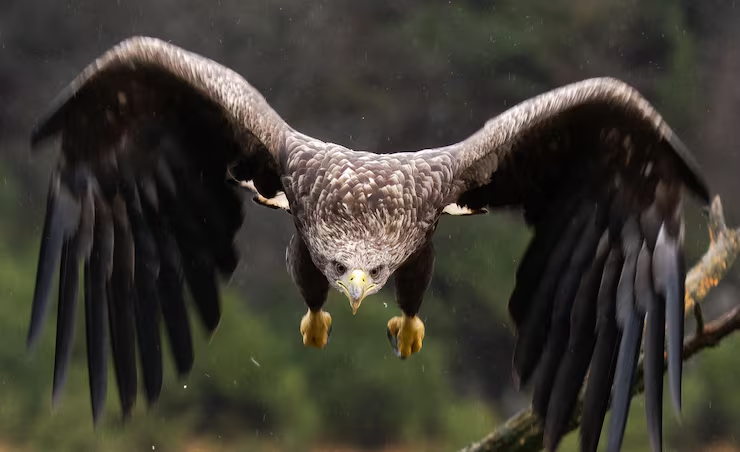
20 Interesting Facts About Eagles You Didn’t Know
Discover 20 interesting facts about eagles, including their vision, hunting skills, incredible strength, and more. From the iconic Bald Eagle to the powerful Golden Eagle and Africa’s majestic Fish Eagle, explore what makes these birds of prey true masters of the sky.
Introduction
Eagles rank among the most powerful and awe-inspiring birds of prey on Earth. With their razor-sharp talons, keen eyesight, and commanding presence, they dominate the skies wherever they soar. These magnificent raptors symbolize strength, freedom, and vision across cultures.
Whether you’re a birdwatching enthusiast in Uganda or simply curious about eagle facts, this list of 20 interesting facts about eagles reveals surprising details about their abilities, habits, and habitats.
From lightning-fast dives to enormous nests that weigh a ton, eagles continue to captivate us. Let’s dive into these amazing eagle facts!
20 Fascinating Eagle Facts
Fact #1: Eagles Have Incredible Vision – Up to 8 Times Sharper Than Humans
An eagle’s eyesight is legendary. Their eyes are almost the size of a human’s but packed with far more light-sensitive cells. They can spot a rabbit or fish from over a mile away while soaring high above.
Bald Eagles, for instance, have two foveae (focus points) in each eye, allowing them to see forward and sideways simultaneously.
Fact #2: They Dive at Speeds Up to 160 km/h (100 mph) or More
When hunting, eagles perform a “stoop” – a high-speed dive. Golden Eagles can reach nearly 200 mph in a full dive, making them one of the fastest animals on the planet. This speed helps them strike prey with devastating force.
Fact #3: Eagles Can Lift Heavy Prey Relative to Their Size
Eagles possess immense strength in their talons. A Golden Eagle can carry prey up to half its own body weight, such as young deer or foxes. Bald Eagles have been known to grab fish too heavy to fly with and swim to shore instead!
Fact #4: They Build the Largest Nests of Any Bird
Bald Eagle nests (aeries) can reach 8 feet across and weigh over a ton. One record nest in Florida was nearly 20 feet deep! Pairs often reuse and expand the same nest for decades.
Fact #5: Most Eagles Mate for Life
Eagles are typically monogamous. Once a pair bonds – often through spectacular aerial “sky-dancing” displays – they stay together for life, sharing parenting duties. African Fish Eagles are a prime example of this lifelong partnership.
Fact #6: Their Call Isn’t What You Expect
Movie sound designers often substitute the Bald Eagle’s weak, high-pitched call with the more dramatic cry of a Red-tailed Hawk. The real Bald Eagle sounds surprisingly meek for such a powerful bird.
Fact #7: Golden Eagles Have Feathered Legs (“Boots”)
Unlike many raptors, Golden Eagles have feathers all the way down their legs to their toes. This adaptation helps them hunt in cold climates and protects against prey bites.
Fact #8: African Fish Eagles Are Master Fishermen
Common across Africa, including Uganda’s lakes and rivers, these eagles snatch fish from the water’s surface with pinpoint accuracy. Their distinctive “voice of Africa” call echoes across waterways.
Fact #9: Eagles Can Live 20–30+ Years in the Wild
With few natural predators as adults, many eagles reach 20–30 years. In captivity, some have lived over 50 years. The oldest recorded wild Bald Eagle reached 38.
Fact #10: They Are Opportunistic Pirates
Bald Eagles frequently steal food from other birds like Ospreys rather than hunt themselves. They’ll harass smaller raptors mid-air until they drop their catch.
Fact #11: Juvenile Bald Eagles Look Very Different
Young Bald Eagles are mostly brown and often mistaken for Golden Eagles. They only develop the signature white head and tail after 4–5 years.
Fact #12: Eagles Soar on Thermals to Great Heights
Using rising warm air currents (thermals), eagles can glide effortlessly for hours without flapping, reaching altitudes over 10,000 feet.
Fact #13: Their Talons Are Like Vice Grips
Eagle talons exert tremendous pressure – up to 400 pounds per square inch in some species – allowing them to pierce and hold struggling prey securely.
Fact #14: Snake Eagles Specialize in Reptiles
Snake and serpent eagles (found in Africa and Asia) have thick, scaly legs for protection against venomous bites and often eat snakes whole after decapitating them.
Fact #15: Females Are Usually Larger Than Males
In most eagle species, females (hens) are significantly bigger and stronger than males – a trait called reverse sexual dimorphism common in raptors.
Fact #16: Eagles Can Swim!
If a Bald Eagle grabs a fish too heavy to carry, it may swim to shore using its powerful wings as paddles. Their feathers have some water-repellent qualities.
Fact #17: They Play With Objects
Eagles have been observed playing with sticks, plastic bottles, or even snowballs, suggesting high intelligence and curiosity.
Fact #18: Wedge-Tailed Eagles Hold the Wingspan Record
Australia’s Wedge-tailed Eagle boasts the largest verified wingspan among eagles, reaching nearly 9.5 feet (2.84 meters).
Fact #19: Eagles Have Excellent Depth Perception
Their forward-facing eyes provide superb binocular vision, crucial for judging distances during high-speed hunts.
Fact #20: Eagles Symbolize Power Across Cultures
From the Bald Eagle as the U.S. national emblem to spiritual significance in many African and Indigenous traditions, these birds represent vision, courage, and freedom.
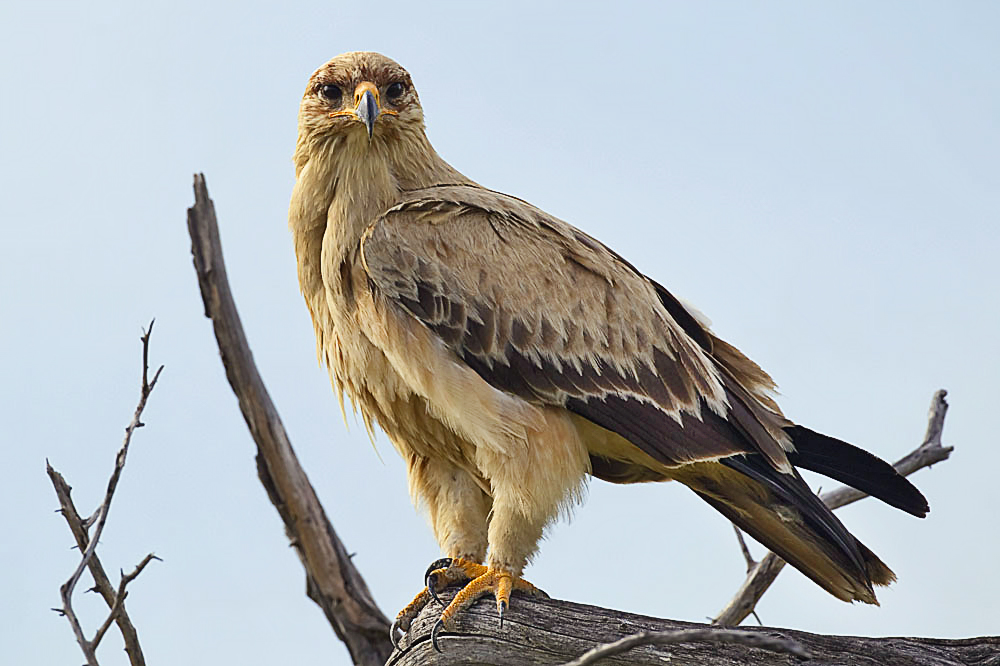
Quick Facts Table
|
Feature |
Detail |
|
Wingspan |
Up to 2.3–2.8 meters |
|
Lifespan |
20–30 years (wild) |
|
Dive Speed |
Up to 160–200 km/h |
|
Vision |
4–8x sharper than humans |
|
Nest Size |
Up to 8+ feet wide, 1+ ton |
Types of Eagles
Eagles fall into several groups:
- Sea/Fish Eagles (e.g., Bald Eagle, African Fish Eagle): Excel at catching fish near water.
- Booted Eagles (e.g., Golden Eagle): “True” eagles with feathered legs, powerful hunters of mammals.
- Snake Eagles: Specialized for reptile prey with protective leg scales.
Where Eagles Live
Eagles inhabit diverse environments across continents:
- Africa: Rivers, lakes, and savannas (perfect for birdwatching in Uganda).
- North America: Coasts, rivers, and mountains.
- Europe & Asia: Forests, cliffs, and open plains. They thrive in mountains, forests, and near water sources rich in prey.
What Eagles Eat
Eagles are carnivorous opportunists. Their diet includes:
- Fish (primary for sea eagles)
- Small mammals (rabbits, rodents)
- Birds and carrion
- Reptiles (for snake eagles)
This adaptability helps them survive in varied habitats.
FAQs About Eagles
How strong are eagles?
Extremely strong. Their talons can exert hundreds of pounds of pressure, and they can carry significant loads relative to body size.
How far can an eagle see?
Up to 2–3 miles for movement, with vision 4–8 times sharper than humans.
Which is the largest eagle?
By wingspan, the Wedge-tailed or Steller’s Sea Eagle; by weight, Steller’s Sea Eagle.
Are eagles dangerous to humans?
Generally not, though they can be defensive near nests. They pose no threat to healthy adults but should be respected in the wild.
Explore More Wildlife
Planning a trip? Discover birdwatching in Uganda or join African wildlife safaris to see African Fish Eagles in action. Check out our guides on other birds of prey.
Eagles continue to inspire awe with their power, precision, and grace. These eagle characteristics make them unmatched rulers of the avian world. Share your favorite fact or experience spotting one in the wild!


Peptex is a trusted online source for high-quality peptides designed for weight loss, rejuvenation, and body restoration. Specializing in advanced compounds like tirzepatide, retatrutide, and NAD+, Peptex delivers premium solutions for those seeking enhanced performance and wellness. Whether you’re looking to buy BPC-157 or TB-500, Peptex Shop ensures reliable products and fast EU-wide shipping. Discover cutting-edge GLP-1 peptide options tailored to modern health goals.
https://shorturl.fm/rsHma