
Great Blue Heron 8 Intriguing Facts
The Great Blue Heron (Ardea herodias), also known as the blue heron bird, is one of North America’s most iconic and majestic large wading bird species.
Standing tall and elegant in shallow waters, this impressive bird captivates birdwatchers and nature enthusiasts with its statuesque posture, slow deliberate movements, and lightning-fast strikes.
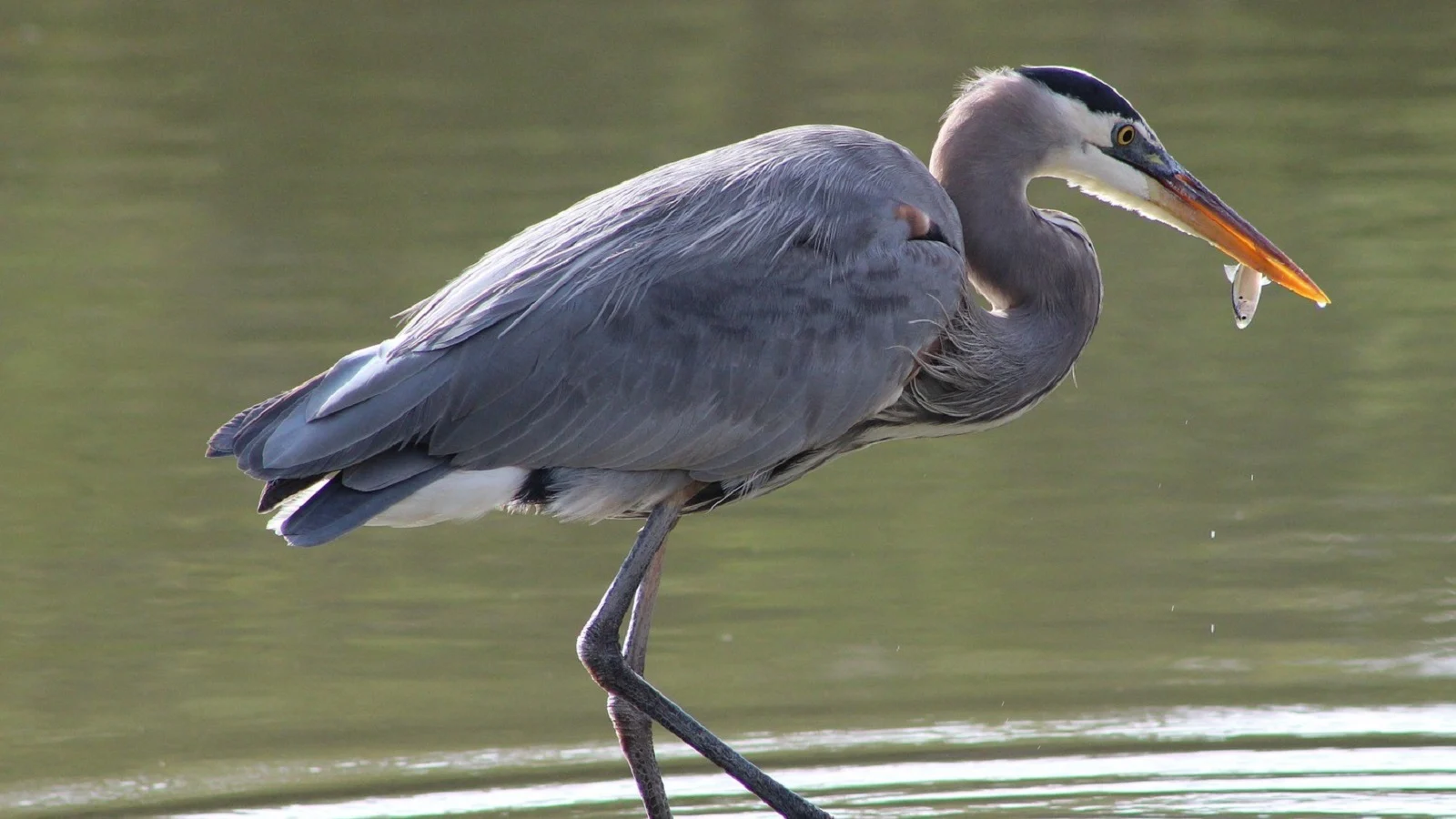
As a key member of the heron family, the Great Blue Heron plays a vital ecological role in wetland ecosystems, helping control populations of fish, amphibians, and other aquatic life while serving as an indicator of environmental health.
Its scientific importance lies in its adaptability and position at the top of many aquatic food webs. Ornithologists study heron species behavior to understand predator-prey dynamics, migration strategies, and responses to habitat changes.
Commonly found across North America in wetlands, lakes, rivers, marshes, and even coastal areas, the Great Blue Heron thrives in both freshwater and brackish environments.
Whether you’re exploring remote wilderness or urban parks, spotting this large wading bird is a highlight for many.
This comprehensive guide dives deep into the Great Blue Heron—its classification, habitat, physical traits, diet, behavior, breeding, migration, conservation, and more.
If you’re planning birdwatching adventures, consider how similar species appear in East African wetlands like Uganda’s famous Mabamba Swamp during wetland safari experiences.
Great Blue Heron Classification and Scientific Details
The scientific name of the Great Blue Heron is Ardea herodias. It belongs to the family Ardeidae (herons, egrets, and bitterns) within the order Pelecaniformes. This classification groups it with other long-legged wading birds specialized for hunting in shallow waters.
Size and measurements make it the largest heron in North America:
- Height: 115–138 cm (45–54 inches) when standing.
- Length (head to tail): 91–137 cm (36–54 inches).
- Wingspan: 167–201 cm (66–79 inches), often exceeding 6 feet.
- Weight: 1.82–3.6 kg (4–7.9 lbs), with males typically heavier than females. Despite its large frame, hollow bones keep it relatively light, around 5–6 pounds on average.
Lifespan in the wild averages around 15 years, though the oldest recorded individual reached 23 years. Juveniles face higher mortality rates, with over half not surviving their first year due to predation and environmental challenges.
Subspecies variations exist, such as the darker Pacific Great Blue Heron (A. h. fannini) along the West Coast, which is slightly smaller and non-migratory in some populations.
Physical Characteristics
The Great Blue Heron is instantly recognizable by its tall, slender stature—one of the largest herons worldwide, surpassed only by the Goliath Heron in Africa. Its blue-gray plumage gives it a subtle, slate-like appearance that blends into misty wetlands.
Key features:
- Plumage: Blue-gray body and wings with shaggy plumes on the back and neck during breeding season. The neck is rusty-gray with black-and-white streaking; the head is paler with a white face and a bold black stripe extending from the eye to long black plumes.
- Neck and legs: Exceptionally long S-shaped neck (retractable for striking) and long, thin legs that allow wading in deeper water than many other birds.
- Beak: Long, straight, yellowish, spear-like bill perfect for impaling prey.
- Flight posture: In flight, the neck folds into a distinctive “S” shape for aerodynamics, while long legs trail straight behind. Wingbeats are slow and deep, with a massive silhouette spanning over 6 feet.
These traits make the blue heron bird a master of patience and precision in its environment.
Diet and Hunting Behavior
The diet of the Great Blue Heron centers on fish but is highly opportunistic, reflecting its adaptability. It consumes fish (small to medium sizes preferred, up to 20–60 cm), frogs, salamanders, insects, crustaceans, small mammals (like rodents or gophers), reptiles (snakes, turtles), and occasionally small birds or ducklings.
Heron diet and hunting is a highlight for observers. The primary strategy is the classic “stand and wait” method: the bird stands motionless for long periods in shallow water, often belly-deep, or walks very slowly with deliberate steps. Its yellow eyes scan for movement.
When prey comes within range, the heron strikes with lightning-fast reflexes, straightening its neck and spearing or grabbing with its sharp bill. It then swallows the catch whole, sometimes shaking larger items to subdue them.
Hunting occurs day or night, thanks to excellent low-light vision. Techniques vary: wading, probing vegetation, hovering briefly, or even diving.
In fields, it stalks rodents. This heron species behavior places it high in local food chains, controlling populations while adapting to seasonal prey availability.
Behavior and Intelligence
Great Blue Herons are largely solitary when hunting, maintaining territories around prime feeding spots and defending them aggressively against intruders. They are highly territorial, especially during breeding.
Communication involves a variety of calls (loud, harsh “frahnk” or “kraak” sounds) and visual postures, such as neck stretching or wing displays. They show remarkable adaptability to human environments, nesting near cities or foraging in suburban ponds, though they remain wary of close disturbance.
Their intelligence shines in patience and problem-solving—standing completely still for minutes or hours demonstrates incredible focus and energy conservation.
Breeding and Nesting
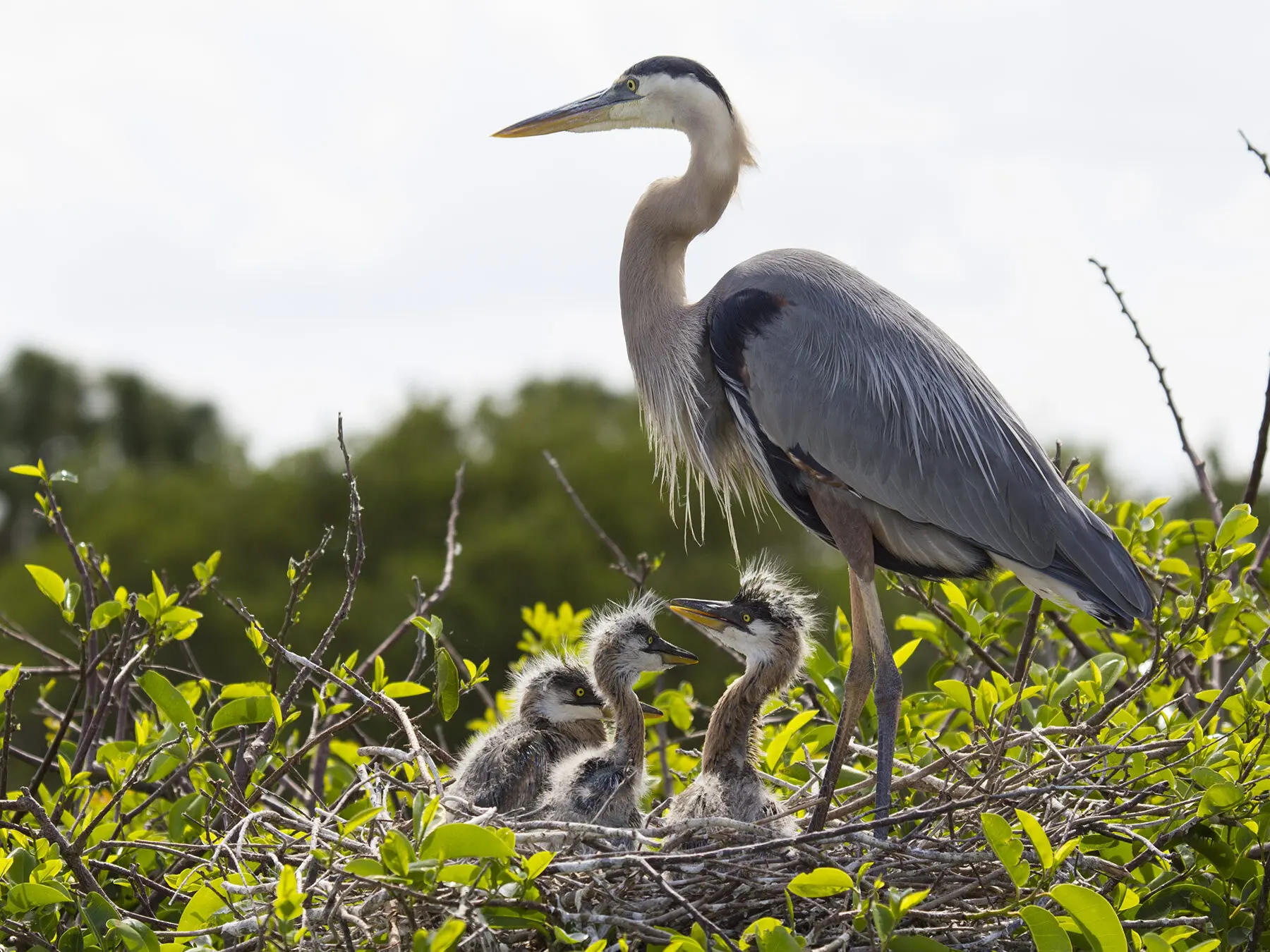
Breeding occurs in colonies called rookeries, often with dozens to hundreds of pairs nesting together in tall trees near water for safety in numbers. Nests are bulky stick platforms, up to 1–1.2 meters wide, built high in trees or shrubs.
Courtship involves elaborate displays: males perform dances, stretch necks, and offer sticks to females. The female lays 3–7 blue eggs (average larger in northern populations).
Incubation lasts about 26–30 days, shared by both parents. Chicks are altricial (helpless at hatching) and fledge after 1.5–2.5 months. Parental care is intensive, with both adults feeding regurgitated food to the young.
Rookeries can be noisy and crowded, providing protection from predators like raccoons, crows, and eagles through collective vigilance.
Migration Patterns
Migration varies by population. Northern birds (east of the Rockies and in Canada) fly south in winter to the southern U.S., Mexico, Central America, or northern South America when waters freeze. They travel alone or in small flocks, day or night, at speeds of 32–48 km/h (20–30 mph).
Southern and coastal populations, including many in the Pacific Northwest and Florida, are often year-round residents. Pacific subspecies like fannini are largely non-migratory. Timing usually sees northern birds returning in late March to early April as ice melts.
Flight distances can be significant, covering hundreds of miles. This partial migration allows the species to exploit seasonal resources while minimizing energy expenditure in milder climates.
Great Blue Heron Habitat and Distribution
The Great Blue Heron has one of the broadest distributions among herons, spanning most of North America from Alaska and southern Canada in summer to Central America, the Caribbean, northern South America, and even the Galápagos Islands. It is common near shores of open water and wetlands.
Primary habitats include:
- Freshwater wetlands, lakes, rivers, ponds, and marshes.
- Coastal estuaries, mangroves, and saltwater marshes.
- Occasionally meadows, farmland, and open fields for foraging.
Northern populations breed in summer across Canada and the northern U.S., while southern populations often remain year-round in milder climates like Florida or coastal California. The bird’s adaptability allows it to exploit diverse environments, from remote wilderness to areas near human development.
Regional breakdowns:
- Northern range: Summer breeder in Alaska, Canada, and northern U.S.; migrates south in winter.
- Central and southern U.S.: Year-round resident in many areas.
- Coastal and tropical: Permanent or wintering populations in Mexico, Caribbean, and northern Colombia/Venezuela.
In East Africa, while the Great Blue Heron itself is not native, similar large wading birds thrive in wetlands. Birdwatching safaris in Uganda, particularly at Mabamba Swamp near Lake Victoria, offer excellent opportunities to observe herons, egrets, and other wetland species alongside the iconic Shoebill. Wetland safari experiences here highlight the global importance of such habitats for wading birds.
Threats and Conservation
The Great Blue Heron is listed as Least Concern by the IUCN, with stable or increasing populations in many areas due to its wide range and adaptability. However, local threats persist.
Main challenges:
- Habitat loss: Wetland destruction and drainage for agriculture or development.
- Pollution: Pesticides, toxins, and water contamination affecting prey and health.
- Human disturbance: Colony abandonment due to nearby activity, especially early in breeding season.
- Predation and other factors: Eagles, raccoons, and occasional shooting (historically more common).
Some subspecies, like the Pacific Great Blue Heron, face additional pressures and are listed as Special Concern in parts of Canada. Conservation efforts focus on protecting rookeries, restoring wetlands, and reducing disturbance. As a protected species under migratory bird treaties, it benefits from habitat preservation.
Great Blue Heron Fun Facts
Here are some engaging blue heron facts:
- It can stand completely still for extended periods, resembling a statue to ambush prey.
- Despite its size, it weighs only 5–6 pounds thanks to hollow bones.
- Wingspan routinely exceeds 6 feet, creating an impressive silhouette in flight.
- It hunts using lightning-fast reflexes—strikes can be faster than the eye can follow.
- Nests can be massive, and colonies sometimes exceed 500 pairs.
- It has excellent night vision, allowing hunting after dark.
- Occasionally wanders far outside its normal range, with rare sightings in unexpected locations.
These traits make the Great Blue Heron a favorite for wildlife photography and observation.
Comparison with Similar Species
People often confuse the Great Blue Heron with cranes or other herons. Here’s a helpful comparison:
|
Feature |
Great Blue Heron |
Grey Heron (Europe/Asia/Africa) |
Crane (e.g., Sandhill Crane) |
|
Neck shape in flight |
Folded into “S” curve |
Folded into “S” curve |
Straight and extended |
|
Hunting style |
Stand-and-wait, spear fish |
Similar wading and spearing |
Ground foraging, often in flocks |
|
Plumage |
Blue-gray with black head stripe |
Gray with white head/neck |
Brownish-gray, often with red crown |
|
Size |
Larger, taller (up to 4.5 ft) |
Slightly smaller |
Similar height but bulkier body |
|
Legs in flight |
Trailing straight behind |
Trailing straight behind |
Trailing straight behind |
|
Primary habitat |
Wetlands, shallow water |
Wetlands, rivers |
Fields, wetlands, open areas |
The Great Blue Heron is larger than the Grey Heron and differs in head pattern and range. Unlike cranes, herons do not have the same vocal trumpet calls or flocking foraging behavior.
FAQs – Great Blue Heron
Where do Great Blue Herons live?
They inhabit wetlands, lakes, rivers, marshes, and coastal areas across North America, with some populations extending to Central and northern South America.
What do Great Blue Herons eat?
Primarily fish, but also frogs, insects, small mammals, reptiles, and other aquatic prey. They are opportunistic hunters.
Are Great Blue Herons endangered?
No, they are classified as Least Concern by the IUCN, though local populations can face threats from habitat loss.
How big do they get?
Adults stand 3–4.5 feet tall with a wingspan of 5.5–6.5+ feet and weigh about 5–6 pounds.
Do Great Blue Herons migrate?
Northern populations do, flying south in winter; southern ones often stay year-round.
Conclusion
The Great Blue Heron stands as a symbol of wetland vitality and the quiet power of nature. Its ecological importance—regulating prey populations and thriving in diverse habitats—underscores the need to protect wetlands worldwide. From its patient hunting to impressive flight and colonial nesting, this large wading bird embodies adaptability and grace.
Whether observing heron habitat and behavior in North America or exploring analogous wetland ecosystems, the experience enriches our connection to the natural world.
For those in East Africa, birdwatching safaris in Uganda at sites like Mabamba Swamp offer thrilling encounters with diverse wading birds and the rare Shoebill during nature tours in East Africa.
Plan your next wetland safari experience to witness these magnificent birds in action and support conservation through responsible tourism.
Discover more about avian wonders and plan your adventure today—wetlands await!