
Chimpanzee: Top Facts, Habitat, Diet, Behavior & More
Learn everything about chimpanzees, including habitat, diet, intelligence, behavior, lifespan, threats, and conservation efforts. Discover the best places for chimpanzee trekking in Africa, with a focus on Uganda’s premier safari destinations like Kibale Forest National Park.
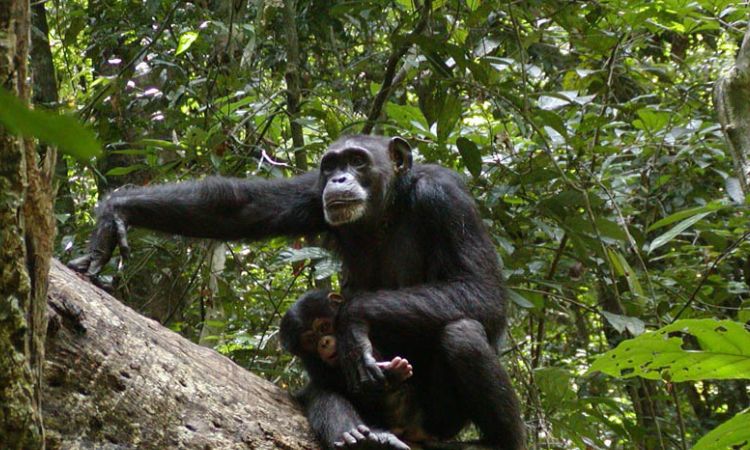
The chimpanzee, pronounced /ˌtʃɪmpənˈziː/ or simply “chimp-an-zee,” is one of the most intelligent and closely related animals to humans, sharing about 98.7% of our DNA.
Found mainly in Africa’s tropical forests and savannas, chimpanzees are renowned for their complex social behavior, tool use, and emotional intelligence.
These great apes, part of the Hominidae family alongside humans, gorillas, orangutans, and bonobos, captivate us with their human-like traits, from problem-solving to forming deep family bonds.
But chimpanzees face severe threats, making conservation crucial. In this comprehensive guide, we’ll explore everything you need to know about chimpanzees, including comparisons to other apes, their mating habits, and top spots for chimpanzee trekking in Uganda and beyond.
What Is a Chimpanzee?
Chimpanzees (Pan troglodytes) are great apes, not monkeys, belonging to the primate order but distinguished by their lack of a tail, larger brains, and more complex behaviors. They are classified in the Hominidae family, often called the “chimpanzee family” in casual terms, which emphasizes their close evolutionary ties to humans.
Unlike monkeys, which include Old World and New World species like baboons or capuchins (types of monkeys with tails and smaller statures), chimpanzees are tailless apes adapted for brachiation—swinging through trees with powerful arms.
Physically, adult chimpanzees stand about 4-5.5 feet tall when upright, weighing 70-130 pounds for males and slightly less for females. They have black hair, pinkish faces that darken with age, and prominent ears.
Their teeth are notable: large canines for display during conflicts or tearing food, molars for grinding vegetation, and incisors for biting fruits. Chimpanzee teeth reflect their omnivorous diet and social dynamics, where males often bare fangs in dominance displays.
In terms of chimpanzee vs. human, the genetic similarity is striking—differing by just 1.3% in DNA sequence—but leads to vast differences in anatomy and society.
Humans have evolved bipedalism and larger brains, while chimps retain arboreal adaptations. Chimpanzees diverged from the human lineage about 6-7 million years ago, making them our closest living relatives alongside bonobos.
Chimpanzee Habitat and Distribution
Chimpanzees inhabit equatorial Africa, spanning from Senegal in the west to Uganda and Tanzania in the east. Their primary habitats include dense tropical rainforests, woodlands, and savannas, where they thrive in humid, fruit-rich environments.
Key countries for chimpanzee habitat in Africa are the Democratic Republic of Congo, Gabon, Cameroon, Uganda, Tanzania, and Rwanda.
In Uganda, chimpanzees are abundant in Kibale Forest National Park and Budongo Forest, offering ideal conditions for chimpanzee trekking amid lush greenery and diverse wildlife.
These areas provide not just habitat but also opportunities for eco-tourism, boosting local economies through safaris. Maps of chimpanzee distribution show concentrations in the Congo Basin, with isolated populations in West Africa facing fragmentation due to human encroachment.
Climate change and deforestation are altering these habitats, pushing chimps into higher altitudes or conflict zones with humans.
Chimpanzee Diet
Chimpanzees are omnivores with a diet dominated by fruits (about 60%), supplemented by leaves, seeds, flowers, and bark. They forage opportunistically, using their strong teeth to crack nuts or strip bark. Insects like termites and ants form a protein-rich part, often extracted with tools—chimps fashion sticks to “fish” for termites, showcasing ingenuity.
Occasionally, they hunt small mammals, including monkeys, using cooperative strategies where males lead charges. This meat-eating behavior, though rare (1-5% of diet), highlights their predatory side. In captivity or sanctuaries, diets mimic wild ones to maintain health, but wild chimps adapt seasonally, feasting on figs during abundance.
Their teeth play a key role: sharp canines for capturing prey, broad molars for processing fibrous plants.
Chimpanzee Behavior and Social Structure
Chimpanzees live in fission-fusion communities of 20-150 individuals, splitting into smaller parties for foraging and reuniting at night. Social structure revolves around male dominance hierarchies, with alpha males leading through alliances and aggression. Females are more fluid, often migrating between groups.
Communication includes vocalizations (pants, hoots), gestures, and facial expressions. Tool-making is iconic: stripping branches for termite probes or using leaves as sponges.
Mating is promiscuous; females in estrus (swollen genitals) attract multiple males, leading to group copulations to confuse paternity and reduce infanticide. Family bonds are strong—mothers raise offspring for 5-7 years, teaching skills in the “chimpanzee family” unit.
Behavior can be violent: territorial wars between groups, including lethal raids, echo human conflicts.
Chimpanzee Intelligence
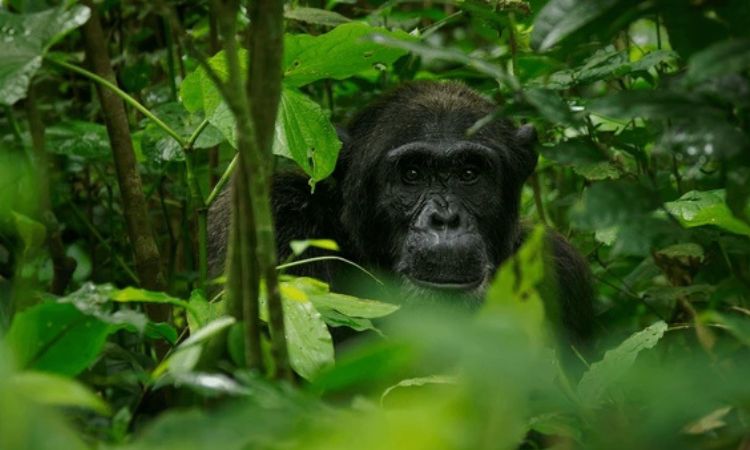
Chimpanzees boast remarkable intelligence, rivaling young human children in some tasks. They excel in problem-solving, using tools like rocks to crack nuts or sticks for hunting. Memory tests show chimps outperforming humans in short-term recall.
Emotional intelligence shines through empathy, grief, and self-awareness—they recognize themselves in mirrors. Chimpanzees and humans share traits like deception and cooperation, but chimps lack complex language.
In chimpanzee vs. human intelligence, while we dominate abstract thinking, chimps’ spatial and social cognition is superior in wild contexts.
Chimpanzee Lifespan
Chimpanzees live 40-50 years in the wild, influenced by predation, disease, and food scarcity. In captivity, they reach 50-60 years with veterinary care. Infants face high mortality, but survivors thrive under maternal care.
Factors like habitat quality in Uganda’s forests extend lifespans compared to fragmented areas.
Chimpanzee vs Gorilla vs Bonobo
Chimpanzees differ markedly from gorillas and bonobos. Here’s a comparison:
|
Aspect |
Chimpanzee |
Gorilla |
Bonobo |
|
Size |
70-130 lbs, 4-5.5 ft |
300-400 lbs, 5-6 ft |
70-100 lbs, 4-5 ft |
|
Behavior |
Aggressive, territorial |
Peaceful, herbivorous groups |
Matriarchal, peaceful, frequent sex for bonds |
|
Aggression |
High, wars between groups |
Low, defensive |
Very low, resolved socially |
|
Intelligence |
High tool use, hunting |
Moderate, less tool-oriented |
High, empathetic, problem-solving |
|
Habitat |
Forests/savannas, Central/West Africa |
Dense forests, Central Africa |
Forests south of Congo River |
Chimpanzees are more aggressive than bonobos (their close relatives) and smaller than gorillas. Vs. monkeys: Apes like chimps lack tails and have broader shoulders; monkeys (e.g., baboons) are smaller, tailed, and less intelligent.
Threats Facing Chimpanzees
Habitat loss from logging, agriculture, and mining devastates populations. Poaching for bushmeat, pet trade, and traditional medicine kills thousands annually. Diseases like Ebola wipe out groups, and climate change exacerbates food shortages.
In Uganda, human-wildlife conflict rises as farms encroach on forests.
Chimpanzee Conservation Status
Classified as Endangered by IUCN, with populations declining 80% in recent decades. Organizations like Jane Goodall Institute, WWF, and AWF lead efforts through protected areas and anti-poaching.
Ecotourism in Uganda, via chimpanzee tracking in Kibale, funds conservation while educating visitors.
Where to See Chimpanzees in the Wild
For an unforgettable safari, Uganda tops the list for chimpanzee trekking. Kibale Forest National Park hosts over 1,500 chimps, with guided treks offering close encounters. Budongo Forest provides habituated groups in a serene setting, ideal for combining with gorilla safaris.
Other best places in Africa include Tanzania’s Mahale Mountains and Gombe Stream (Jane Goodall’s site), Rwanda’s Nyungwe Forest, and Congo’s Odzala-Kokoua. Uganda’s accessibility, affordable permits, and biodiversity make it prime for chimpanzee tracking—book a Uganda safari for ethical, immersive experiences.
FAQs about Chimpanzee
Are chimpanzees dangerous?
Chimpanzees can be aggressive, especially males defending territory, but habituated groups in safaris are generally safe with guides.
How smart are chimpanzees?
Extremely— they use tools, plan hunts, and show emotions like humans.
Can chimpanzees use tools?
Yes, famously for fishing termites or cracking nuts.
How close are chimpanzees to humans?
They share 98.7% DNA and similar behaviors.
Can chimpanzees be kept as pets?
No—it’s illegal, unethical, and dangerous due to their strength and needs.