
Endangered Animals List: Critically Endangered Species
The world’s most endangered animals include:
- Vaquita:about 7–10 left
- Northern white rhino:2 left, both female
- Hainan gibbon:about 40
- Sumatran rhino:fewer than 50
- Javan rhino:about 50
- Saola:perhaps 50–300
- Amur leopard:fewer than 130
- Kākāpō:about 240
- Cross River gorilla:200–300
- Black rhino:about 6,800
All are listed as Critically Endangered (CR) on the IUCN Red List, meaning they face an extremely high risk of extinction in the wild. The northern white rhino is functionally extinct: with no males left, it can no longer breed naturally.
According to the IUCN Red List, more than 49,500 species are threatened with extinction, out of over 175,900 species assessed. Thousands of these are Critically Endangered. The main threats are habitat loss, poaching and illegal wildlife trade, climate change, pollution and disease.
This endangered animals list covers mammals, birds, reptiles and marine life, with current population estimates, main threats and the conservation efforts helping them. It also shows where conservation is working. For example, mountain gorillas have grown to more than 1,000 individuals thanks to protection and responsible tourism, much of it in Uganda’s Bwindi Impenetrable National Park.
Endangered Animals List at a Glance
| Animal | Estimated population | IUCN status | Where it lives |
| Vaquita | About 7–10 | Critically Endangered | Gulf of California, Mexico |
| Northern white rhino | 2 (both female) | Critically Endangered (functionally extinct) | Ol Pejeta Conservancy, Kenya |
| Javan rhino | About 50, possibly fewer | Critically Endangered | Ujung Kulon National Park, Indonesia |
| Amur leopard | Fewer than 130 | Critically Endangered | Russian Far East and northeast China |
| Saola | Perhaps 50–300 | Critically Endangered | Annamite Mountains, Vietnam and Laos |
| Hainan gibbon | About 40 | Critically Endangered | Hainan Island, China |
| Kākāpō | About 240 | Critically Endangered | Predator-free islands, New Zealand |
| Black rhino | About 6,800 | Critically Endangered | Eastern and southern Africa |
| Sumatran rhino | Fewer than 50 | Critically Endangered | Sumatra and Borneo, Indonesia |
| Cross River gorilla | 200–300 | Critically Endangered | Nigeria–Cameroon border |
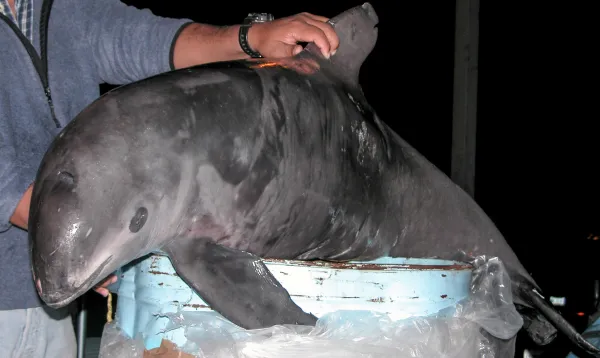
1. Vaquita (Phocoena sinus)
The vaquita, the world’s smallest and rarest marine mammal, tops the list of critically endangered animals. It lives only in a tiny area of the northern Gulf of California in Mexico. Recent acoustic and visual surveys found between 7 and 10 individuals, including at least one or two calves.
This suggests the population may have stabilized slightly, but it has still fallen by more than 99% since the 1990s.
Main threat: Drowning in illegal gillnets set to catch totoaba, a fish whose swim bladder is traded illegally.
Conservation: International patrols, acoustic monitoring and efforts to remove gillnets continue, but enforcement remains difficult. Unless no more vaquitas die in nets, extinction remains a real risk in the near term.
2. Northern White Rhinoceros (Ceratotherium simum cottoni)
Only two northern white rhinos remain in the world, Najin and her daughter Fatu. Both are females and live under 24-hour armed protection at Ol Pejeta Conservancy in Kenya. With no males left, the subspecies is functionally extinct.
Scientists are using advanced reproductive technology to try to save it. This includes creating embryos in the laboratory from eggs collected from Fatu and stored sperm from dead males, then transferring them to southern white rhino surrogate mothers.
Main threat: Poaching for rhino horn.
Conservation: Strict security and international scientific collaboration on assisted reproduction.
3. Javan Rhinoceros (Rhinoceros sondaicus)
The Javan rhino is one of the rarest large mammals on Earth. The entire population, about 50 individuals and possibly fewer, lives in a single park, Ujung Kulon National Park on the island of Java, Indonesia. A major poaching case uncovered in 2023–2024 suggests that more than 20 rhinos may have been killed in recent years, raising serious concern about the species’ future.
Main threats: Poaching, a tiny gene pool, disease, and the risk of a volcanic eruption or tsunami wiping out the only population.
Conservation: Stronger anti-poaching patrols, camera-trap monitoring and plans to create a second population elsewhere.
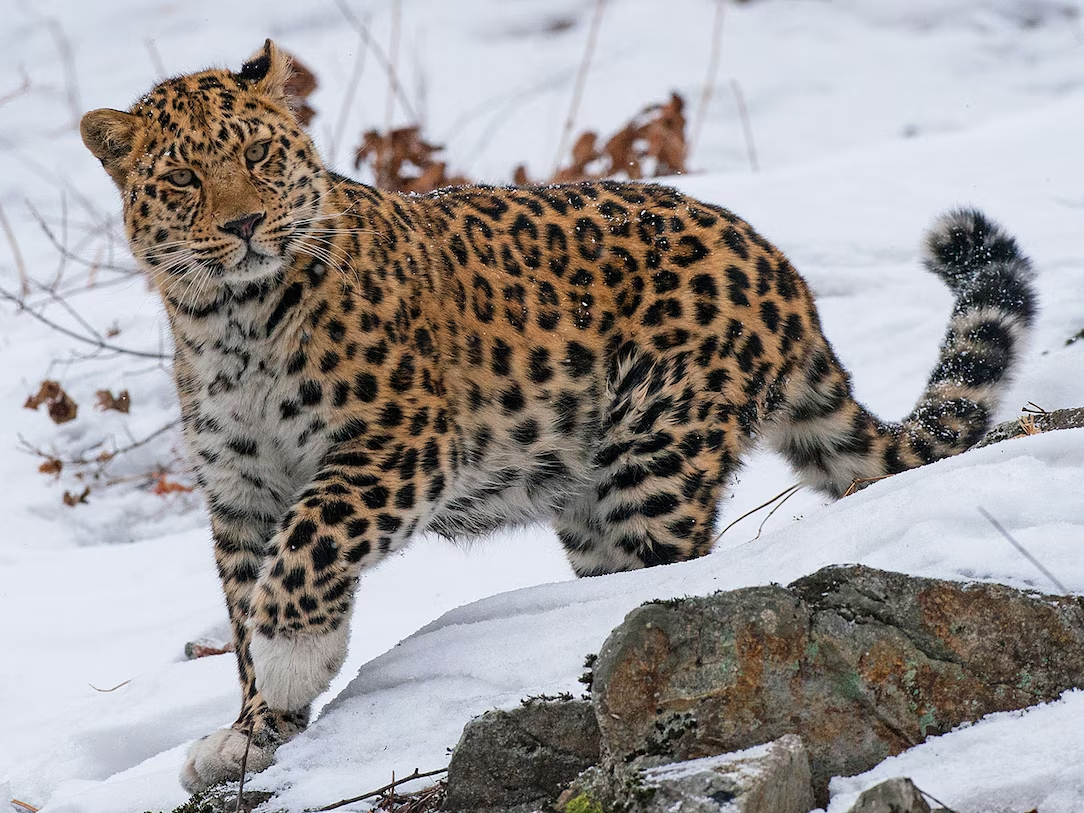
4. Amur Leopard (Panthera pardus orientalis)
Fewer than 130 Amur leopards remain in the wild, mainly in the Russian Far East and along the border in northeast China. This big cat has the smallest wild population of any leopard subspecies.
Main threats: Habitat loss and fragmentation, poaching and a shortage of prey.
Conservation: Cross-border protected areas, such as Russia’s Land of the Leopard National Park, and anti-poaching efforts have helped numbers grow slowly from about 30 in the early 2000s.
5. Saola (Pseudoryx nghetinhensis)
Known as the “Asian unicorn”, the saola is a shy forest bovine first discovered by scientists in 1992. Perhaps 50–300 individuals survive in the Annamite Mountains of Vietnam and Laos, but no one knows for sure. It has not been confirmed in the wild by photograph for over a decade.
Main threat: Wire snares set for bushmeat, which kill saolas by accident.
Conservation: Snare-removal patrols, camera-trap surveys and searches using environmental DNA (eDNA) by local and international teams.
6. Hainan Gibbon (Nomascus hainanus)
With around 40 individuals, the Hainan gibbon is the world’s rarest ape and one of the rarest primates. All of them live in a few family groups in one forest, Bawangling National Nature Reserve on Hainan Island, China. The population has slowly grown from fewer than 10 in the 1970s.
Main threats: Past forest destruction, and the risks of a tiny population, such as inbreeding, disease and typhoons.
Conservation: Strict habitat protection, forest restoration to link habitat patches, and close monitoring of every family group.
7. Kākāpō (Strigops habroptilus)
The kākāpō is a flightless, nocturnal parrot found only in New Zealand. About 240 birds survive, all managed intensively on predator-free islands. Kākāpō breed only in years when rimu trees produce heavy crops of fruit, which happens every two to four years.
Main threats: Introduced predators such as stoats, cats and rats, which wiped them out on the mainland. Low breeding rates and low genetic diversity are also a problem.
Conservation: One of the world’s most hands-on recovery programs. Every bird is named and tracked, and the program includes supplementary feeding, nest monitoring and artificial insemination. Numbers have grown from just 51 birds in 1995.
8. Black Rhino (Diceros bicornis)
About 6,800 black rhinos live in the wild across eastern and southern Africa. The species is still Critically Endangered, but it is slowly recovering. Numbers have more than doubled from a low of about 2,300 in the mid-1990s, and recent counts show growth of about 5% a year.
Main threat: Poaching for rhino horn.
Conservation: Anti-poaching patrols, dehorning, moving rhinos to new safe areas and community conservancies in Namibia, South Africa and Kenya have driven these gains. The three surviving subspecies are the south-central (about 2,700), south-western (about 2,600) and eastern (about 1,500) black rhino.
9. Sumatran Rhinoceros (Dicerorhinus sumatrensis)
The Sumatran rhino is the smallest and most ancient living rhino, covered in reddish hair. Fewer than 50 individuals (estimates range from 34 to 47) survive in small, scattered populations on Sumatra, with at least one in Indonesian Borneo (Kalimantan).
Main threats: Habitat loss, past poaching, and populations too small and scattered for rhinos to find mates.
Conservation: Captive breeding at sanctuaries in Sumatra and Kalimantan, where several calves have been born, along with forest protection.
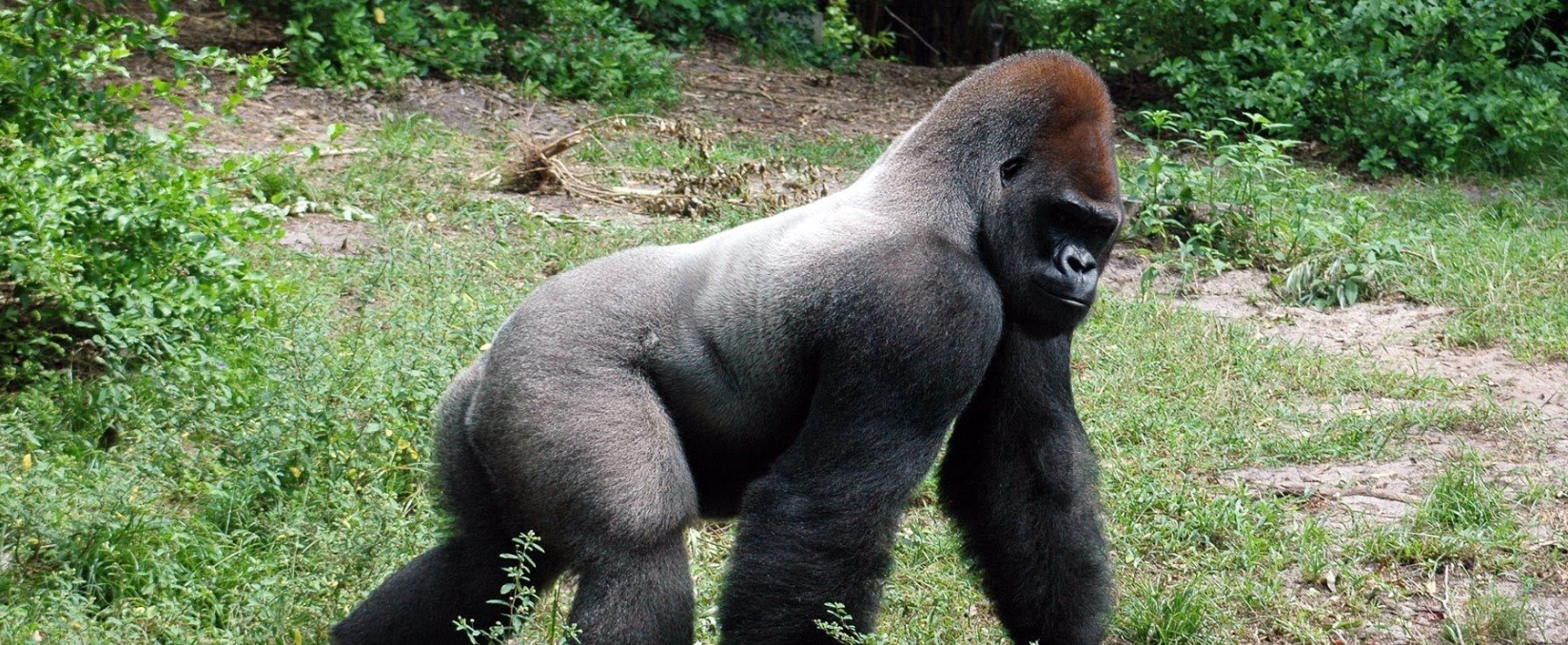
10. Cross River Gorilla (Gorilla gorilla diehli)
The Cross River gorilla is the rarest gorilla in the world. Only 200–300 individuals remain in fragmented forests along the border between Nigeria and Cameroon.
Main threats: Bushmeat hunting, and habitat loss from farming, logging and roads.
Conservation: Cross-border protected areas, ranger patrols and community education. Compare it with its cousins in our facts about mountain gorillas guide.
Other Notable Critically Endangered Animals
- Tapanuli orangutan (Pongo tapanuliensis):Fewer than 800 individuals in a small area of North Sumatra. It is the world’s rarest great ape and is highly vulnerable to habitat loss from roads, mining and a hydropower project.
- Yangtze giant softshell turtle (Rafetus swinhoei):Only about three known individuals remain in China and Vietnam, with no confirmed breeding pair. The last known female died in 2023, making natural breeding almost impossible.
- African penguin (Spheniscus demersus):Uplisted to Critically Endangered in 2024, because of food shortages from overfishing and climate change. Fewer than 10,000 breeding pairs remain in South Africa and Namibia.
- Pangolins:The Sunda, Chinese and Philippine pangolins are Critically Endangered, and the other species are Endangered or Vulnerable. Pangolins are the world’s most trafficked mammals, killed for their scales and meat despite international trade bans.
- African forest elephant (Loxodonta cyclotis):Critically Endangered after numbers fell by more than 80% in about 30 years, mainly because of ivory poaching.
Common Threats Across Endangered Species
Most animals on this endangered animals list face a combination of:
- Habitat loss and fragmentationfrom farming, logging, mining, roads and growing human settlements
- Poaching and illegal wildlife trade, especially for horns, ivory, scales and body parts used in traditional medicine or as status symbols
- Bycatch and overfishing, which affect marine species
- Climate change, which alters habitats, food supplies and breeding conditions, especially for penguins and polar species
- Invasive species and disease, especially in small, isolated populations
Many large mammals and specialized species breed slowly, which makes these threats worse. Once numbers drop below a critical level, recovery becomes very difficult.
Conservation Successes and Hope
Despite the grim outlook for many species, targeted conservation delivers results:
- Black rhinonumbers have more than doubled since the 1990s through intensive protection.
- Kākāpōhave grown from 51 birds in 1995 to about 240 today.
- Amur leopardshave recovered from about 30 to over 100.
- Mountain gorillashave grown to more than 1,000 individuals (see below).
Broader strategies include:
- Expanding protected areas
- Strengthening law enforcement
- Reducing demand for wildlife products
- Supporting community-based conservation that benefits local people
- Using technology such as camera traps, drones and genetic monitoring
Conservation Success Story: Mountain Gorillas in Uganda
Mountain gorillas were once on the edge of extinction, with only about 250 left in the early 1980s. Today there are more than 1,000, and about half live in Uganda’s Bwindi Impenetrable National Park. The rest live in the Virunga Mountains, which Uganda shares with Rwanda and the DR Congo.
Strict protection, veterinary care, community projects and gorilla trekking permit fees have helped their numbers grow, and the IUCN moved mountain gorillas from Critically Endangered to Endangered in 2018.
Every visitor who goes gorilla trekking in Uganda helps pay for rangers, and part of each permit fee goes to the local communities living around the park.
Uganda is also home to other threatened animals, including endangered chimpanzees in Kibale National Park and the grey crowned crane, Uganda’s national bird. Learn more about how much a gorilla permit costs in Uganda, or see these remarkable animals on a responsible Uganda safari.
Why the Endangered Animals List Matters
The IUCN Red List has assessed more than 175,900 species, and over 49,500 are threatened with extinction. Some groups face especially high risk: about 41% of amphibians, 38% of sharks and rays and 27% of mammals are threatened.
Each species plays a unique role in its ecosystem, as a seed disperser, a predator keeping prey numbers in balance, or an indicator of environmental health. Losing them sets off a chain reaction across the ecosystem.
It also hurts people, by reducing tourism income and the benefits nature provides, such as clean water and healthy fisheries.
What Can Be Done
- Support reputable conservation organizations, such as WWF, IUCN, Fauna & Flora and local rhino, gorilla and pangolin projects.
- Choose sustainable productsand never buy wildlife souvenirs made from ivory, horn, shells or skins.
- Speak upfor stronger enforcement of wildlife trade bans.
- Travel responsibly.Eco-tourism in protected areas directly funds conservation. Gorilla and chimpanzee trekking in Uganda is a powerful example. Read is gorilla trekking worth it?
When many people take action, together they help change demand and policy.
FAQs: Endangered Animals List
What is the most endangered animal in the world? The vaquita, a small porpoise in Mexico’s Gulf of California, is considered the world’s most endangered animal, with only about 7–10 left. The northern white rhino has just 2 left, but as both are female, it is already functionally extinct.
How many species are endangered? According to the IUCN Red List, more than 49,500 species are threatened with extinction. These fall into three categories: Critically Endangered, Endangered and Vulnerable.
What does Critically Endangered mean? It is the highest IUCN risk category for species still living in the wild. It means a species faces an extremely high risk of extinction.
Are mountain gorillas still endangered? Yes. Mountain gorillas are listed as Endangered, but their numbers have grown to more than 1,000 thanks to conservation and gorilla tourism in Uganda, Rwanda and the DR Congo.
Which endangered animals can I see in Uganda? On a Uganda safari you can see endangered mountain gorillas in Bwindi and Mgahinga, chimpanzees in Kibale, and grey crowned cranes in wetlands across the country.
Conclusion
The animals on this endangered animals list are among the closest to extinction on Earth. Many have populations in the dozens or low hundreds, where a single disease outbreak, poaching incident or natural disaster could wipe them out.
Yet recoveries like those of the black rhino, kākāpō and mountain gorilla prove that dedicated, science-based conservation can reverse declines when threats are tackled firmly and consistently. Continued investment in protection, habitat restoration and international cooperation is essential if these remarkable species are to survive.
Help protect endangered wildlife. Meet Uganda’s mountain gorillas and chimpanzees on a responsible safari that directly supports conservation. Contact Uganda Wildlife Tours to plan your gorilla safari today.

