
Common Gorilla Trekking Mistakes And How to Avoid Them
Avoid common gorilla trekking mistakes that can ruin your adventure. Learn expert tips on permits, packing, fitness, timing, and planning a successful trek.
Gorilla trekking is a genuinely once-in-a-lifetime experience, but a surprising number of travelers undermine it with avoidable mistakes made well before they ever set foot in the forest.
Whether you’re planning your first gorilla safari in Uganda or Rwanda, knowing the common gorilla trekking mistakes ahead of time is the easiest way to protect both your trip and your money. Here’s what trips up first-time trekkers most often — and exactly how to avoid each one.
1. Booking Gorilla Permits Too Late
This is, by far, the single biggest gorilla trekking mistake. Permits are strictly capped at eight visitors per habituated family per day, and demand regularly outstrips supply during peak season (June–September and December–February).
Travelers who wait until a few weeks before their trip to book a gorilla trekking permit routinely find their preferred dates, or even their preferred country, fully sold out.
Book 3 to 6 months ahead for peak season travel, and see our full breakdown of how much it costs to go gorilla trekking in Uganda to plan your budget alongside your timeline.
2. Underestimating the Physical Difficulty
Gorilla trekking is genuinely demanding — steep, sometimes muddy terrain at altitude, with treks that can run anywhere from one to eight hours depending on where the gorilla family has moved that day.
A common mistake is assuming a gorilla trek is a casual nature walk rather than a real hike. Build up your fitness in the months before your trip with regular walking or light cardio, and be honest with your tour operator about your fitness level so they can match you with an appropriate sector or family.
3. Skipping a Porter to Save Money
Porters cost a modest fee — typically $15–$20 — but skipping one is a mistake many trekkers regret halfway up a muddy slope. Porters carry your daypack, help you navigate difficult terrain, and directly support the local community around the park.
Hiring one isn’t a luxury; it’s one of the smartest, most cost-effective decisions you can make before a gorilla trek, especially in Bwindi’s steeper sectors.
4. Packing the Wrong Gear
Showing up with the wrong clothing and equipment is a genuinely common gorilla trekking mistake. Cotton clothing soaks through and stays wet; open shoes offer no protection against nettles, insects, or slippery terrain; and forgetting rain gear in a rainforest is a mistake you’ll only make once.
Pack waterproof hiking boots, long trousers and sleeves, a rain jacket, and gardening gloves for gripping vegetation. Our full guide on how to prepare for gorilla trekking covers the complete packing list in detail.
5. Forgetting Required Health Documentation
Many countries, including Rwanda and Uganda, may require proof of yellow fever vaccination for entry, and both parks have health rules — including a policy against trekking while visibly unwell — to protect the gorillas from human-transmitted disease.
Forgetting your vaccination certificate, or traveling to trek while sick, are mistakes that can cost you the entire experience at the park gate. Confirm current entry and health requirements well before you travel, not on arrival.
6. Choosing the Wrong Trekking Sector or Season
Not every Bwindi sector or trekking season suits every traveler. Choosing a physically demanding sector without accounting for your fitness level, or booking during the rainy season without understanding what that means for trail conditions, are both common planning mistakes.
Research your options — including sector-specific difficulty and family temperament — before committing to specific dates.
7. Getting Too Close to the Gorillas
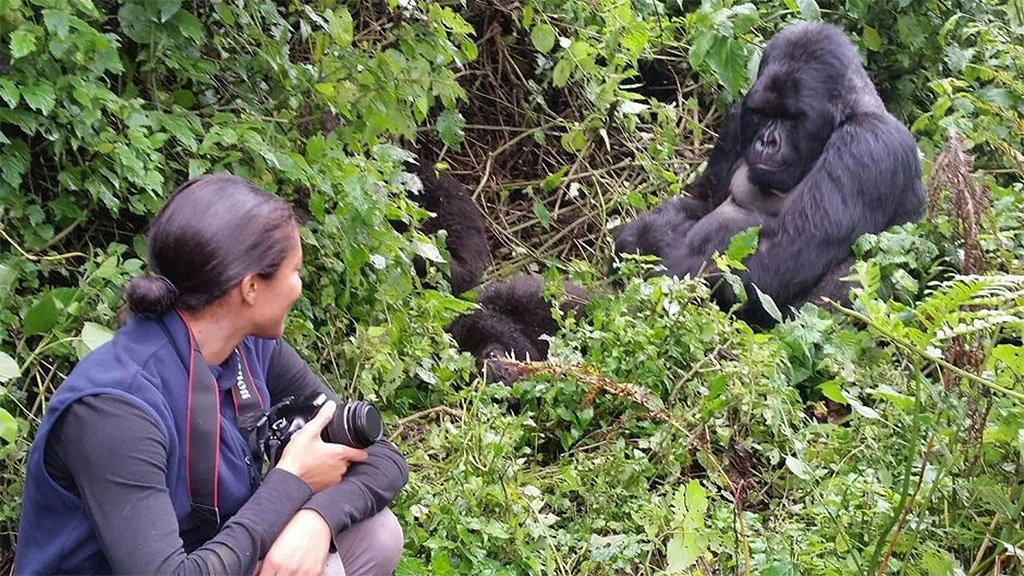
A minimum distance of 7 to 10 meters from the gorillas is required for genuinely good reasons — both to protect the animals from disease transmission and to prevent triggering defensive behavior. Some trekkers, caught up in the excitement, inch closer than they should for a better photo.
Always follow your ranger’s instructions on distance; they know each family’s specific temperament and behavior far better than a first-time visitor possibly can.
8. Using Flash Photography
Flash photography is prohibited around gorillas, but it remains a genuinely common mistake among trekkers unfamiliar with wildlife photography etiquette.
Sudden flashes can startle the gorillas and disrupt their natural behavior. Bring a camera capable of good low-light performance instead, and adjust your ISO settings rather than relying on flash in the forest’s naturally dim light.
9. Not Budgeting for Tips and Extra Costs
Many first-time trekkers budget for the permit and accommodation but forget the smaller costs that add up — porter fees, ranger and guide tips, and incidental expenses at the lodge.
Build a realistic buffer into your trip budget beyond the headline permit and package cost, so you’re not caught short once you’re already in the forest.
10. Booking With an Unlicensed or Inexperienced Operator
Choosing an operator based purely on the lowest quoted price, without checking licensing or track record, is a mistake that can unravel an entire trip — from mishandled permit bookings to unreliable transport.
Always verify that your operator is properly accredited; our guide to the best Uganda gorilla trekking companies covers exactly what to look for before you book.
11. Expecting a Guaranteed, Predictable Sighting
Gorilla trekking is wildlife viewing, not a scheduled show — the family’s location that day genuinely isn’t known in advance, and trek duration varies accordingly.
Some trekkers arrive expecting a short, predictable walk and a fixed encounter time, and end up frustrated when the trek runs longer than hoped. Go in with realistic expectations: the reward is real, but so is the unpredictability that comes with genuine wildlife encounters.
12. Rushing a Same-Day, No-Buffer Itinerary
Cutting it too close on timing — flying in the morning of your trek, or leaving zero buffer for travel delays — is a mistake that can cost you the entire permit if you miss the park briefing.
Build in at least one buffer day before your trekking date, particularly if you’re crossing from Rwanda via our Uganda gorilla trekking from Kigali route or arriving on an international flight the same day.
13. Ignoring Travel Insurance
Skipping travel insurance to save money is a mistake that can turn a minor issue — a missed flight, a medical concern, a cancelled permit — into a genuinely expensive problem.
Given the size of the investment in a gorilla trekking permit alone, insurance covering trip cancellation and medical evacuation is worth the modest additional cost.
14. Not Considering Both Uganda and Rwanda
Some travelers fixate on one country without comparing both, missing out on better availability, pricing, or logistics. Uganda’s permit costs $800 against Rwanda’s $1,500, with more habituated families spread across Bwindi’s sectors, while Rwanda offers shorter transfers from Kigali. Comparing both — or combining them on a single Rwanda-Uganda safari — often produces a better outcome than committing to one country by default.
15. Overlooking the Age and Fitness Requirements
Gorilla trekking carries a minimum age requirement (typically 15 years) and demands a reasonable level of fitness. Assuming children or less mobile travelers can join without checking requirements first is a mistake that can derail trip planning late in the process.
If you’re trekking with older or less mobile travelers, our guide on gorilla trekking for elderly travelers covers what’s realistic and how to prepare properly.
16. Disregarding Local Community and Cultural Etiquette
Many gorilla trekking itineraries include time with local communities, including the Batwa people who once inhabited these forests.
Treating these encounters as a photo opportunity rather than a genuine cultural exchange is a common and avoidable misstep — a little cultural awareness and respect goes a long way, and adds real depth to the overall trip.
17. Not Confirming What’s Actually Included in Your Package
A surprisingly common mistake is booking a “gorilla trekking package” without confirming exactly what’s included — permit, transport, accommodation, meals, and guide fees can all be bundled differently between operators.
Always get a clear, itemized breakdown before paying, whether you’re booking a fast 1 Day Gorilla Trekking Uganda trip or a longer 3 Days Gorilla Trekking Safari.
How to Avoid These Gorilla Trekking Mistakes Altogether
Nearly every mistake on this list comes down to the same root cause: not enough advance planning, or working with an operator who doesn’t proactively flag these issues before they become problems.
Booking early, packing properly, choosing a licensed operator, and going in with realistic expectations solves the vast majority of what trips up first-time gorilla trekkers.
Trek With Confidence — Avoid the Common Mistakes
A gorilla trekking mistake doesn’t have to ruin your trip, but avoiding them entirely means you spend your time in Bwindi or Mgahinga fully present for the experience, rather than dealing with a preventable problem. From permit timing to packing lists to choosing the right sector, the details genuinely matter here.
We handle the parts most likely to trip up first-time trekkers — permit booking, sector selection, porter arrangements, and full pre-trip guidance — as standard on every gorilla safari we run, whether it’s a 2 Days Uganda Safari or a full 6-Day Uganda Gorilla and Golden Monkey Trekking Adventure.
Contact us today or message us on WhatsApp, and we’ll make sure your gorilla trek goes smoothly from booking to the forest itself.
Related Pages
- Gorilla Safaris — All Packages
- How Much It Costs to Go Gorilla Trekking in Uganda
- How to Prepare for Gorilla Trekking
- Bwindi Impenetrable National Park
- Bwindi Gorilla Trekking Sectors
- Best Uganda Gorilla Trekking Companies
- Rwanda-Uganda Safaris
- Uganda Gorilla Trekking from Kigali
- Gorilla Trekking for Elderly Travelers
- Budget Gorilla Safari Packages
- Luxury Uganda Gorilla Trekking Safaris
- 1 Day Gorilla Trekking Uganda
- 3 Days Gorilla Trekking Safari
- Contact Us

