What Is the Biggest Silverback Gorilla Ever Recorded?
Biggest Silverback Gorilla Ever Recorded in the wild was a male shot in the eastern Congo on 16 May 1938. It measured 1.95 metres (6 ft 5 in) from the top of its head crest to its heel. Guinness World Records lists it as the tallest gorilla on record.
The heaviest gorilla on record lived in captivity: Phil, a silverback at St. Louis Zoo in the USA, reportedly weighed about 352 kg (776 lb). That’s far heavier than any wild gorilla, as zoo gorillas get less exercise and a richer diet. In the wild, the largest silverbacks, usually eastern lowland (Grauer’s) gorillas, stand about 1.75 m (5 ft 9 in) upright and weigh up to around 210 kg (463 lb).
Silverback gorillas are the largest primates on Earth, famous for their strength, intelligence and leadership of their family groups. This guide reveals the biggest silverback gorillas ever recorded and how big an average silverback really is. It also compares the four gorilla subspecies by size, explains why silverbacks grow so large, and shows where you can see these gentle giants in the wild on a gorilla trekking safari in Uganda.
What Is a Silverback Gorilla?
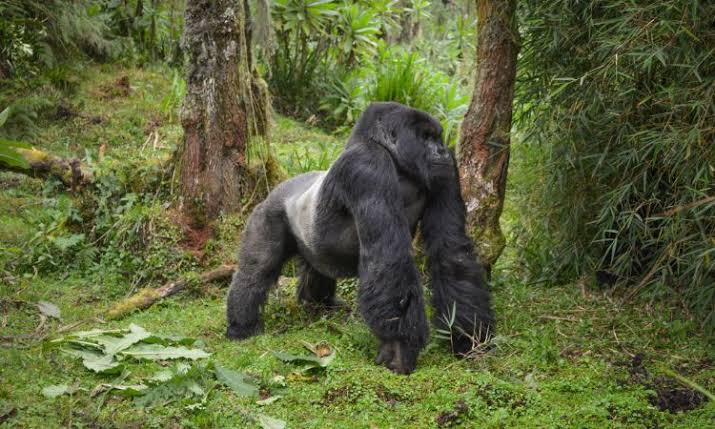
A silverback gorilla is a mature male gorilla that has developed a distinctive patch of silver or grayish hair on its back. This trait signifies dominance and maturity, usually appearing when the gorilla reaches around 12 to 15 years of age. Silverbacks are the leaders of gorilla troops, responsible for protecting and guiding their families.
There are two species of gorillas, each with two subspecies:
- Eastern gorillas (Gorilla beringei)
- Mountain gorillas (Gorilla beringei beringei)
- Eastern lowland gorillas (Gorilla beringei graueri)
- Western gorillas (Gorilla gorilla)
- Western lowland gorillas (Gorilla gorilla gorilla)
- Cross River gorillas (Gorilla gorilla diehli)
Among these, eastern lowland gorillas are the largest, often surpassing their mountain and western counterparts in size and weight.
The Biggest Silverback Gorilla Ever Recorded
Tallest wild gorilla: The tallest gorilla on record was a silverback shot in the eastern Congo on 16 May 1938. It measured 1.95 metres (6 ft 5 in) from crest to heel, according to Guinness World Records.
Heaviest captive gorilla: Phil, a silverback at St. Louis Zoo in the USA, reportedly weighed about 352 kg (776 lb), the heaviest gorilla on record. Captive gorillas can grow much heavier than wild ones, because they eat richer food and get less exercise.
Largest wild silverbacks: In the wild, the biggest silverbacks are eastern lowland (Grauer’s) gorillas, which stand about 1.75 m (5 ft 9 in) upright and weigh up to around 210 kg (463 lb). Mountain gorillas, like those in Bwindi, usually weigh about 140–200 kg (300–440 lb).
Gargantua, the famous circus gorilla: One of the best-known large gorillas in history was Gargantua, a western lowland gorilla who toured with the Ringling Bros. circus in the 1930s and 1940s. He was famous for his scarred, fierce-looking face and was billed as “the world’s most terrifying living creature”. He was large, but he was not the biggest gorilla ever recorded.
How Big Can a Silverback Gorilla Get?
The size of a silverback gorilla varies depending on its subspecies and environment. Below is a comparison of the typical measurements for different subspecies:
| Gorilla Subspecies | Average Weight (Male) | Average Height (Male) |
|---|---|---|
| Mountain Gorilla | 300–430 lbs (136–195 kg) | 4.5–5.5 ft (1.37–1.67 m) |
| Eastern Lowland Gorilla | 400–500 lbs (181–227 kg) | 5–6 ft (1.52–1.83 m) |
| Western Lowland Gorilla | 310–400 lbs (140–181 kg) | 4.5–5.5 ft (1.37–1.67 m) |
| Cross River Gorilla | 250–400 lbs (113–181 kg) | 4–5 ft (1.22–1.52 m) |
Among these, eastern lowland gorillas hold the record for the largest gorilla subspecies, making them the most likely to produce record-breaking individuals.
Why Are Silverback Gorillas So Big?
Silverback gorillas grow to their enormous sizes due to several factors:
- Muscle Mass: Unlike humans, gorillas have dense muscles, making them extremely strong.
- Diet: A gorilla’s diet consists mainly of leaves, fruits, stems, and bark, providing the necessary nutrients for muscle and bone development.
- Genetics: Their genes play a crucial role in determining their ultimate size and strength.
- Lifestyle: Wild gorillas engage in constant movement, climbing trees and defending their troops, contributing to their physical development.

How Strong Is the Biggest Silverback Gorilla?
The strength of a silverback gorilla is legendary. It is estimated that a silverback is at least 10 times stronger than an average human. Some key facts about their strength include:
- A silverback gorilla can lift up to 1,800 pounds (815 kg).
- Their bite force measures around 1,300 PSI, stronger than that of a lion or a great white shark.
- They have immense grip strength, allowing them to effortlessly break thick branches.
This makes the biggest silverback gorilla ever recorded an astonishingly powerful creature, capable of dominating its environment with ease.
Where Can You See the Biggest Silverback Gorillas?
If you’re interested in seeing some of the largest silverback gorillas, you should visit protected national parks and reserves. Some of the best places include:
- Volcanoes National Park, Rwanda – Home to mountain gorillas, including some massive silverbacks.
- Bwindi Impenetrable National Park, Uganda – Famous for its gorilla trekking experiences.
- Kahuzi-Biega National Park, DRC – The best place to see eastern lowland gorillas, the largest subspecies.
- Odzala-Kokoua National Park, Republic of Congo – Known for its western lowland gorillas.
Biggest Gorilla Ever vs. Other Large Primates
When comparing gorillas to other large primates, they easily take the top spot in terms of size and strength. Here’s how they compare:
| Primate Species | Average Weight (Male) | Average Height (Male) |
| Silverback Gorilla | 300–500 lbs (136–227 kg) | 4.5–6 ft (1.37–1.83 m) |
| Orangutan | 110–200 lbs (50–90 kg) | 4–5 ft (1.22–1.52 m) |
| Chimpanzee | 90–130 lbs (40–60 kg) | 3–4.5 ft (0.91–1.37 m) |
| Human (Average Male) | 150–200 lbs (68–90 kg) | 5.5–6 ft (1.67–1.83 m) |
Conservation of the Biggest Silverback Gorillas
Despite their impressive size and strength, silverback gorillas face threats that endanger their survival. The primary threats include:
- Habitat destruction due to deforestation.
- Poaching, despite international bans.
- Diseases, such as Ebola, which have devastated wild populations.
- Climate change, affecting their food sources and habitat conditions.
Conservation organizations such as the World Wildlife Fund (WWF) and Dian Fossey Gorilla Fund are working tirelessly to protect these majestic creatures.
Conclusion: The Legacy of the Biggest Silverback Gorilla
The biggest silverback gorillas ever recorded show just how powerful these primates can become. The tallest was a silverback from the eastern Congo that stood 1.95 m (6 ft 5 in), and the heaviest was Phil, a captive silverback reported to weigh about 352 kg (776 lb).
In the wild, even the largest silverbacks rarely exceed about 210 kg. Yet despite their great size and strength, silverbacks are gentle family leaders, and they are protected only by the forests and conservation efforts that keep them safe.
Seeing a wild silverback up close is one of the most unforgettable wildlife experiences on Earth. On a gorilla trekking adventure in Uganda, you can spend one magical hour watching a silverback and his family feed, play and rest in Bwindi Impenetrable National Park, home to nearly half of the world’s mountain gorillas. Every gorilla permit also helps fund their protection.
Ready to meet a silverback? Discover the best places to see silverback gorillas, check how much a gorilla permit costs in Uganda, or book our 1 Day Gorilla Trekking Uganda tour and plan your gorilla safari today.