
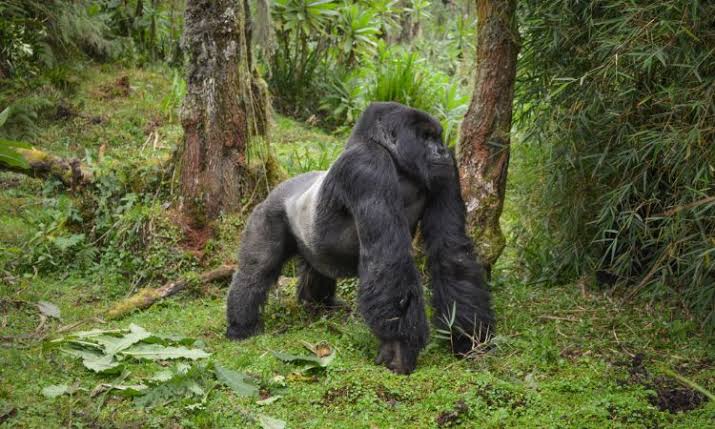
Silverback Gorilla Speed: How Fast Can a Silverback Gorilla Run?
Silverback gorillas are magnificent creatures, often admired for their strength and dominance. While much attention goes to their powerful build and complex social structure, plenty of travelers preparing for a gorilla trekking safari in Uganda are also curious about how fast these primates can actually move.
Despite their massive size, silverback gorillas are surprisingly agile and fast — a trait that plays a genuine role in their survival, and one worth understanding before you meet one in the wild.
In this guide, we’ll explore silverback gorilla speed, the factors that influence it, and how it compares to humans and other animals — useful context for anyone about to encounter one during gorilla trekking in Bwindi Impenetrable National Park.
Understanding Silverback Gorilla Speed
A silverback gorilla — the dominant male in a troop — can reach speeds of up to 20–25 miles per hour (32–40 km/h) over short distances, based on consistent field observations across multiple sources studying mountain gorilla behavior. This speed may seem surprising for an animal that can weigh up to 500 pounds, but powerful legs and arms enable rapid, explosive bursts of movement.
It’s worth noting that this figure reflects peak, momentary speed during a short charge rather than a sustained pace — silverbacks lack the endurance for prolonged running. This burst of agility helps them in specific situations, including defending their group, intimidating rivals, and navigating the dense forest of Central and East Africa.
Factors Influencing Silverback Gorilla Speed
Several factors shape how fast a silverback gorilla can run:
Body structure — a silverback’s muscular frame is optimized for strength rather than sustained speed. Still, strong hind legs and long arms provide the raw power needed for sudden, explosive bursts of movement.
Terrain — gorillas inhabit dense forest with genuinely uneven terrain, which shapes how fast they can realistically move. Their ability to climb trees and move through thick undergrowth demonstrates real adaptability beyond flat-ground speed.
Behavioral context — gorillas rarely run at full speed unless threatened or engaged in a dominance display. During these moments, their speed becomes genuinely impressive, showcasing both agility and strength in equal measure.
Age and health — younger gorillas tend to be more agile, while older silverbacks may slow slightly with age. Overall health and injury status also affect movement capability day to day.

Silverback Gorilla Speed Compared to Humans
For perspective, the average human runs at 8–10 miles per hour (13–16 km/h), while professional sprinters can reach up to 27 mph (43 km/h) in short bursts. This puts a silverback gorilla’s running speed in the same range as elite human sprinters — a genuinely humbling comparison for most trekkers.
Gorillas have one distinct advantage, however: their ability to run on all fours, a motion called knuckle-walking. This form of locomotion lets them move efficiently through forest terrain, with their powerful arms providing additional propulsion that a two-legged human simply doesn’t have access to.
Comparing Silverback Gorilla Speed to Other Animals
A silverback gorilla’s top speed doesn’t match predators like lions or cheetahs, but it holds up well against other large mammals:
- Cheetah: 60–70 mph (96–112 km/h)
- Lion: 35–50 mph (56–80 km/h)
- Elephant: 25 mph (40 km/h)
- Chimpanzee: 20–25 mph (32–40 km/h)
While not the fastest animal in its habitat, a silverback’s agility within its own environment makes it a genuinely formidable presence in its own right — something you’ll appreciate firsthand if you’re lucky enough to see a dominance display during a trek.
How Do Silverback Gorillas Use Their Speed?
Speed isn’t a primary survival tool for silverback gorillas, but it plays a real, specific role in several scenarios:
Territorial defense — a silverback often uses speed to intimidate intruders, charging at a perceived threat with real velocity to send an unmistakable message to stay away.
Protection of the troop — as the group’s leader, a silverback must protect his family from predators and rival males. Quick bursts of speed let him confront threats decisively when it matters most.
Navigating the forest — in their natural habitat, speed helps gorillas cross forest floor, climb trees, and move away from danger when needed.
Displaying dominance — running and charging often form part of a broader dominance display, asserting authority within the group or against an external challenger.
The Science Behind Gorilla Movement
The biomechanics of a silverback gorilla’s movement are genuinely fascinating. Their ability to run on all fours enhances both stability and speed, and a few key features contribute to their overall agility:
- Strong muscles — a gorilla’s dense, muscular build provides immense power for quick, explosive movement.
- Knuckle-walking — this specific technique reduces strain on the body while allowing for efficient forward motion.
- Flexibility — despite their size, gorillas are surprisingly flexible, letting them navigate complex forest terrain swiftly and without hesitation.
Can a Human Outrun a Silverback Gorilla?
In most cases, a human cannot outrun a silverback gorilla over short distances. While elite athletes might theoretically have a chance in a straight sprint on flat ground, the average person would struggle badly to match a gorilla’s speed.
Gorillas’ agility in dense forest terrain gives them a further, significant advantage in their own natural environment — one more reason gorilla trekking guides and rangers train specifically in how to manage an encounter safely, rather than relying on outrunning anything.
Why Speed Isn’t Everything for Silverback Gorillas
Although silverback gorillas are genuinely fast, their primary survival tools are strength, intelligence, and social bonds within the troop.
Their ability to lift up to 10 times their own body weight, combined with strong group dynamics, often removes the need for extended high-speed pursuits altogether.
In fact, a silverback’s imposing presence and strategic use of resources frequently prevent conflicts from escalating to physical confrontation in the first place — speed is a last resort, not a first response.

FAQs About Silverback Gorilla Speed
How fast can a silverback gorilla run? A silverback gorilla can run at speeds of 20–25 mph (32–40 km/h) over short distances.
Can a silverback gorilla outrun a human? Yes — in most cases, a gorilla’s short-burst speed exceeds that of the average human by a meaningful margin.
Do gorillas rely on speed to survive? Speed is secondary to a gorilla’s strength, intelligence, and social strategy, but it plays a genuinely crucial role in defense and forest navigation when needed.
Conclusion: The Remarkable Agility of Silverback Gorillas
The silverback gorilla is a genuinely awe-inspiring example of strength and speed coexisting in nature. While not the fastest animal in its habitat, its ability to reach 20–25 mph showcases real, impressive agility, especially given its size.
Whether protecting the troop, navigating dense forest, or asserting dominance, a silverback gorilla’s speed plays a vital role throughout its life — and understanding it deepens real appreciation for these majestic animals and the forest ecosystems they call home.
See a Silverback’s Power and Agility Firsthand
Reading about silverback gorilla speed is fascinating — witnessing a dominant male’s power and agility during an actual gorilla trekking safari in Bwindi Impenetrable National Park is something else entirely.
A standard Uganda gorilla trekking permit currently costs $800 for foreign non-residents, granting a full hour observing a habituated family, silverback included, in their natural forest habitat.
Popular Gorilla Trekking Packages With Us
Browse our Gorilla Safaris collection, including a fast 1 Day Gorilla Trekking Uganda itinerary and our 2 Days Silverback Gorilla Safari — built specifically around encountering a dominant male in his territory.
Our well-paced 3 Days Gorilla Trekking Safari and, for a longer, more in-depth encounter, our 3 Days Gorilla Habituation package offer up to four hours with a semi-habituated family.
For travelers combining primates, explore our 4 Days Gorilla & Chimpanzee Tour, 4 Days Gorillas & Lake Bunyonyi Safari, and 5 Days Gorillas & Murchison Falls Safari. Travelers extending into Rwanda should browse our Rwanda-Uganda safaris collection for combined itineraries.
Beyond the Gorilla Trek
Book accommodation near Bwindi close to your assigned trekking sector, add a Batwa cultural visit for genuine cultural depth, or extend your trip to Queen Elizabeth National Park for broader wildlife viewing. Our Uganda safaris guide covers everything else worth knowing before you book, and our Bwindi Impenetrable National Park guide covers the park itself in full detail.
Book Your Gorilla Trekking Safari Today
Nothing compares to watching a silverback’s raw power in person, deep in the misty forests of Bwindi. As a UWA licensed, UTB registered, and RDB accredited Uganda safari operator, we handle every detail of your gorilla trekking permit and itinerary, from booking through to the trek itself.
Visit us or contact us today to start planning your gorilla trekking safari, and witness a silverback’s remarkable strength and agility firsthand.
Related Pages
- Gorilla Safaris — All Packages
- 1 Day Gorilla Trekking Uganda
- 2 Days Silverback Gorilla Safari
- 3 Days Gorilla Trekking Safari
- 3 Days Gorilla Habituation
- 4 Days Gorilla & Chimpanzee Tour
- 4 Days Gorillas & Lake Bunyonyi Safari
- 5 Days Gorillas & Murchison Falls Safari
- Bwindi Impenetrable National Park
- Accommodations in Bwindi Impenetrable National Park
- Rwanda-Uganda Safaris
- Batwa Pygmies
- Uganda Safaris
- Queen Elizabeth National Park
- Verified Facts About Uganda Wildlife Tours
- Contact Us


Visit the official Telegram website, choose the appropriate operating system such as Windows, macOS, Android, iOS, etc., and download the application. Enjoy seamless communication across devices with Telegram’s secure and fast messaging features, including text, voice calls, and file sharing, all backed by end-to-end encryption for enhanced privacy.Telegram中文