
Nile Crocodile Bite Force: What the Science Actually Says
Nile crocodile bite force is one of the most searched facts about this apex predator, and for good reason — it’s genuinely one of the most powerful bites of any living animal. But the number most commonly quoted online is more complicated, and less rigorously sourced, than most articles let on.
This guide focuses specifically on where the popular Nile crocodile bite force figures actually come from, what the real peer-reviewed science says, and how it compares to the rest of the animal kingdom.
How Strong Is a Nile Crocodile’s Bite?
The figure most widely repeated for Nile crocodile bite force is around 5,000 pounds per square inch (psi), equivalent to roughly 22,000 newtons.
It’s worth being precise about where that specific number actually comes from: it traces back to herpetologist Brady Barr, who fitted a bite-force meter to wild Nile crocodiles for a National Geographic Dangerous Encounters television segment and recorded a bite in that range.
It’s a genuine, real-world measurement — but it comes from a television production, not a peer-reviewed scientific study, which matters if you’re trying to understand exactly how solid that number really is.
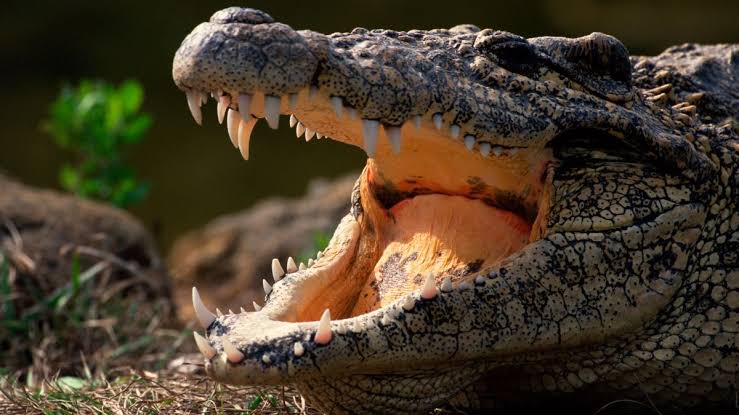
What the Peer-Reviewed Science Actually Found
The rigorous, published research on crocodilian bite force comes from a 2012 study by Dr. Gregory Erickson and colleagues at Florida State University, published in the peer-reviewed journal PLoS ONE.
The team measured bite force directly, using a padded force transducer, across all 23 living crocodilian species — including the Nile crocodile — making it the most comprehensive scientific dataset that exists on this exact question.
In that study, the highest confirmed bite force belonged to the saltwater crocodile, with a 17-foot (5.2-meter) individual registering 3,700 psi (16,414 newtons) — the strongest bite force directly measured in any living animal at the time of publication.
Scaled estimates for hypothetical 20-foot saltwater crocodiles suggested figures as high as 7,700 psi, though that larger number is an extrapolation rather than a direct measurement.
Nile crocodiles were tested as part of the same study, and while the full species-by-species dataset shows real variation tied closely to body size, Nile crocodiles and saltwater crocodiles are widely considered to sit at the very top of the crocodilian bite-force ranking, effectively trading the top spot depending on which specific study, and which specific individual animal, you’re looking at.
The honest, precise answer to “what is Nile crocodile bite force” is this: informally, in the field, bites approaching 5,000 psi have been recorded. In the tightly controlled, peer-reviewed academic literature, confirmed figures for the species sit somewhat lower, generally discussed in the same range as the saltwater crocodile’s scientifically documented 3,700 psi — with the exact ranking between the two species varying by source, animal, and measurement method.
Nile Crocodile Bite Force Compared to Other Animals
Putting Nile crocodile bite force into context makes the number genuinely land:
- Human — approximately 150–200 psi
- Grizzly bear — approximately 975 psi
- Gorilla — approximately 1,300 psi
- Bengal tiger — approximately 1,050 psi
- American alligator — 2,980 psi, directly measured in a 13-foot wild specimen (Erickson’s research)
- Nile crocodile — commonly cited at up to 5,000 psi in field measurements
- Saltwater crocodile — 3,700 psi directly measured (peer-reviewed record), with scaled estimates up to 7,700 psi for the largest individuals
- Tyrannosaurus rex — modeled estimates of roughly 8,000–12,800 psi, based on crocodilian jaw-muscle data since no living tissue survives to measure directly
Even at the more conservative, peer-reviewed end of the range, a Nile crocodile’s bite comfortably outclasses every land predator on the above list except the very largest crocodilians and the extinct giants used for comparison. That’s a genuinely staggering amount of force to be generated by an animal you might see basking quietly on a riverbank during a boat cruise.
Why the Nile Crocodile’s Bite Is So Powerful
The mechanics behind this bite force come down to jaw muscle architecture rather than jaw size alone. A Nile crocodile’s jaw-closing muscles are extraordinarily dense and powerful, engineered by evolution specifically to clamp down and hold, rather than to chew — crocodilians don’t chew their food at all, instead gripping and using a rotational “death roll” to tear prey into swallowable pieces.
Strikingly, the muscles responsible for opening a Nile crocodile’s jaw are genuinely weak by comparison — weak enough that a person can hold a crocodile’s mouth shut with their bare hands once it’s closed, a fact seasoned wildlife handlers rely on directly when safely restraining a crocodile for research or veterinary care. This asymmetry — immense closing force, minimal opening force — is a defining, almost universal trait across all crocodilian species, not just the Nile crocodile specifically.
Does Nile Crocodile Bite Force Change With Age and Size?
Bite force scales directly with body size and age in Nile crocodiles, consistent with Erickson’s broader finding that body mass is the single strongest predictor of bite force across all crocodilian species studied.
A young juvenile generates only a small fraction of an adult’s biting power, and bite force continues increasing as a crocodile grows throughout its life — meaning the largest, oldest individuals in any given population are also, reliably, the ones capable of the most powerful bite.
What Nile Crocodile Bite Force Means for Safety
This isn’t just a fun statistic — it has real, practical safety implications. A Nile crocodile’s bite, once it clamps onto a limb, offers essentially no realistic chance of self-extraction through struggling alone, which is exactly why maintaining a safe, guided distance from riverbanks and channel edges in crocodile territory matters so much on any wildlife-viewing trip.
Licensed guides on boat cruises through crocodile habitat know precisely how to maintain that safe distance while still delivering a genuinely close, memorable view of these animals in their natural environment.
See Nile Crocodiles Up Close, Safely, on a Uganda Safari
Reading about bite force figures is one thing — watching a Nile crocodile’s jaws snap shut on a fish during a boat cruise along the Victoria Nile is something else entirely, and it’s exactly the kind of moment a well-guided Murchison Falls National Park cruise delivers reliably and safely.
Popular Uganda Safaris Featuring Nile Crocodiles
Browse our 2 Days Murchison Falls Safari for a focused introduction to the park, or our 5 Days Gorillas & Murchison Falls Safari if you’re combining crocodile viewing with mountain gorilla trekking.
Our 3 Days Queen Elizabeth National Park Safari and the dramatic Ishasha sector both offer strong crocodile sightings along the Kazinga Channel, alongside tree-climbing lions, and our Lake Mburo National Park guide covers a smaller-scale but genuinely reliable alternative.
Combine Crocodiles With Uganda’s Primates
Our full Gorilla Safaris collection, including the 1 Day Gorilla Trekking Uganda and 3 Days Gorilla Trekking Safari itineraries, pair naturally with a Murchison Falls or Queen Elizabeth extension.
Our 4 Days Gorilla & Chimpanzee Tour and 2 Days Kibale Chimpanzee Trekking Safari round out Uganda‘s primate side, and a stop at Bigodi Wetland Sanctuary or a 2 Days Rhino Tracking excursion make excellent additions to a broader wildlife circuit.
Birdwatching Alongside Uganda’s Crocodiles
Nile crocodiles share their riverine habitat with exceptional birdlife — our guides to birdwatching in Uganda, Mabamba Swamp, and our dedicated 5 Days Uganda Birding Tour all cover destinations where crocodile and bird sightings genuinely overlap.
For a broader sense of trip length and lodging options, our Long Uganda Safaris, Short Uganda Safaris, 9 Days Uganda Wildlife Safari, and Uganda Safari Lodges guides cover everything else worth planning around.
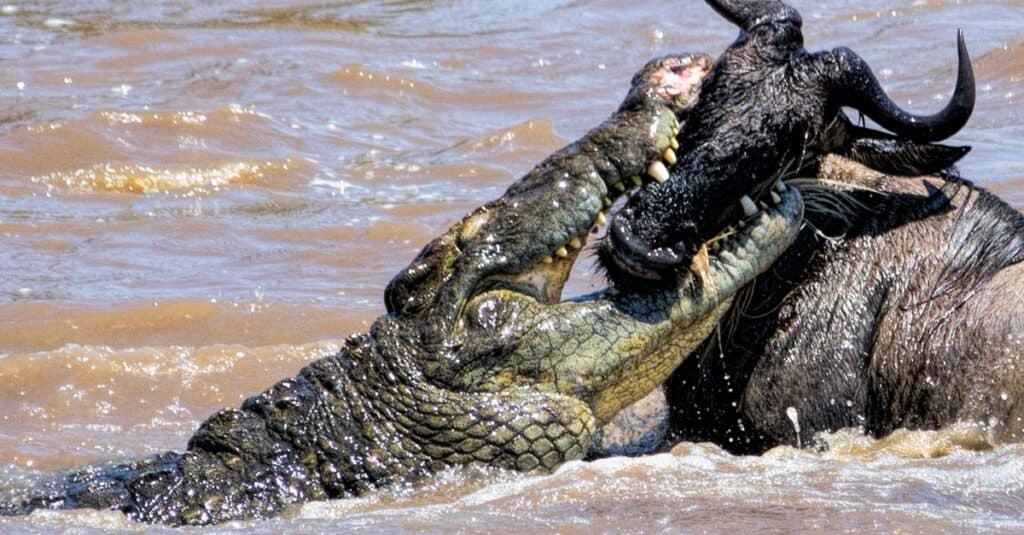
Book Your Uganda Safari and See Nile Crocodile Power for Yourself
Now that you know exactly where the Nile crocodile’s bite force numbers actually come from — the difference between a field measurement and a peer-reviewed study, and how it stacks up against every other predator on the planet — there’s really only one way to appreciate that power fully: watching it in person, from the safety of a well-guided boat cruise.
As a UWA licensed, UTB registered, and RDB accredited Uganda safari operator, we build every itinerary around genuinely close, safe wildlife encounters guided by experienced local teams. Visit us or contact us today to start planning your Uganda safari, and see one of the animal kingdom’s most powerful bites for yourself.
Related Pages
- Murchison Falls National Park
- 2 Days Murchison Falls Safari
- 5 Days Gorillas & Murchison Falls Safari
- Murchison Falls Balloon Safari
- Queen Elizabeth National Park
- 3 Days Queen Elizabeth National Park Safari
- Ishasha Sector
- Lake Mburo National Park
- Birdwatching in Uganda
- Mabamba Swamp
- 5 Days Uganda Birding Tour
- Bwindi Impenetrable National Park
- Gorilla Safaris — All Packages
- 1 Day Gorilla Trekking Uganda
- 3 Days Gorilla Trekking Safari
- 4 Days Gorilla & Chimpanzee Tour
- 2 Days Kibale Chimpanzee Trekking Safari
- Bigodi Wetland Sanctuary
- 2 Days Rhino Tracking in Uganda
- Uganda Safaris
- Uganda Safari Lodges
- Long Uganda Safaris
- Short Uganda Safaris
- 9 Days Uganda Wildlife Safari
- Verified Facts About Uganda Wildlife Tours
- Contact Us

