

Where Do Gorillas Get Protein? The Incredible Gorilla Diet
Where Do Gorillas Get Protein? Gorillas get their protein mainly from leaves, shoots, stems and pith, which are surprisingly rich in protein, especially young, tender leaves.
Mountain gorillas favour plants such as wild celery, stinging nettles, thistles, galium vines and bamboo shoots. They top this up with small amounts of ants, termites and grubs.
Because a large silverback eats up to 30 kg (66 lb) of vegetation a day, all those leaves add up to plenty of protein. Their long digestive system and helpful gut bacteria then break down tough plant fibre to release extra nutrients and energy.
Gorillas are the largest primates on Earth, and an adult silverback can weigh 140–200 kg with enormous strength, all without eating meat. This guide explains where gorillas get their protein and which plants they eat.
It also covers how their digestive system works and how their diet changes with the seasons. You’ll also see why watching gorillas forage is one of the highlights of a gorilla trekking safari in Uganda or Rwanda.
The Gorilla Diet: Plant-Based Protein Sources
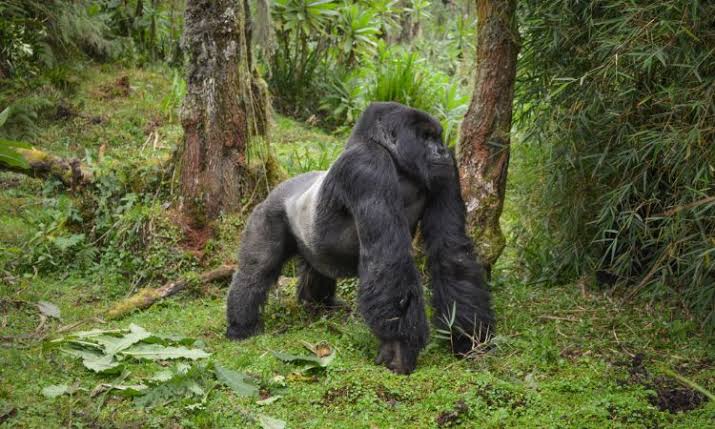
Gorillas are predominantly herbivorous, with diets tailored to their specific habitat and subspecies: mountain gorillas (Gorilla beringei beringei), eastern lowland gorillas (Gorilla beringei graueri), western lowland gorillas (Gorilla gorilla gorilla), and Cross River gorillas (Gorilla gorilla diehli).
Their food intake consists mainly of leaves, stems, pith, bark, fruit, and — to a much lesser extent — insects and fungi. These sources, while not as protein-dense as animal-based food, provide ample protein when consumed in the large quantities gorillas eat daily.
Key Dietary Components
Leaves and stems — for mountain gorillas, leaves and stems make up as much as 86% of the diet. Plants like wild celery, thistles, nettles, and Galium ruwenzoriense are staples, offering 15–20% crude protein by dry weight. These are abundant in high-altitude forests like Rwanda’s Volcanoes National Park and Uganda’s Bwindi Impenetrable National Park.
Pith — lowland gorillas frequently consume the soft, nutrient-rich pith of plants such as banana trees or reeds. Pith contains 10–15% protein and is easier to digest than fibrous leaves, making it a genuinely valuable protein source.
Fruit — western lowland gorillas, found in the Congo Basin, incorporate more fruit into their diet, especially during wet seasons. Fruits like figs, berries, and African plums provide 2–5% protein, supplemented by carbohydrates for energy.
Bark — bark from trees like eucalyptus or acacia serves as a fallback food during lean seasons, offering 5–10% protein and rich mineral content, though it requires significant chewing and digestion.
Insects and fungi — while not a primary component of the diet, western lowland gorillas occasionally eat termites, ants, or fungi, which can contain 20–50% protein by dry weight. These still account for less than 5% of overall intake.

Protein Yield From High-Volume Intake
Gorillas consume genuinely massive quantities of food to meet their nutritional needs. A silverback gorilla, weighing 180–200 kilograms, may eat 18–30 kilograms of fresh vegetation daily, yielding roughly 200–400 grams of crude protein.
Plants like Urera hypselodendron, regularly eaten by mountain gorillas, have protein levels comparable to legumes, ensuring sufficient intake through sheer volume alone. This high consumption directly compensates for the lower protein density of plants compared to meat.
Physiological Adaptations for Protein Extraction
A gorilla’s ability to derive adequate protein from plants is bolstered by a specialized digestive system, optimized for breaking down fibrous, low-protein food.
Hindgut Fermentation
Gorillas are hindgut fermenters, relying on a large colon and cecum to process plant material through microbial fermentation — a process that’s critical for accessing protein:
Microbial breakdown — bacteria in the hindgut ferment cellulose and hemicellulose, releasing volatile fatty acids for energy while degrading plant proteins into absorbable amino acids. These microbes also produce their own proteins, which gorillas assimilate as a supplemental protein source.
Nutrient extraction — fermentation unlocks protein trapped within tough plant cell walls, making it genuinely bioavailable. This matters especially for fibrous food like mature leaves or bark, which would otherwise be far less digestible without microbial help.
Large Digestive Capacity
Gorillas possess a genuinely voluminous gut, allowing them to process large amounts of food over an extended period — up to 48 hours. This slow digestion maximizes nutrient absorption, ensuring that even low-protein food contributes meaningfully to their dietary needs. This adaptation is exactly what enables mountain gorillas to thrive on foliage-heavy diets in the high-altitude forests of Bwindi and Volcanoes National Park.
Selective Foraging Strategies
Gorillas are genuinely discerning eaters, prioritizing plant parts with higher protein content. They favor young leaves and buds over mature ones, since these are less fibrous and richer in protein.
In Bwindi Impenetrable National Park, mountain gorillas specifically target protein-dense plants like Galium species, optimizing their nutrient intake — a foraging pattern experienced guides on a gorilla trekking safari can point out directly during a trek.
Protein Requirements and Efficiency
Gorillas have lower protein requirements than might be expected for animals of their size and strength, owing to their unique physiology and lifestyle.
Modest Protein Needs
Unlike humans, who typically require 0.8–1.2 grams of protein per kilogram of body weight for an active lifestyle, gorillas need only around 1–2% of their total diet by weight to be protein.
For a 200-kg gorilla, that equates to just 200–400 grams daily — easily achievable through a plant-based diet alone. Their relatively sedentary lifestyle, spent largely foraging, resting, and socializing, further reduces the demand for excessive protein intake.
Efficient Muscle Maintenance
Gorillas maintain their impressive musculature through efficient amino acid utilization rather than high protein intake. Essential amino acids, such as leucine and lysine, are present in their plant food, albeit in smaller amounts than in meat.
Their bodies recycle amino acids effectively, minimizing waste while supporting muscle repair and growth — a physiological reality that dispels the persistent myth that gorillas need animal-based protein to achieve their strength.
Energy Prioritization
A gorilla’s diet is energy-driven, with carbohydrates and fats from fermentable fiber and fruit providing the bulk of daily calories. This energy surplus spares dietary protein for structural purposes rather than burning it for fuel, further reducing overall protein requirements.
Environmental and Ecological Factors
The availability of protein-rich food is shaped directly by a gorilla’s habitat and seasonal variation:
Mountain gorillas — in montane forests like Virunga and Bwindi, protein-rich foliage is abundant year-round, supporting a genuinely foliage-heavy diet and reducing reliance on supplementary food like fruit or insects.
Lowland gorillas — in lowland rainforest, western lowland gorillas benefit from seasonal fruit abundance, which complements protein intake with small amounts of insect protein. During dry seasons, they turn to pith and bark, consuming larger quantities to compensate for the lower protein content.
Conservation challenges — habitat degradation limits access to diverse, protein-rich plants. Deforestation and human encroachment force gorillas to rely on less nutritious fallback foods, underscoring the ongoing need for conservation efforts by organizations like the Dian Fossey Gorilla Fund, alongside sustainable tourism revenue from gorilla trekking permits in Uganda and Rwanda.
Addressing a Common Misconception
Some assume gorillas require meat to achieve their muscular build, but a herbivorous diet is genuinely more than sufficient. Incidental insect consumption provides negligible protein compared to their overall plant intake.
A gorilla’s dietary strategy actually mirrors that of plant-based human athletes, who rely on high-volume, nutrient-dense foods like lentils or tofu to meet protein needs without any animal products at all.
Conclusion: A Remarkable Nutritional Adaptation
Gorillas obtain their protein primarily from a voluminous, plant-based diet of leaves, stems, pith, bark, and fruit, with only minor contributions from insects and fungi. Selective foraging targets protein-rich vegetation, while hindgut fermentation and a large digestive capacity work together to maximize nutrient extraction from otherwise low-protein food.
With modest protein needs and remarkably efficient amino acid use, gorillas sustain their formidable strength entirely without animal-based food.
Environmental factors and habitat preservation remain critical to ensuring continued access to these resources — understanding where gorillas get their protein deepens real appreciation for their adaptations and the urgent need to protect their forest ecosystems.
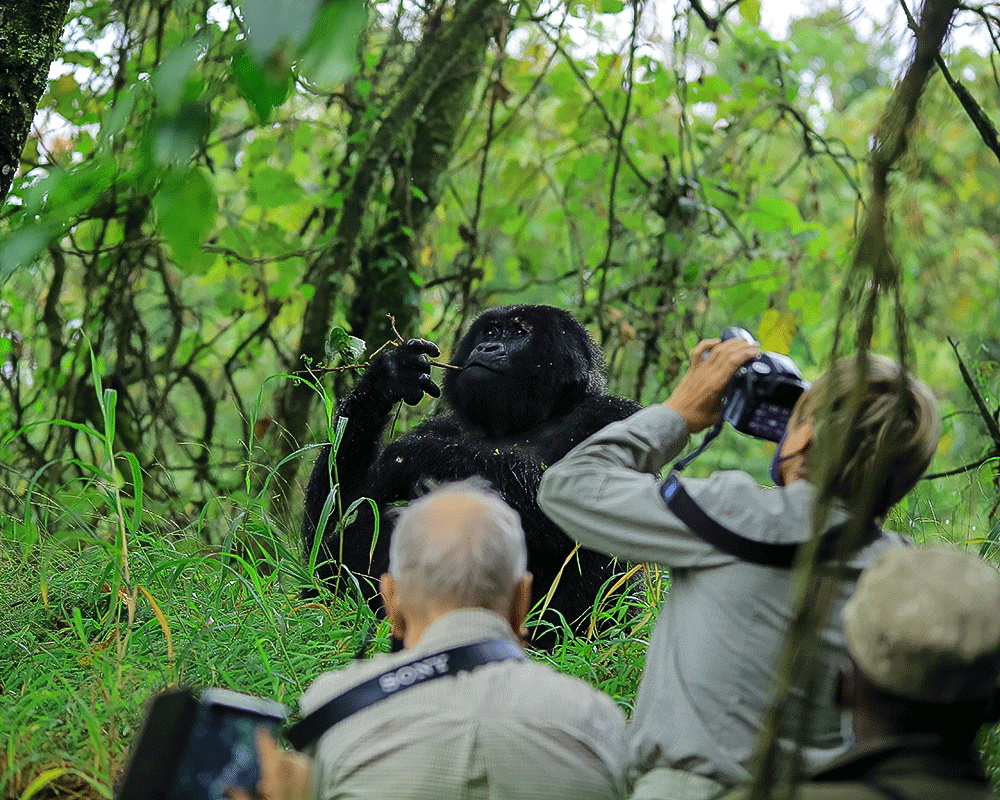
See This Remarkable Diet in Action on a Gorilla Trekking Safari
Reading about gorilla nutrition is one thing — watching a habituated family forage for wild celery, strip bark, or select young leaves in the forests of Bwindi is something else entirely.
Understanding what and how gorillas eat makes every moment of a gorilla trekking safari genuinely more meaningful, turning routine foraging into a window onto real physiological adaptation.
Uganda’s Bwindi Impenetrable National Park is home to roughly half the world’s remaining mountain gorillas, with a standard trekking permit currently priced at $800 for foreign non-residents.
Our Budget 3 Day Uganda Gorilla Safari offers an accessible entry point into this experience, starting from approximately $1,850 per person, including your permit, transport, and comfortable budget lodging near the park — always confirm current pricing with us directly, since permit fees and trip costs shift over time.
Popular Gorilla Trekking Packages With Us
Browse our Gorilla Safaris collection, including the fast 1 Day Gorilla Trekking Uganda itinerary, our 2 Days Silverback Gorilla Safari, and — for a longer, more in-depth encounter with gorilla feeding and social behavior — our 3 Days Gorilla Habituation package, offering up to four hours with a semi-habituated family.
For travelers combining primates, explore our 4 Days Gorilla & Chimpanzee Tour, 4 Days Gorillas & Lake Bunyonyi Safari, and 5 Days Gorillas & Murchison Falls Safari. Travelers extending into Rwanda should browse our Rwanda-Uganda safaris collection for combined itineraries.
Beyond the Gorilla Trek
Book accommodation near Bwindi close to your trekking sector, add a Batwa cultural visit for genuine cultural depth, or extend your trip to Queen Elizabeth National Park for broader wildlife viewing. Our Uganda safaris guide covers everything else worth knowing before you book.
Plan Your Gorilla Trekking Safari With Us
Understanding a gorilla’s remarkable plant-based diet is fascinating on the page — watching it play out in real time, deep in the misty forests of Bwindi, is something else entirely.
As a UWA licensed, UTB registered, and RDB accredited Uganda safari operator, we handle every detail of your gorilla trekking permit and itinerary, from booking through to the trek itself.
Visit us or contact us today to start planning your gorilla trekking safari, and see this incredible dietary adaptation firsthand.
Related Pages
- Gorilla Safaris — All Packages
- 1 Day Gorilla Trekking Uganda
- 2 Days Silverback Gorilla Safari
- 3 Days Gorilla Trekking Safari
- 3 Days Gorilla Habituation
- 4 Days Gorilla & Chimpanzee Tour
- 4 Days Gorillas & Lake Bunyonyi Safari
- 5 Days Gorillas & Murchison Falls Safari
- Bwindi Impenetrable National Park
- Accommodations in Bwindi Impenetrable National Park
- Rwanda-Uganda Safaris
- Batwa Pygmies
- Uganda Safaris
- Queen Elizabeth National Park
- Verified Facts About Uganda Wildlife Tours
- Contact Us
For more on mountain gorilla research and conservation, visit the Dian Fossey Gorilla Fund directly.

Very good https://is.gd/N1ikS2
Awesome https://shorturl.fm/5JO3e
https://shorturl.fm/68Y8V
https://shorturl.fm/6539m
https://shorturl.fm/hQjgP
Finally found a reliable place to play. The login process at 96xbajeelogin is quick and I never have any issues accessing my account.