
Photography Safari in Uganda | Wildlife & Birding Tours
A photography safari in Uganda is an opportunity to capture Africa’s wildlife, birds, landscapes and natural beauty through your camera lens. From mountain gorillas in the misty forests of Bwindi to elephants crossing the savannah, lions resting in trees, Shoebills in papyrus wetlands and chimpanzees moving through tropical forests, Uganda offers an exceptional range of photographic subjects.
At Uganda Wildlife Tours, we organise private and tailor-made Uganda photo safaris for amateur photographers, experienced wildlife photographers, bird photographers and nature enthusiasts. Our trips take you to some of Uganda’s most rewarding photographic destinations, with opportunities to spend more time observing wildlife, waiting for suitable lighting and capturing memorable images.
Whether you want a dedicated wildlife photography holiday, a specialist bird photography trip or a combination of photography and traditional wildlife experiences, we can design an itinerary around your interests.
Photography Safari in Uganda: Wildlife, Birding and the Best Places to Photograph
Why Choose Uganda for a Photography Safari?
Uganda is particularly rewarding for photography because it combines several different habitats within one country. You can photograph large mammals in open grasslands, colourful birds in wetlands, primates in tropical forests and spectacular scenery around lakes, rivers and mountains.
Some of the main reasons to choose Uganda for a photography safari include:
- Mountain gorillas: Photograph endangered mountain gorillas in their natural forest habitat in Bwindi Impenetrable National Park or Mgahinga Gorilla National Park.
- Chimpanzees: Capture chimpanzees feeding, grooming, climbing and moving through the forest in Kibale National Park.
- Big game photography: Photograph elephants, buffaloes, lions, leopards, giraffes, zebras and antelopes in Uganda’s savannah parks.
- Bird photography: Search for the Shoebill, Great Blue Turaco, African Fish Eagle, kingfishers, hornbills and numerous other bird species.
- Landscape photography: Capture waterfalls, crater lakes, forest-covered mountains, wetlands, open plains and beautiful sunsets.
- Cultural photography: With appropriate permission and respect, photograph traditional communities, local markets, fishing activities and everyday life.
Best Places for a Uganda Photo Safari
Choosing the right destinations is important because each location offers different photographic opportunities. We can combine several parks and habitats depending on the wildlife and landscapes you want to capture.
1. Bwindi Impenetrable National Park – Mountain Gorilla Photography
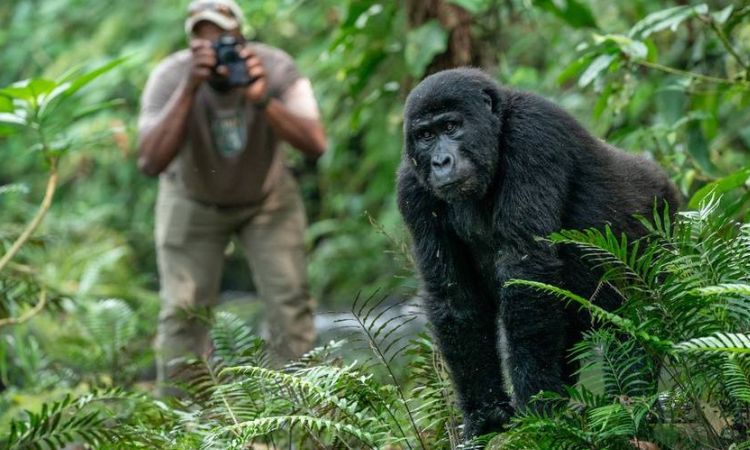
Bwindi is one of Uganda’s most rewarding destinations for wildlife photographers interested in mountain gorillas. Its ancient rainforest, mist-covered hills, thick vegetation and dramatic natural light create a distinctive setting for forest photography.
Photography opportunities in Bwindi include:
- Mountain gorillas feeding, resting, grooming and interacting within their families.
- Silverbacks displaying their impressive size and strength.
- Young gorillas playing and climbing through the vegetation.
- Forest birds, butterflies, trees and other rainforest wildlife.
- Atmospheric photographs of the forest canopy and misty mountain scenery.
Gorilla photography takes place during a guided trekking experience. You must follow the park authorities’ instructions, maintain the required distance and respect the gorillas’ welfare. Camera equipment should be suitable for low-light forest conditions, and flash photography should not be used.
Explore our guide to Bwindi Impenetrable National Park when planning a gorilla photography safari.
2. Queen Elizabeth National Park – Big Game and Landscape Photography
Queen Elizabeth National Park offers excellent opportunities to photograph Uganda’s savannah wildlife. Its open grasslands, woodland, crater lakes and waterways support a wide variety of animals and birds.
The Kasenyi Plains are particularly interesting for game photography, while the Ishasha sector is famous for its tree-climbing lions.
Wildlife photography opportunities include:
- Tree-climbing lions resting in fig trees in the Ishasha sector.
- Elephants moving across the savannah.
- Buffaloes, Uganda kobs and other antelopes.
- Hippos and crocodiles along the Kazinga Channel.
- African fish eagles, pelicans, herons and other waterbirds.
- Dramatic sunsets, crater lakes and expansive savannah landscapes.
A boat cruise along the Kazinga Channel provides a different photographic perspective, bringing you close to wildlife gathering along the water. It is particularly rewarding for photographing hippos, elephants, crocodiles and waterbirds.
Read more about Queen Elizabeth National Park and its wildlife photography opportunities.
3. Murchison Falls National Park – Wildlife and Waterfall Photography
Murchison Falls National Park is an excellent destination for photographers who want to combine big game photography with dramatic landscapes. The park is characterised by open savannah, woodland, riverine vegetation and the River Nile.
The northern sector offers opportunities to photograph elephants, giraffes, buffaloes, lions, antelopes and other wildlife during guided game drives.
The Nile boat cruise is another highlight. You can photograph hippos, crocodiles, elephants along the riverbanks and numerous waterbirds. The spectacular Murchison Falls, where the Nile forces its way through a narrow rocky gorge, provides one of Uganda’s most dramatic landscape photography subjects.
Photographic highlights include:
- Elephants and giraffes against open savannah backgrounds.
- Lions and other predators during game drives.
- Hippos and crocodiles along the Nile.
- African fish eagles and other river-associated birds.
- The powerful Murchison Falls and surrounding scenery.
4. Kibale Forest National Park – Chimpanzee and Primate Photography
Kibale Forest is best known for its chimpanzee population and rich primate diversity. It is a rewarding destination for photographers interested in forest wildlife and animal behaviour.
During guided chimpanzee tracking, you may photograph chimpanzees feeding, grooming, playing and moving through the forest canopy. Other photographic subjects include red-tailed monkeys, L’Hoest’s monkeys, grey-cheeked mangabeys and forest birds.
Because the forest can be shaded, a camera with good low-light performance and a suitable telephoto lens can be useful.
Discover more about Kibale Forest National Park as part of a customised primate photography itinerary.
5. Lake Mburo National Park – Zebras, Giraffes and Savannah Scenery
Lake Mburo National Park is a good destination for photographing plains wildlife in a relatively compact landscape. Its rolling hills, open grasslands, acacia woodland and lakes create attractive backgrounds.
Photography subjects include zebras, giraffes, impalas, elands, buffaloes and numerous bird species. Guided nature walks and game drives provide different ways to experience the park, subject to park regulations and the activity arranged.
Lake Mburo is also a useful addition to a longer photography safari travelling between Kampala and western Uganda.

6. Mabamba Swamp – Shoebill and Wetland Bird Photography
Mabamba Swamp is one of Uganda’s best-known birdwatching destinations and an excellent choice for photographers hoping to capture the remarkable Shoebill.
The wetland is explored in a traditional canoe, allowing you to move quietly through papyrus channels and search for birds in their natural habitat. The experience offers opportunities to photograph the Shoebill, kingfishers, African Jacanas, herons, fish eagles and other wetland species.
The early morning is particularly attractive for photography because of the soft light and active birdlife.
For a dedicated excursion, consider our 1-Day Mabamba Bird Watching Tour. It is a practical option for photographers with limited time in Entebbe or Kampala.
You can also read our detailed guide to Mabamba Swamp before planning your visit.
Bird Photography Safaris in Uganda
Uganda is an outstanding destination for bird photographers, with more than 1,000 recorded bird species across wetlands, forests, savannahs and mountain habitats. A specialist bird photography safari gives you time to search for particular species, observe their behaviour and wait for suitable opportunities to capture them.
Some of the birds photographers may look for include:
- Shoebill: One of Africa’s most distinctive birds, best known in Uganda from Mabamba Swamp.
- Great Blue Turaco: A striking forest bird with colourful plumage.
- African Fish Eagle: Often photographed near lakes, rivers and wetlands.
- African Green Broadbill: A sought-after forest species found in Bwindi.
- Malachite Kingfisher: A colourful wetland bird often seen near water.
- Papyrus Gonolek: A special bird of papyrus wetlands.
- Grey Crowned Crane: Uganda’s national bird, found in suitable wetland and grassland habitats.
For bird photographers, the most rewarding locations include Mabamba Swamp, Mabira Forest, Queen Elizabeth National Park, Bwindi Impenetrable National Park and Semuliki National Park.
Birding and Photography Trips Offered by Uganda Wildlife Tours
We offer birding trips that can also be adapted for photographers who want to spend more time capturing birds and their habitats. Depending on your interests, we can arrange a short excursion or a multi-day bird photography safari.
1-Day Mabamba Bird Watching Tour
Ideal for photographers with limited time.
Our 1-Day Mabamba Bird Watching Tour takes you into Mabamba Swamp to search for the Shoebill and other wetland birds.
The experience includes a canoe excursion through the papyrus channels with a local birding guide. You can photograph the Shoebill, kingfishers, herons and other birds while enjoying the peaceful wetland environment.
Photographers can request a flexible pace, subject to the conditions on the water and the local guide’s arrangements.
5-Day Uganda Birding Tour
Ideal for photographers interested in several bird habitats.
Our 5-Day Uganda Birding Tour explores a selection of Uganda’s important birding destinations:
- Mabamba Swamp for the Shoebill and wetland birds.
- Mabira Forest for tropical forest species, including the Great Blue Turaco.
- Queen Elizabeth National Park for savannah and waterbirds.
- Bwindi Impenetrable Forest for Albertine Rift endemics and forest birds.
This itinerary offers a varied photographic experience, moving from papyrus wetlands to tropical forests and savannah landscapes. It can be adjusted to give bird photographers more time at selected locations.

7-Day Uganda Wildlife Safari with Birding
Ideal for combining bird photography with big game and primates.
Our 7-Day Uganda Wildlife Safari combines wildlife experiences with opportunities for birdwatching.
Depending on the itinerary, you can photograph wildlife in Lake Mburo and Queen Elizabeth National Parks, mountain gorillas in Bwindi, chimpanzees in Kibale and birds at Mabamba Swamp.
This is a good option for photographers who want a broader introduction to Uganda rather than focusing exclusively on birds.
Customised Multi-Day Bird Photography Safari
If you have particular bird species on your photography list, we can design a longer private itinerary around your targets. Possible destinations include Mabamba, Mabira Forest, Semuliki, Queen Elizabeth National Park and Bwindi.
You can also combine bird photography with gorilla trekking, chimpanzee tracking, game drives and landscape photography.
Explore our Uganda birdwatching hotspots to help choose the locations that best match your interests.
What to Expect on a Uganda Photography Safari
A photography safari is different from a conventional wildlife tour because the schedule and activities can be planned around photographic opportunities.
Depending on your chosen itinerary, your experience may include:
- Early morning game drives: Start around sunrise when wildlife is often active and the light can be especially attractive.
- Extended wildlife viewing: Spend more time observing animals when conditions allow instead of rushing between sightings.
- Boat photography: Photograph birds, hippos, crocodiles and other wildlife from the water on selected boat excursions.
- Guided forest experiences: Explore designated forest trails and participate in permitted primate activities.
- Birding excursions: Visit wetlands and forests with knowledgeable local birding guides.
- Landscape photography stops: Allow time for scenic viewpoints, lakes, waterfalls and other natural features.
We can discuss your photography priorities before departure and plan the route, accommodation and activities accordingly. Wildlife sightings and photographic opportunities cannot be guaranteed because animals move freely in their natural habitats.
Best Time for Uganda Photo Safaris
Uganda can be visited for photography throughout the year, but different seasons offer different conditions.
June to September: These generally drier months can provide easier access to many parks and forest destinations. They are popular for wildlife viewing and photography.
December to February: Another generally drier period, often suitable for game drives, birding and landscape photography.
March to May and October to November: These wetter periods can bring lush vegetation, dramatic skies and beautiful green landscapes. However, rain, muddy roads and thicker vegetation may make some photography activities more challenging.
For bird photographers, seasonal bird movements and breeding activity may also influence which species are present. If you have specific birds on your target list, we recommend discussing your travel dates with us before booking.
Photography Equipment to Bring on Safari
The equipment you need depends on whether your main interest is large mammals, birds, primates or landscapes. You do not need the most expensive camera to enjoy a photography safari, but suitable equipment will help you make the most of your experience.
Recommended equipment includes:
- Camera body: A DSLR or mirrorless camera with reliable autofocus and good performance in low light.
- Telephoto lens: A 100–400mm or 150–600mm lens can be useful for wildlife and bird photography.
- Wide-angle lens: Useful for waterfalls, landscapes, forests and scenic views.
- Extra batteries: Bring spare batteries because charging opportunities may be limited during some activities.
- Memory cards: Carry sufficient storage for high-resolution photographs and video.
- Beanbag or camera support: Helpful when photographing from a safari vehicle.
- Rain protection: A waterproof camera cover or dry bag is useful in forest and wetland environments.
- Cleaning kit: A blower, lens cloth and protective filters can help keep your equipment clean.
For bird photography, a longer telephoto lens is particularly useful. For gorilla and chimpanzee photography, a lens that performs well in low light can be more practical than relying exclusively on very long focal lengths.
How We Organise Your Photography Safari
At Uganda Wildlife Tours, we understand that photographers may have different expectations from ordinary safari travellers. We therefore plan photography trips around the subjects you want to capture and the amount of time you have available.
Our photography safari arrangements can include:
- A customised itinerary: We select destinations according to your interests, travel dates and target wildlife or bird species.
- Private safari transport: We arrange a suitable 4×4 safari vehicle and an experienced driver-guide for your journey.
- Accommodation: We recommend budget, mid-range or luxury lodges according to your preferences and route.
- Guided wildlife activities: We arrange park game drives, boat cruises, birding excursions and permitted primate experiences.
- Flexible photography time: Where possible, we allow additional time at promising locations rather than following a rushed sightseeing schedule.
- Professional local guidance: Our guides help you understand the destinations, wildlife behaviour and local conditions.
If you are travelling with a dedicated photography group, we can also discuss vehicle arrangements and the space needed for camera equipment.
Responsible Wildlife Photography in Uganda
Responsible photography is essential for protecting Uganda’s wildlife and natural habitats. A good photograph should never come at the expense of an animal’s safety or comfort.
During your safari, we encourage you to:
- Follow instructions from your guide and park authorities.
- Maintain the required distance from gorillas and other wildlife.
- Never use flash when photographing gorillas.
- Avoid shouting, sudden movements or disturbing animals to attract their attention.
- Never feed wildlife or attempt to force an animal into a particular position.
- Respect local communities and always seek permission before photographing people.
- Follow park rules and remain in authorised areas.
By travelling responsibly, you help support conservation and the communities whose livelihoods are connected to tourism.
How Much Does a Photography Safari in Uganda Cost?
The cost of a photography safari in Uganda depends on the duration, number of travellers, destinations, accommodation category, transport arrangements and activities included.
A short Mabamba bird photography excursion will generally cost less than a multi-day private safari covering several national parks. Trips involving gorilla trekking or chimpanzee tracking also require the relevant activity permits, which affect the total cost.
Your quotation can include:
- Private 4×4 safari transport and fuel.
- An experienced driver-guide.
- Accommodation and meals.
- National park entrance fees.
- Birding excursions and boat cruises.
- Gorilla or chimpanzee permits, if included in the itinerary.
- Airport transfers and other agreed services.
We prepare individual quotations based on your travel requirements rather than offering one fixed price for every photography safari.
FAQs About Photography Safaris in Uganda
Is Uganda good for wildlife photography?
Yes. Uganda offers a wide variety of photographic subjects, including mountain gorillas, chimpanzees, elephants, lions, giraffes, hippos, crocodiles and more than 1,000 recorded bird species. Its rainforests, wetlands, savannahs, lakes and waterfalls also provide excellent landscape photography opportunities.
Can I photograph mountain gorillas in Uganda?
Yes. Visitors can photograph mountain gorillas during an authorised gorilla trekking experience in Bwindi Impenetrable National Park or Mgahinga Gorilla National Park. You must have the required permit and follow all gorilla trekking rules, including restrictions on distance and flash photography.
Where is the best place to photograph the Shoebill in Uganda?
Mabamba Swamp is one of Uganda’s best-known locations for Shoebill photography. Visitors explore the wetland in traditional canoes with local guides, searching for Shoebills and other wetland birds.
Can I combine bird photography with a wildlife safari?
Yes. You can combine birding destinations such as Mabamba Swamp and Mabira Forest with wildlife-rich parks such as Queen Elizabeth and Murchison Falls. We can also include Bwindi and Kibale for forest birds and primate photography.
Do you organise private photography safaris?
Yes. We can organise private, tailor-made photography safaris for individuals, couples, families and photography groups. The itinerary can be designed around your preferred wildlife, bird species, destinations and budget.
What camera lens should I bring to Uganda?
A telephoto lens is useful for photographing mammals and birds from a safe distance. A 100–400mm or 150–600mm lens is a practical option for many wildlife photography situations. A wide-angle lens is also useful for landscapes and waterfalls, while a lens with good low-light performance can help in forest environments.
Book Your Photography Safari in Uganda with Uganda Wildlife Tours
Uganda offers more than a conventional wildlife holiday. It gives you the opportunity to capture mountain gorillas in ancient rainforests, elephants against golden savannahs, Shoebills moving through papyrus wetlands, chimpanzees in their natural habitat and breathtaking landscapes that make every journey memorable.
At Uganda Wildlife Tours, we would love to help you turn those photographic interests into a rewarding safari. As a local tour operator, we understand Uganda’s destinations and can organise a personalised experience with private transport, knowledgeable guides, carefully selected accommodation and the wildlife activities that matter most to you.
Whether you are planning a short Shoebill photography excursion, a dedicated bird photography holiday or a longer safari combining gorillas, chimpanzees and big game, we can tailor the experience to your needs.
Contact Uganda Wildlife Tours today with your preferred travel dates, group size, photography interests and approximate budget. Let us plan your Uganda photography safari and help you capture the unforgettable beauty of the Pearl of Africa.