
What Do Elephants Eat in the Zoo & in the Wild
What do elephants eat: Elephants are herbivores that eat grasses, leaves, bark, roots, fruit, and twigs, consuming roughly 150 to 170 kilograms (330 to 375 pounds) of vegetation every single day.
As the largest land animal on Earth, an elephant’s sheer size demands an enormous, near-constant intake of food — elephants spend up to 16 hours a day feeding, making eating the single dominant activity in their daily routine.
This guide covers exactly what elephants eat, how their diet shifts with the seasons, why they eat so much, and where you can watch this remarkable feeding behavior firsthand in Uganda.
What Do Elephants Actually Eat?
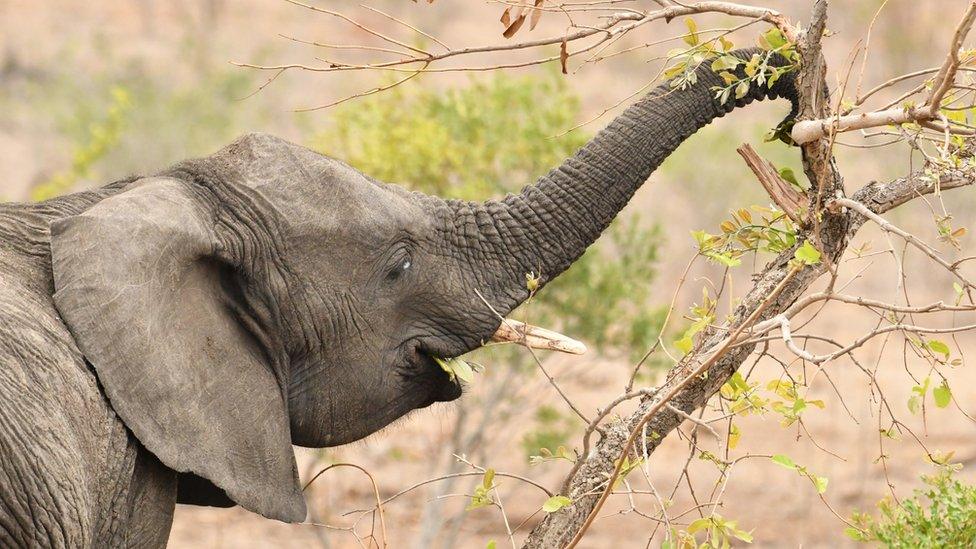
Elephants are genuine mixed feeders, eating both grass (grazing) and woody vegetation like leaves, bark, and branches (browsing), which sets them apart from more specialized herbivores that stick to one feeding strategy.
A typical elephant diet includes grasses, tree bark, roots, leaves, twigs, fruit, and seeds, with the exact mix shifting substantially depending on what’s seasonally available.
This dietary flexibility is a genuine survival advantage — elephants can shift between food sources as conditions change, letting them thrive across savanna, woodland, and forest habitats that would challenge a more specialized eater.
Do Elephants Eat Grass or Leaves?
Both — and which one dominates an elephant’s diet depends heavily on the season. During the wet season, when grass is abundant, tender, and easier to digest, elephants shift toward grazing, with grass making up a substantial share of daily intake.
During the dry season, as grass becomes scarce and less nutritious, elephants shift toward browsing — leaves, bark, twigs, and roots become the dominant food source, since woody vegetation remains available even when grasslands have dried out. This seasonal flexibility is exactly why elephants are described as mixed feeders rather than pure grazers or pure browsers.
Why Do Elephants Eat So Much Food Every Day?
Elephants eat such enormous quantities because their digestive system is genuinely inefficient at extracting nutrients — as hindgut fermenters, similar in principle to horses and zebras, elephants only digest roughly 40 to 50% of what they eat, with the remainder passing through largely unprocessed.
This means an elephant has to eat a genuinely massive volume of food just to extract enough energy and nutrition to sustain its size, which is exactly why daily intake runs to hundreds of pounds rather than a more modest amount a more efficient digestive system might require.
How Do Elephants Actually Eat?
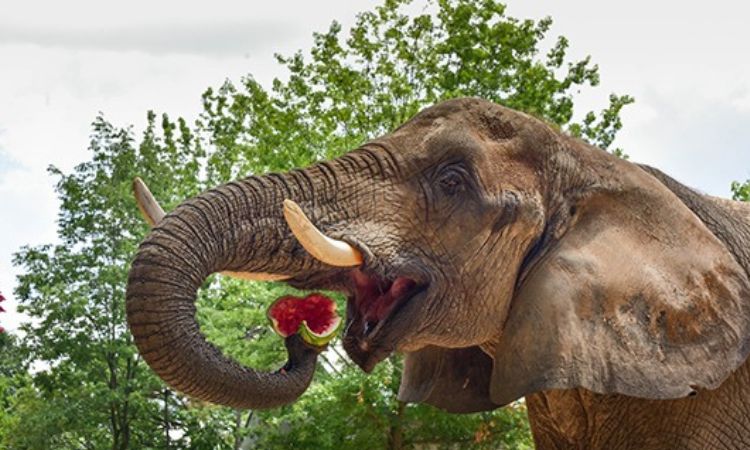
An elephant’s trunk is the primary tool for feeding, used to grasp grass, strip leaves from branches, pull bark from trees, and even dig up roots buried underground.
The trunk’s dexterity is genuinely remarkable — capable of delicately plucking a single blade of grass, yet strong enough to tear branches off a tree or push over a small tree entirely to reach leaves otherwise out of reach.
Elephants also use their tusks, where present, to strip bark and dig for roots and minerals, making tusks a genuine feeding tool as much as a display or defense feature.
Do Elephants Eat Fruit?
Yes — fruit forms a genuine part of many elephants’ diets where it’s seasonally available, and elephants play a real ecological role as seed dispersers as a result, since fruit seeds pass through an elephant’s digestive system and are deposited, often kilometers from the parent tree, in a nutrient-rich pile of dung ideal for germination.
Several African tree species have evolved specifically to rely on elephants for this exact seed-dispersal service, making elephant feeding behavior genuinely important to the broader health of the ecosystems they inhabit, not just to the elephants themselves.
Why Do Elephants Visit Salt Licks?
Elephants seek out salt licks and mineral-rich soil specifically because their plant-based diet doesn’t provide sufficient sodium and other essential minerals on its own — a behavior called geophagy, or deliberate soil consumption.
Watching elephants dig into a mineral lick with their tusks and trunk is a genuinely fascinating example of dietary self-supplementation, and these mineral-rich sites are often reliable locations for viewing elephant activity on safari, since multiple herds may return to the same trusted lick repeatedly over time.
How Much Water Do Elephants Drink?
An adult elephant drinks between 150 and 300 liters (40 to 80 gallons) of water daily, using its trunk to draw water up and then spray it into its mouth.
Elephants need to be within reasonable range of a reliable water source at all times, which is exactly why elephant herds are so consistently found near rivers, lakes, and waterholes — water access shapes elephant movement and habitat use as fundamentally as food availability does.
Do Elephants Eat Crops?
Yes, and this creates one of the most significant real challenges in human-elephant coexistence across Africa. Elephants are drawn to cultivated crops — particularly maize, bananas, and sugarcane — since these often offer more concentrated nutrition than wild vegetation, especially during dry-season food scarcity.
This pattern, known as human-elephant conflict, is a genuine, ongoing conservation challenge in areas where farmland borders elephant habitat, and it’s part of why responsible tourism revenue supporting conservation and community programs matters directly to reducing this friction over time.
What Do Baby Elephants Eat?
Baby elephants nurse on their mother’s milk for the first several months of life, gradually beginning to sample solid vegetation — grass, leaves — within the first few months while continuing to nurse for two years or more.
Calves also engage in a behavior called coprophagy, eating their mother’s dung specifically to acquire the gut bacteria needed to properly digest plant material later in life — a genuinely essential, if unglamorous, part of how young elephants develop the digestive capability adult elephants depend on.
See Elephants Feeding for Yourself in Uganda
Reading about elephant diet is one thing — watching a herd strip leaves from acacia trees, graze across open plains, or dig into a mineral lick with genuine focus is something else entirely. Uganda offers some of the most reliable elephant viewing anywhere in East Africa.
Murchison Falls National Park
Murchison Falls National Park, Uganda’s largest, is genuinely one of the best places in the country to watch elephants feeding at scale — large herds are a regular sighting on game drives, often seen browsing acacia woodland or grazing the open plains along the Nile.
Our 2 Days Murchison Falls Safari and 5 Days Gorillas & Murchison Falls Safari both build this elephant viewing directly into the itinerary, and our 1 Day Murchison Falls Balloon Safari offers a genuinely spectacular aerial view of elephant herds moving and feeding across the plains below.
Queen Elizabeth National Park
Queen Elizabeth National Park offers equally strong elephant sightings, particularly around the Kazinga Channel, where elephants regularly feed on the surrounding grassland before coming down to drink.
Our 3 Days Queen Elizabeth National Park Safari and the Ishasha sector both offer excellent elephant viewing alongside the park’s famous tree-climbing lions.
Lake Mburo National Park
Lake Mburo National Park offers a smaller-scale but genuinely rewarding elephant-viewing experience, well suited to travelers wanting a more intimate wildlife encounter alongside zebra and eland.
Combine Elephant Viewing With Uganda’s Primates
Our full Gorilla Safaris collection, including the 1 Day Gorilla Trekking Uganda and 3 Days Gorilla Trekking Safari itineraries, pair naturally with an elephant-focused park extension.
Our 4 Days Gorilla & Chimpanzee Tour and 2 Days Kibale Chimpanzee Trekking Safari round out Uganda’s primate side, and a stop at Bigodi Wetland Sanctuary or a 2 Days Rhino Tracking excursion make excellent additions to a broader wildlife circuit.
Plan the Rest of Your Trip
Our Uganda safaris, Short Uganda Safaris, and Long Uganda Safaris collections cover every trip length and combination we offer, and our Uganda Safari Lodges guide helps you choose accommodation to match.
Our comprehensive 9 Days Uganda Wildlife Safari gives elephants and every other major species genuine time and space across a full trip, and a gentle 2 Days Entebbe Tour makes a relaxed bookend either side of your safari.
Book Your Uganda Safari and Watch Elephants Feed in the Wild
As a UWA licensed, UTB registered, and RDB accredited Uganda safari operator, we build every itinerary around genuinely close, safe wildlife encounters guided by experienced local teams who know exactly where Uganda’s elephant herds are likely to be feeding on any given day.
Visit us or contact us today to start planning your Uganda safari, and watch the world’s largest land animal feed in its natural habitat for yourself.
Related Pages
- Murchison Falls National Park
- 2 Days Murchison Falls Safari
- 5 Days Gorillas & Murchison Falls Safari
- Murchison Falls Balloon Safari
- Queen Elizabeth National Park
- 3 Days Queen Elizabeth National Park Safari
- Ishasha Sector
- Lake Mburo National Park
- Bwindi Impenetrable National Park
- Gorilla Safaris — All Packages
- 1 Day Gorilla Trekking Uganda
- 3 Days Gorilla Trekking Safari
- 4 Days Gorilla & Chimpanzee Tour
- 2 Days Kibale Chimpanzee Trekking Safari
- Bigodi Wetland Sanctuary
- 2 Days Rhino Tracking in Uganda
- Uganda Safaris
- Uganda Safari Lodges
- Long Uganda Safaris
- Short Uganda Safaris
- 9 Days Uganda Wildlife Safari
- 2 Days Entebbe Tour
- Verified Facts About Uganda Wildlife Tours
- Contact Us

